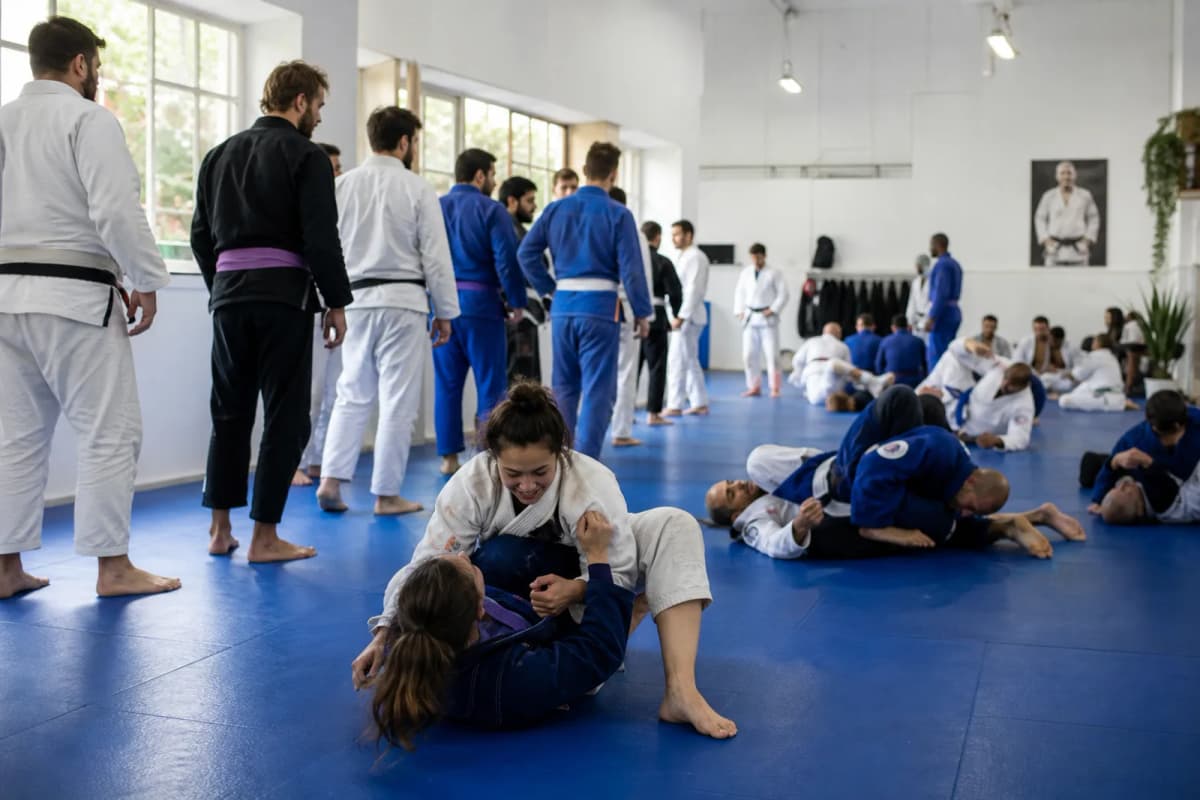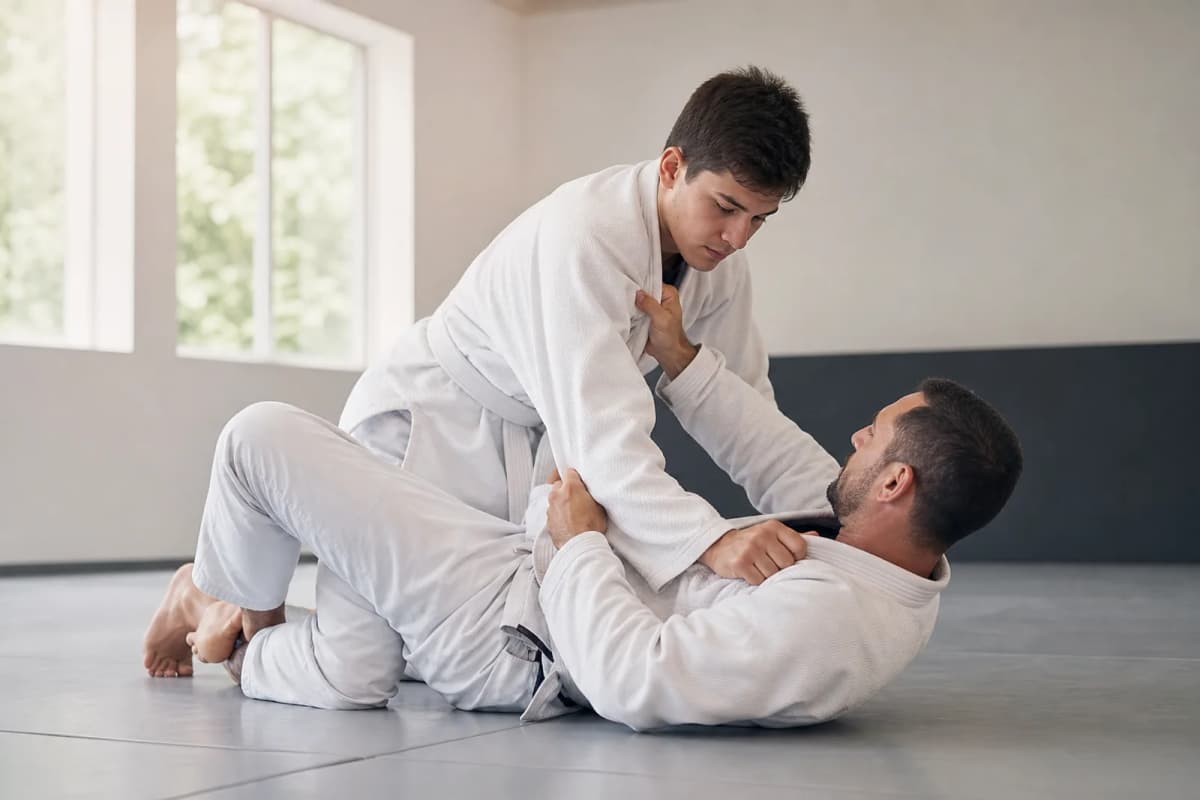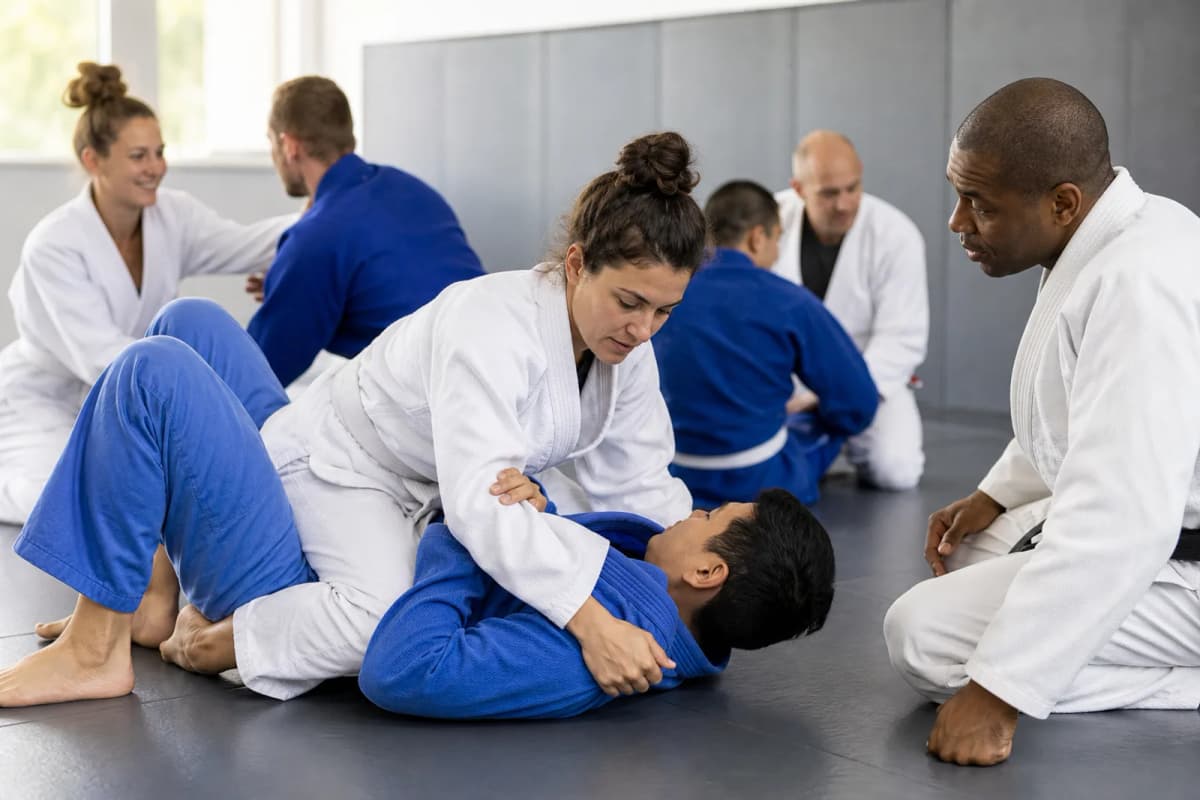
No, you do not need to be in shape before starting BJJ.
Start where you are
Waiting to get fit first often delays the exact activity that would help you adapt.
BJJ fitness is specific. Even strong runners and lifters often feel tired in their first classes because grappling uses unfamiliar tension, breathing, and isometric effort.
A beginner who attends consistently, taps early, and learns to relax will usually build the right kind of conditioning over time.
How to manage intensity
- Tell the coach you are new before class starts
- Focus on breathing during drills instead of winning every exchange
- Take breaks when safety or attention drops
- Choose controlled partners when possible
- Tap early and reset instead of fighting every position with maximum strength
Fitness that carries over
Movement capacity
Hip escapes, technical stand-ups, bridges, and base drills build the movement patterns that make class feel less overwhelming.
Calm pacing
Learning to breathe under pressure can improve endurance faster than simply adding more hard rounds.
Key Takeaways
- You do not need to get fit before starting BJJ.
- BJJ-specific conditioning improves through patient, consistent training.
- Breathing, pacing, and recovery matter more than forcing every round.
Further Study
Breathing and Relaxation
A practical foundation for managing fatigue and pressure.
Technical Stand-Up
A useful movement for beginners building coordination.
Hip Escape
A core movement that doubles as beginner conditioning.
How many times a week should I train BJJ?
How to choose a sustainable training schedule.