The open BJJ knowledge base
Learn BrazilianJiu-Jitsuwithout the paywall
205+ free technique breakdowns, belt-by-belt roadmaps, IBJJF rule explainers, gyms, and events. Start at white belt or jump straight to what you drilled this week.
- No paywall
- No account needed
- Original, sourced guides
- Techniques
- 205+Techniques
- Guides & FAQs
- 74+Guides & FAQs
- Gyms
- 106+Gyms
- Events & camps
- 126+Events & camps
Your path
What belt are you?
Pick your rank and get a structured roadmap: the positions, escapes, and submissions to focus on before your next promotion.
White Belt
Foundational 12-week roadmap to build posture, base, escapes, and core guard skills.
- Timeline
- 12 weeks
- Techniques
- 9 core
Blue Belt
Advance beyond foundational survival with combinations, pressure passing, and guard retention upgrades.
- Timeline
- 16 weeks
- Techniques
- 12 core
Purple Belt
Build a connected game: a primary guard, a passing identity, and finishing chains from dominant positions.
- Timeline
- 16 weeks
- Techniques
- 12 core
Brown Belt
Refine pressure, counters, and high-percentage finishes while closing the holes in your existing game.
- Timeline
- 16 weeks
- Techniques
- 12 core
Black Belt
Turn experience into a teachable system: connections, rule-set choices, and long-term training habits.
- Timeline
- 16 weeks
- Techniques
- 12 core
Technique library
Train by position
Every technique is organized by where the fight is: guards, top control, escapes, sweeps, and the submissions that finish them.
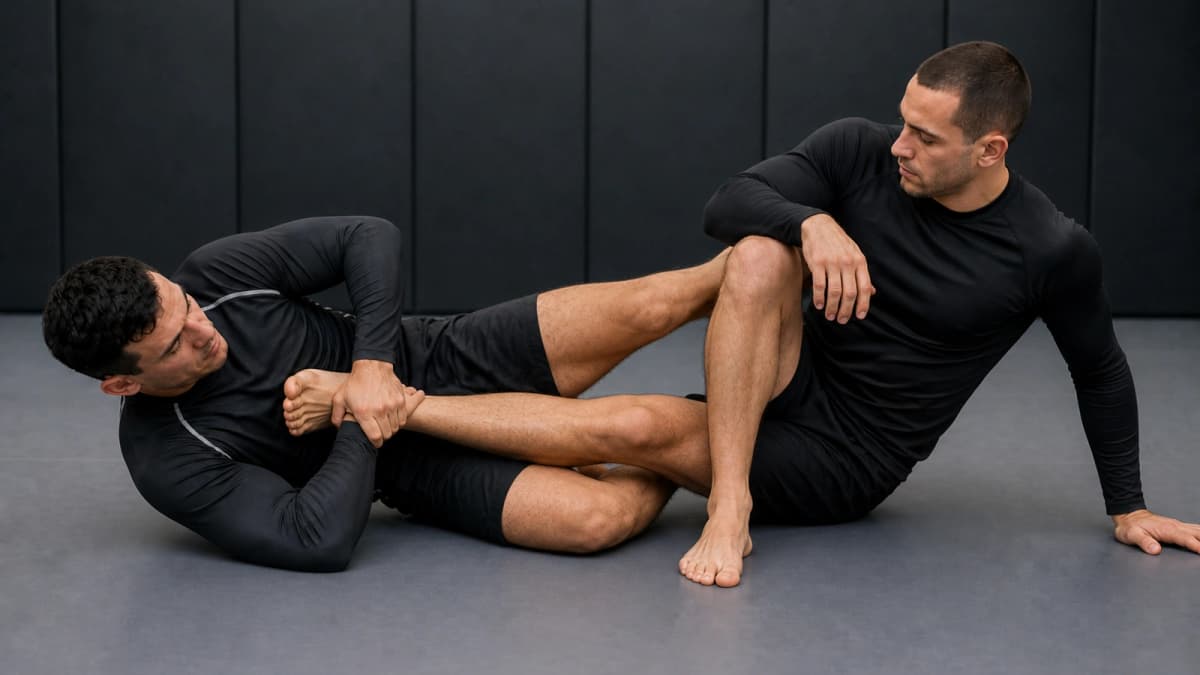 56 techniques
All Positions
Every core BJJ position, from closed guard and half guard to mount, side control, and back control, with attacks and escapes.
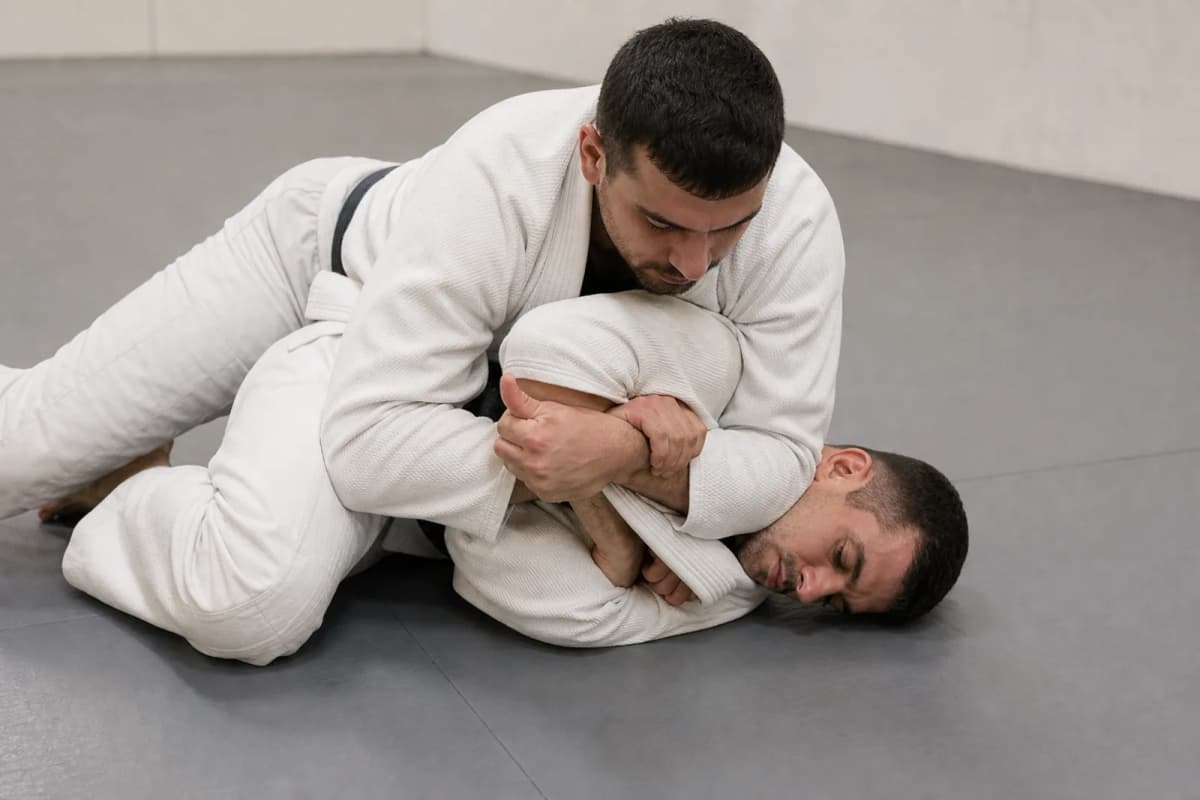 47 techniques
All Submissions
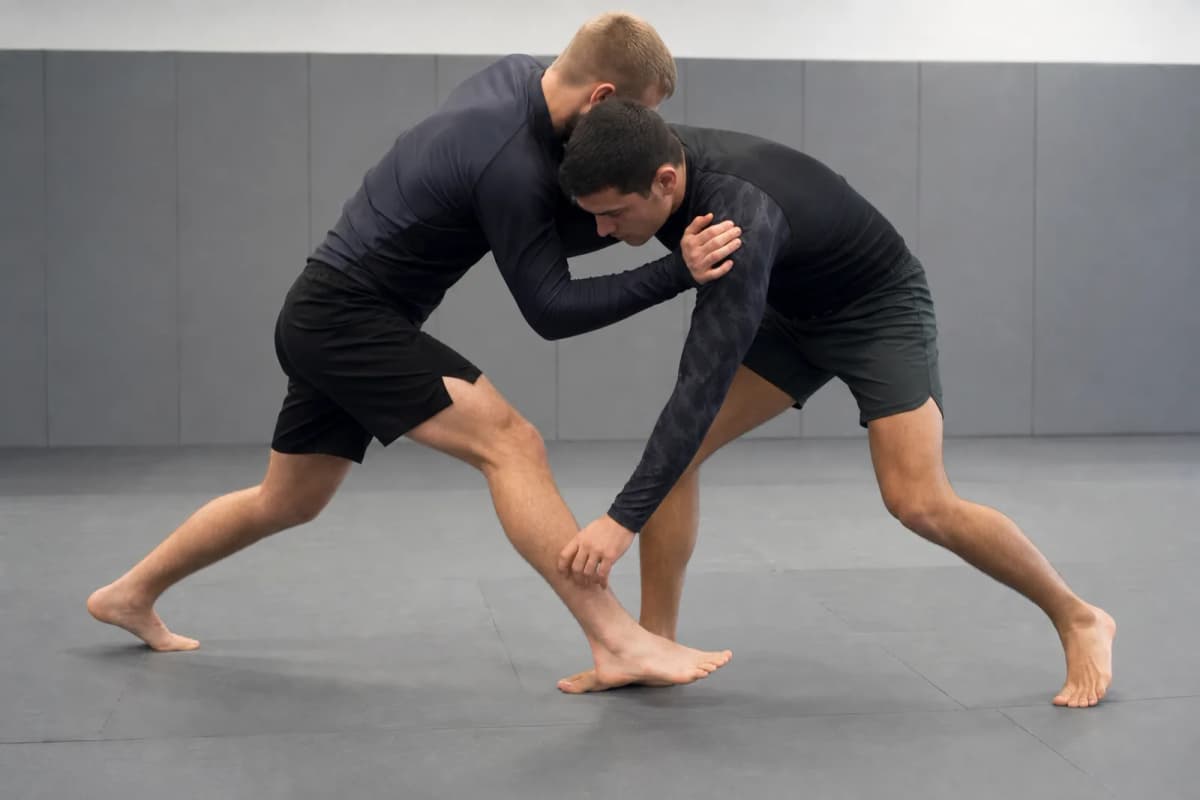 85 techniques
All Transitions
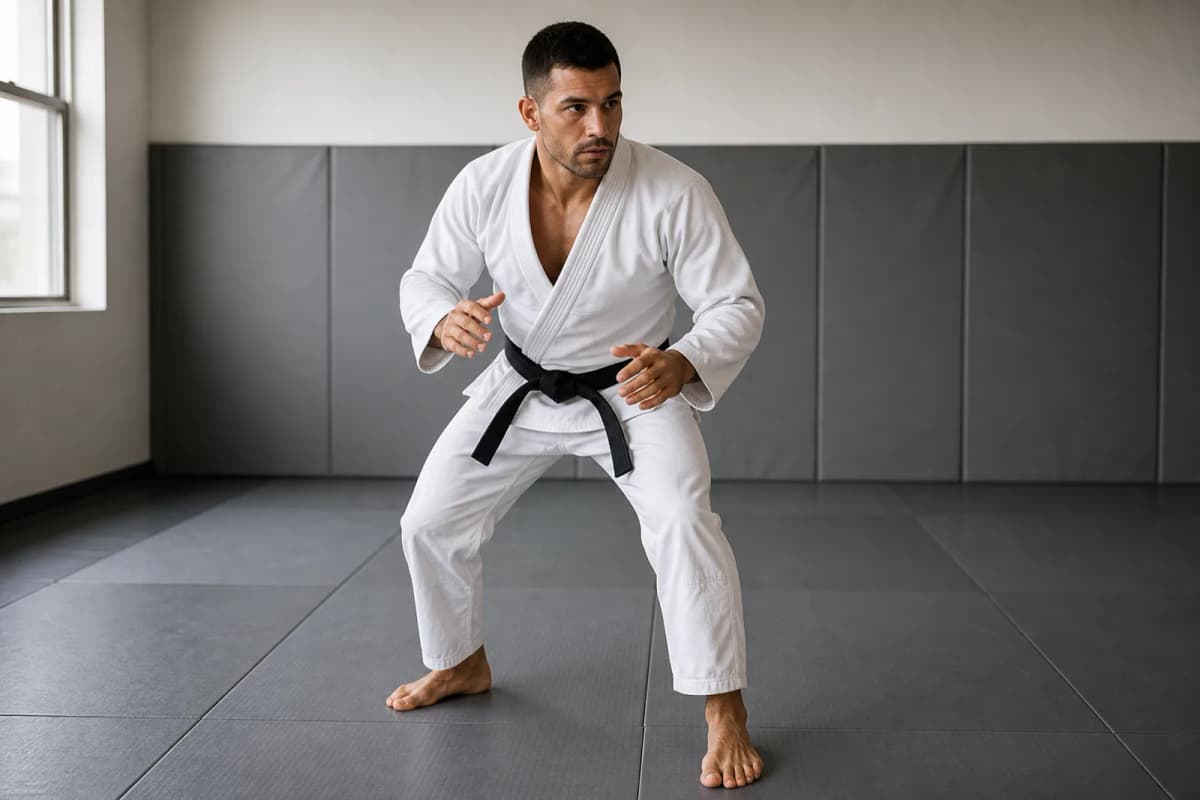 17 techniques
Fundamentals
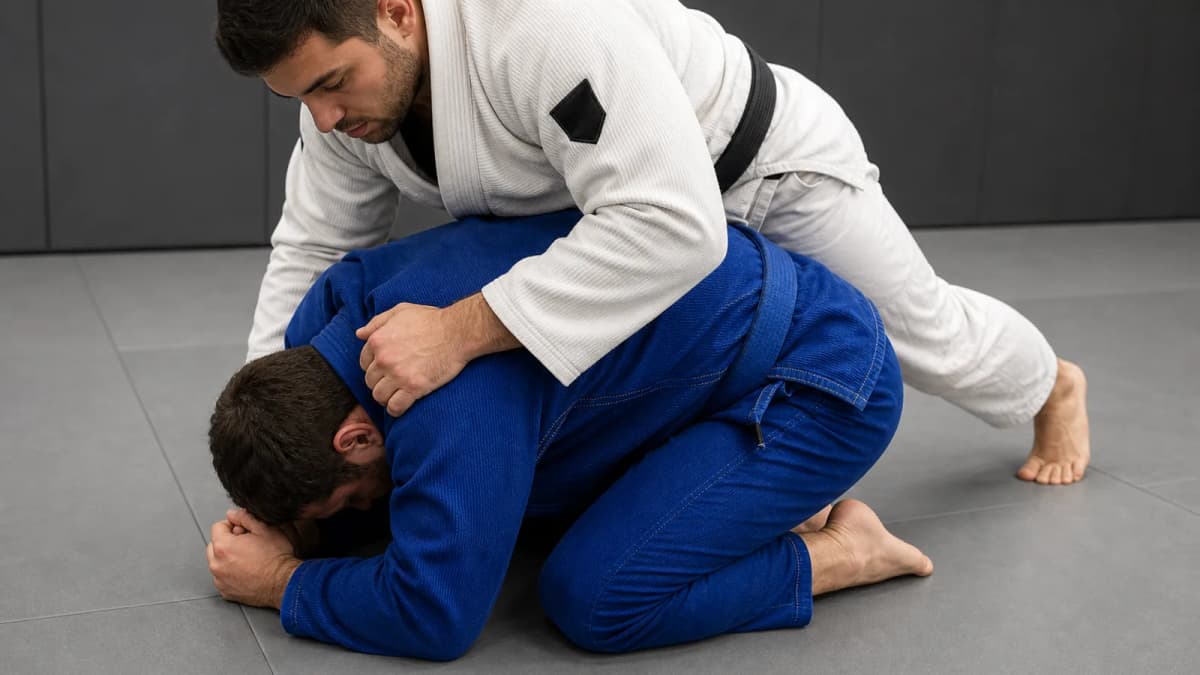 1 technique
Bottom Positions
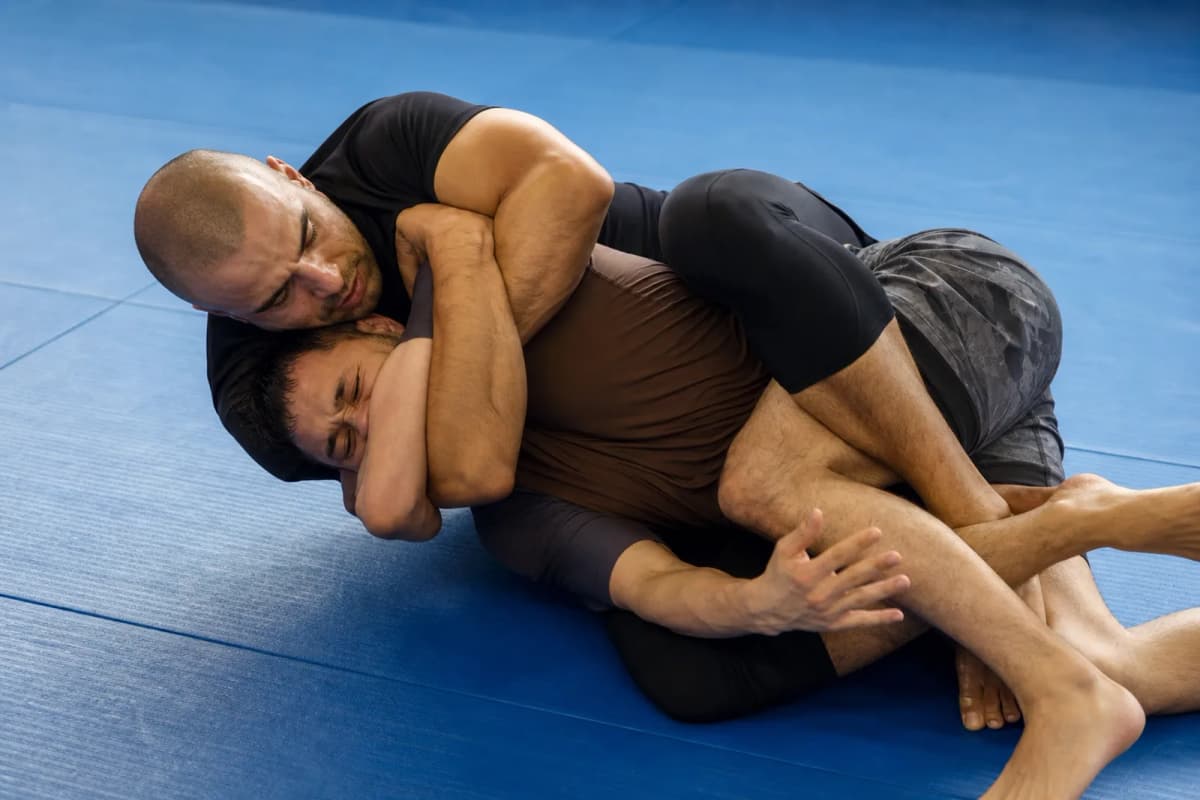 30 techniques
Chokes
33 techniquesGuards
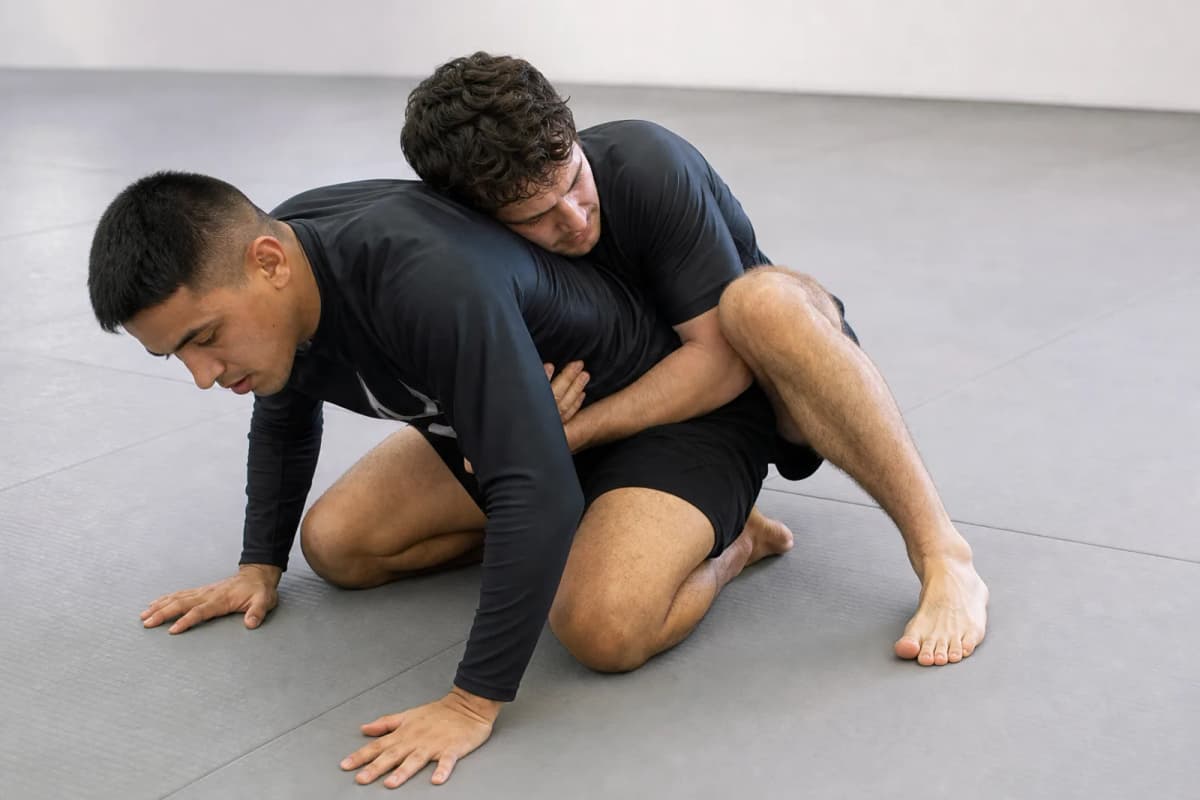 26 techniques
Sweeps
Full library205Browse every techniqueOn the calendar
Upcoming events & camps
Tournaments, seminars, and training camps coming up next. Dates are sourced from organizers.
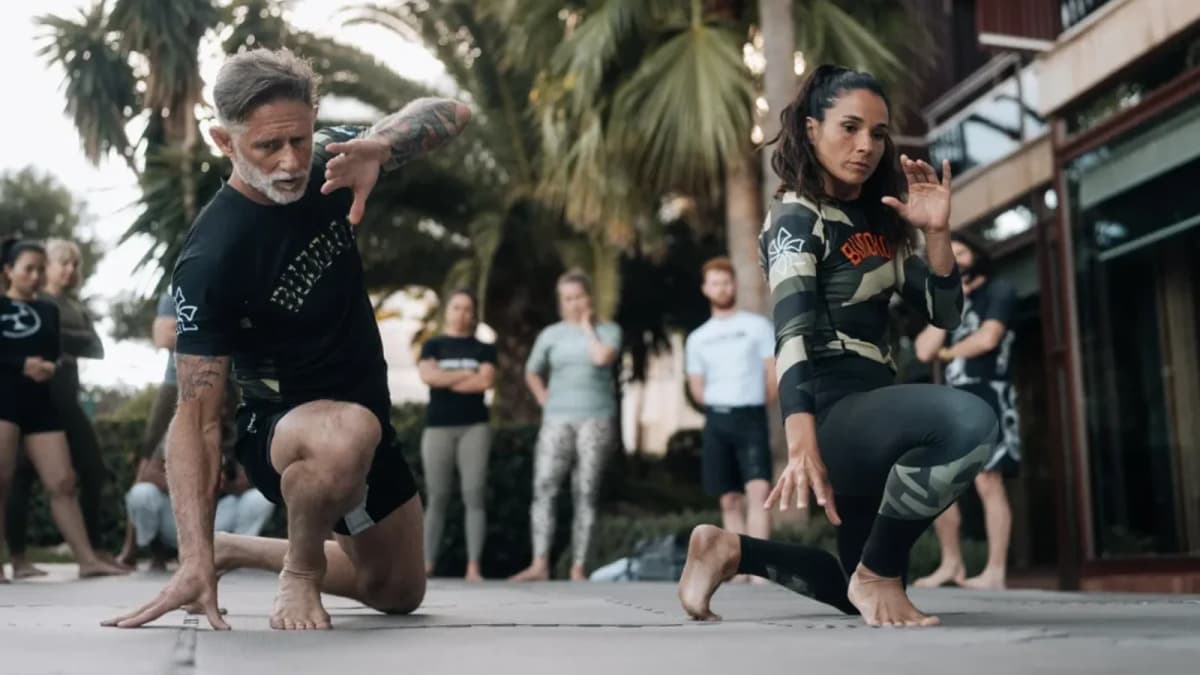 Camp
Oct 26, 2026 - Oct 31, 2026
Mallorca BJJ & Yoga Festival Fall 2026
Camp de Mar, Spain
Mallorca BJJ & Yoga Festival Fall 2026 in Camp de Mar, Spain (2026-10-26). Listing sourced from the organizer calendar — confirm dates and registration on the official page.
View details → Event
Oct 28, 2026 - Nov 1, 2026
European IBJJF Jiu-Jitsu No-Gi Championship 2026
Lido di Ostia, RM, Italy
European IBJJF Jiu-Jitsu No-Gi Championship 2026 in Lido di Ostia, Italy (2026-10-28). Listing sourced from the organizer calendar — confirm dates and registration on the official page.
View details →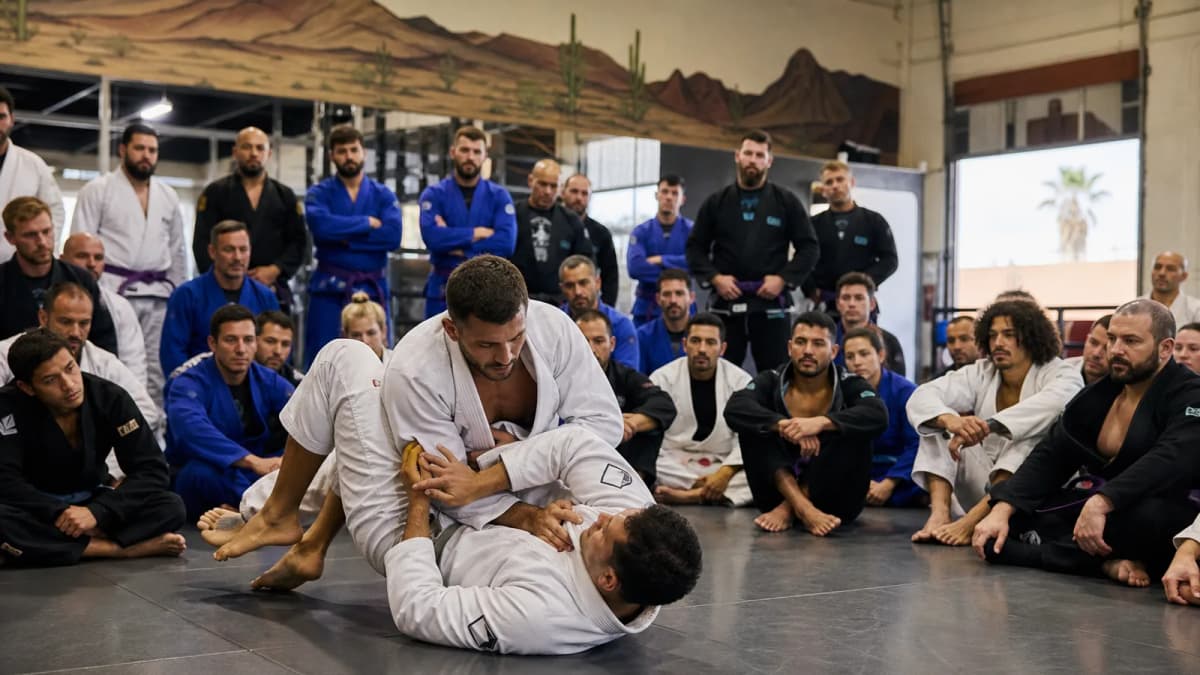 Camp
Nov 2, 2026 - Nov 7, 2026
BJJ Globetrotters Arizona Camp 2026
Jay Pages Jiu-Jitsu Academy — Tempe, United States
BJJ Globetrotters Arizona Camp 2026 in Tempe, United States (2026-11-02 to 2026-11-07). Six-day gi and no-gi training camp — confirm details on the organizer page.
View details → Camp
Nov 3, 2026 - Nov 7, 2026
Women's BJJ Retreat With Jasmine Rocha
Mendocino, United States
Women's BJJ Retreat With Jasmine Rocha in Mendocino, United States (2026-11-03). Listing sourced from the organizer calendar — confirm dates and registration on the official page.
View details →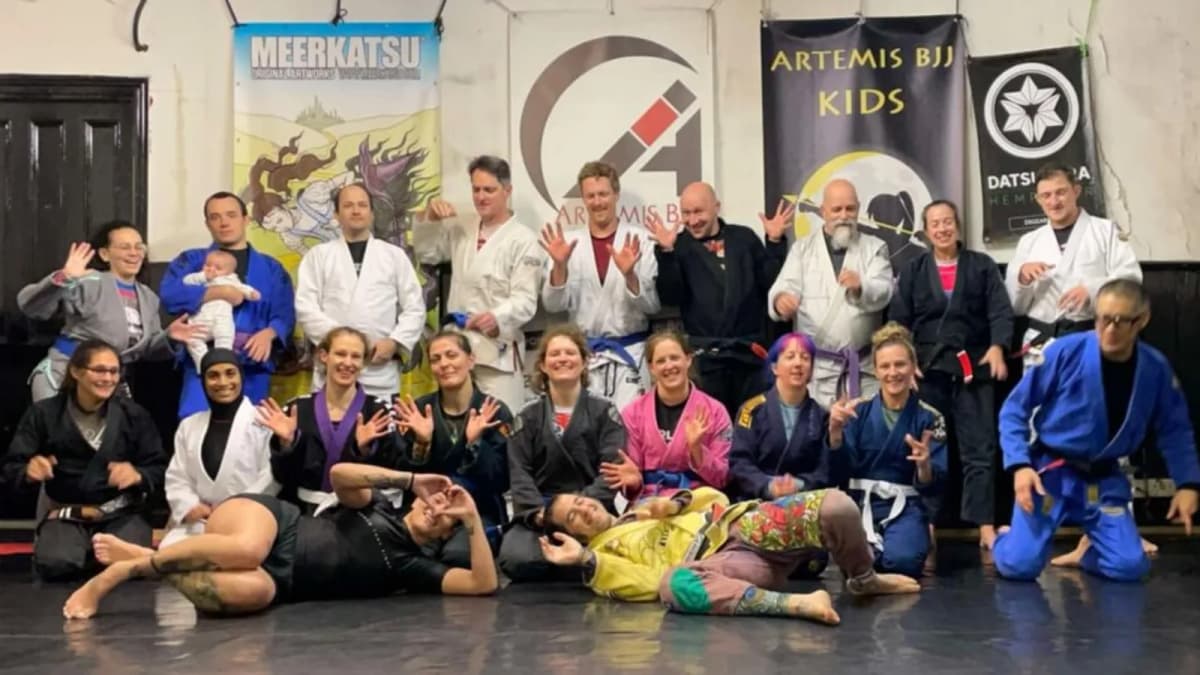 Camp
Nov 6, 2026 - Nov 8, 2026
Artemis BJJ Bristol Camp 2026
Bristol, United Kingdom
Artemis BJJ Bristol Camp 2026 in Bristol, United Kingdom (2026-11-06). Listing sourced from the organizer calendar — confirm dates and registration on the official page.
View details → Event
Nov 7, 2026
Kansas City International Open IBJJF Jiu-Jitsu Championship 2026
Kansas City, MO, United States of America
Kansas City International Open IBJJF Jiu-Jitsu Championship 2026 in Kansas City, United States of America (2026-11-07). Listing sourced from the organizer calendar — confirm dates and registration on the official page.
View details → Event
Nov 7, 2026
Kansas City International Open IBJJF Jiu-Jitsu No-Gi Championship 2026
Kansas City, MO, United States of America
Kansas City International Open IBJJF Jiu-Jitsu No-Gi Championship 2026 in Kansas City, United States of America (2026-11-07). Listing sourced from the organizer calendar — confirm dates and registration on the official page.
View details → Event
Nov 14, 2026 - Nov 15, 2026
Atlanta Fall International Open IBJJF Jiu-Jitsu Championship 2026
College Park, GA, United States of America
Atlanta Fall International Open IBJJF Jiu-Jitsu Championship 2026 in College Park, United States of America (2026-11-14). Listing sourced from the organizer calendar — confirm dates and registration on the official page.
View details → Event
Nov 14, 2026 - Nov 15, 2026
Atlanta Fall International Open IBJJF Jiu-Jitsu No-Gi Championship 2026
College Park, GA, United States of America
Atlanta Fall International Open IBJJF Jiu-Jitsu No-Gi Championship 2026 in College Park, United States of America (2026-11-14). Listing sourced from the organizer calendar — confirm dates and registration on the official page.
View details → Event
Nov 15, 2026
Atlanta Fall Kids International Open IBJJF Jiu-Jitsu Championship 2026
College Park, GA, United States of America
Atlanta Fall Kids International Open IBJJF Jiu-Jitsu Championship 2026 in College Park, United States of America (2026-11-15). Listing sourced from the organizer calendar — confirm dates and registration on the official page.
View details →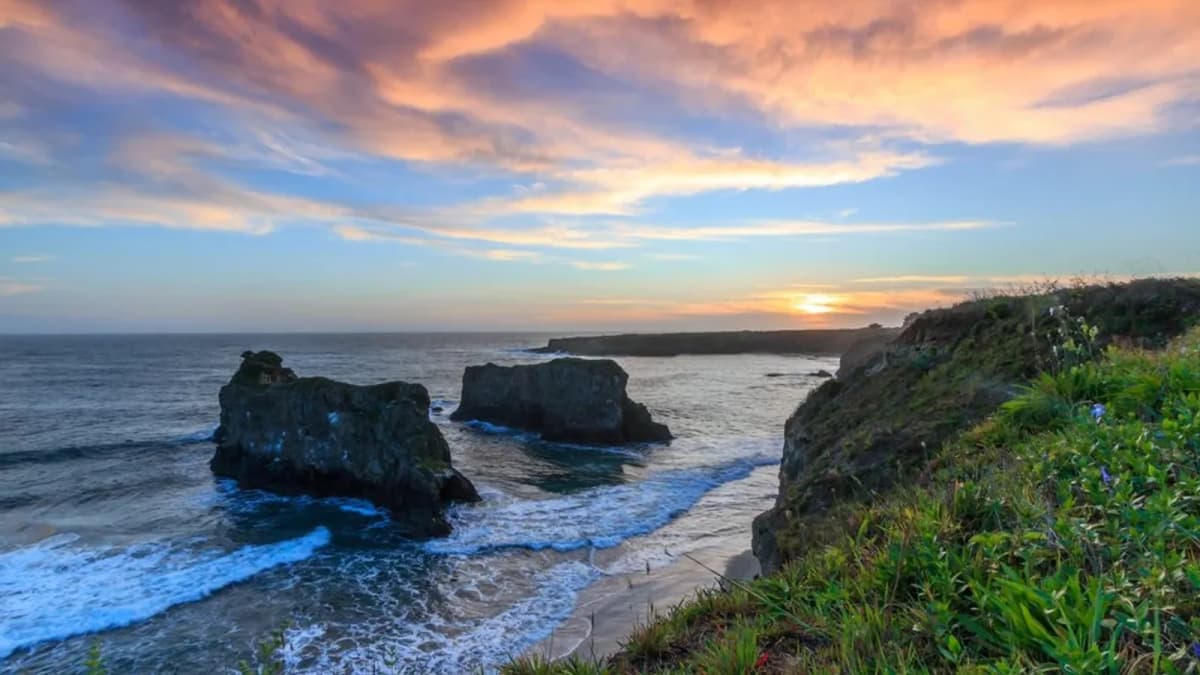 Camp
Nov 16, 2026 - Nov 21, 2026
Grappler's Retreat With Adam Wardzinski - November 2026
Mendocino, United States
Grappler's Retreat With Adam Wardzinski - November 2026 in Mendocino, United States (2026-11-16). Listing sourced from the organizer calendar — confirm dates and registration on the official page.
View details → Event
Nov 21, 2026 - Nov 22, 2026
New Jersey Fall International Open IBJJF Jiu-Jitsu Championship 2026
Secaucus, NJ, United States of America
New Jersey Fall International Open IBJJF Jiu-Jitsu Championship 2026 in Secaucus, United States of America (2026-11-21). Listing sourced from the organizer calendar — confirm dates and registration on the official page.
View details →Planning a trip? Browse training camps
Start here
The fundamentals
Eight techniques most coaches teach first. Work through them in order to survive, escape, and finish in your first months on the mat.
 beginner
Step 01
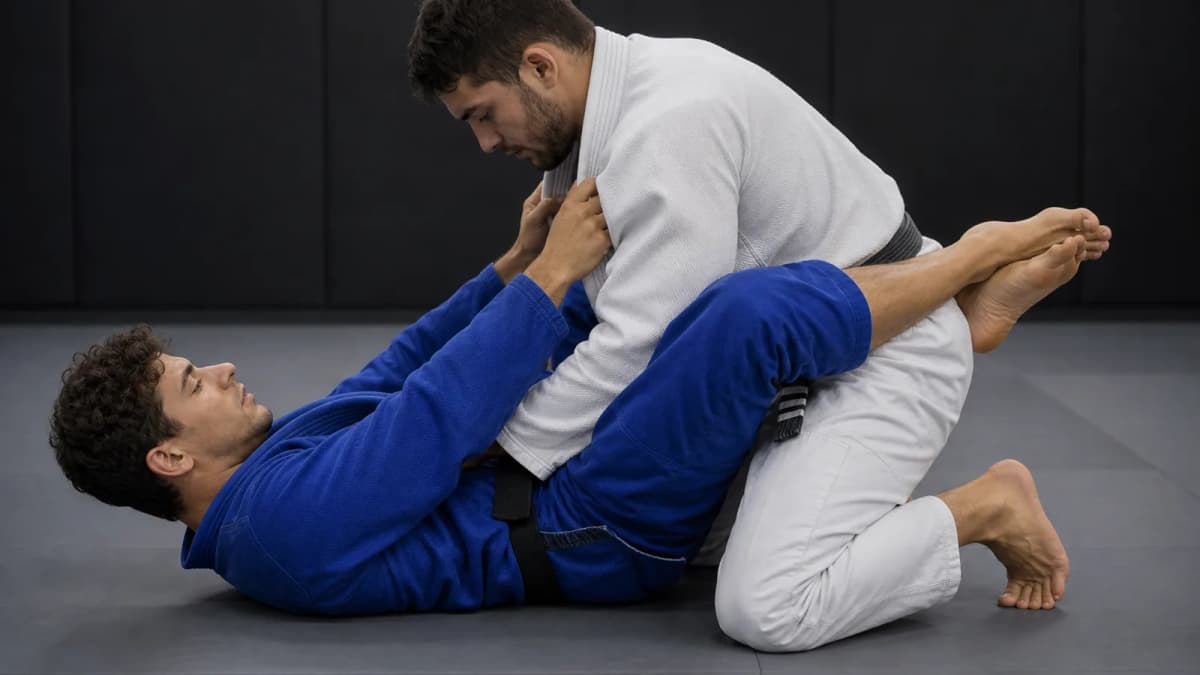
Closed Guard
Fundamental defensive guard with strong control and high-percentage attacks.
Learn technique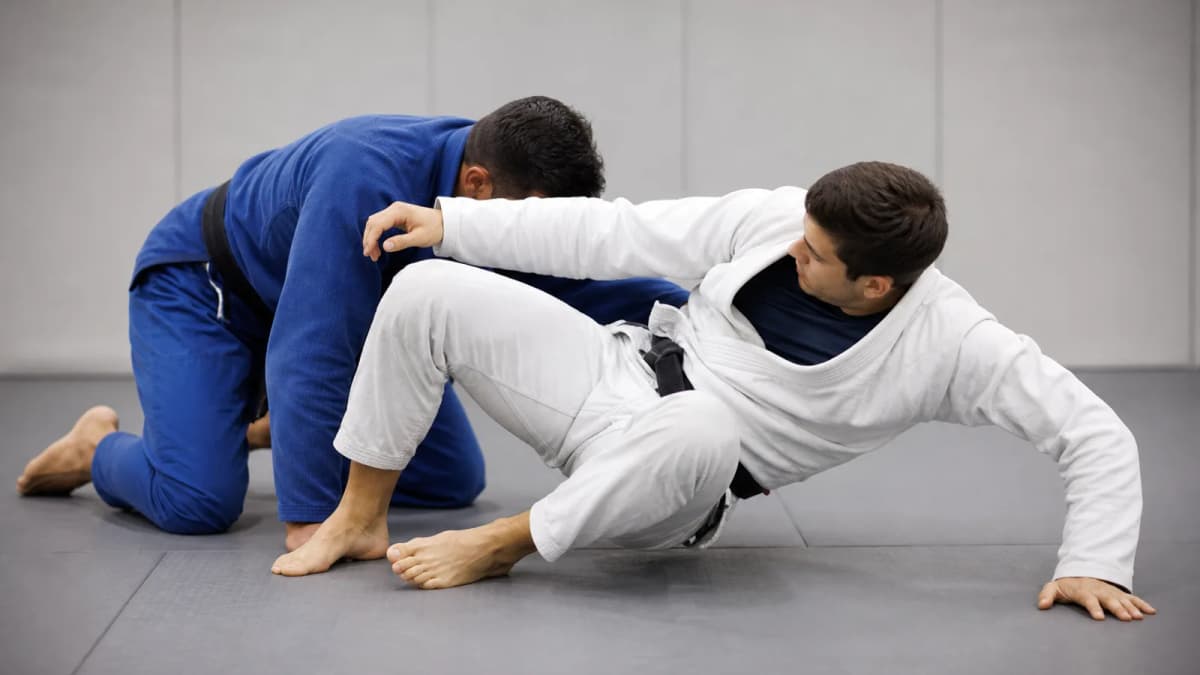 beginner
Step 02
Hip Escape
Core shrimping movement that creates space with the hips to recover guard, escape pins, and reset frames under pressure.
Learn technique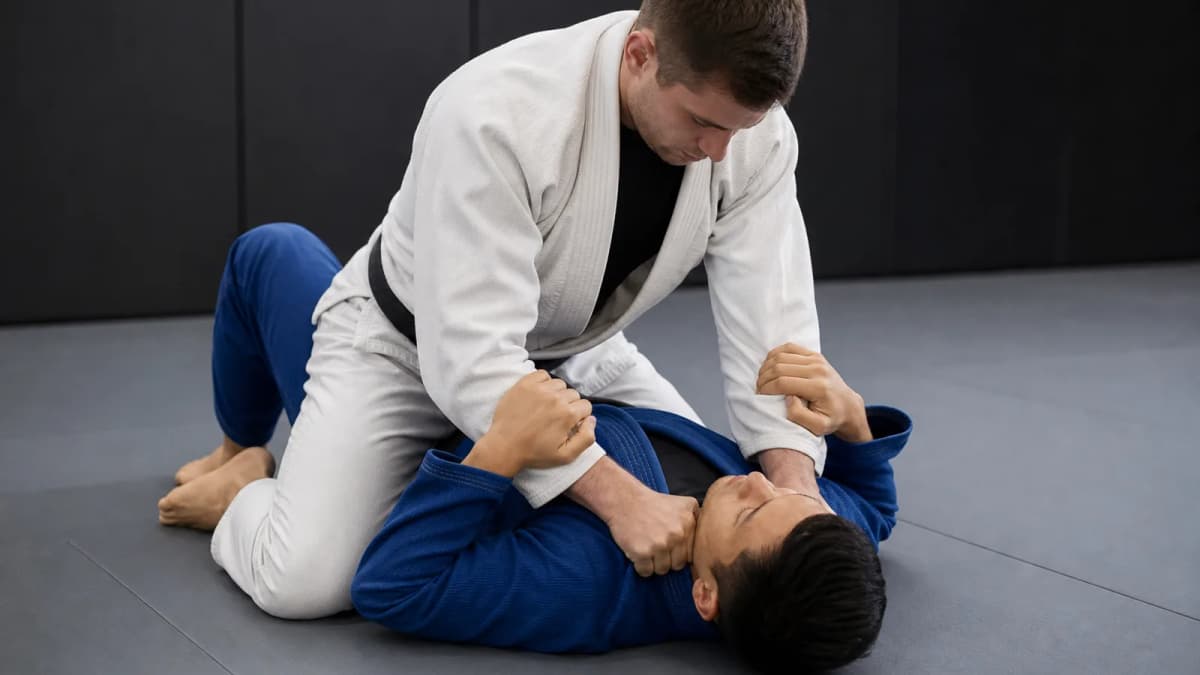 beginner
Step 03
Mount
The most dominant top position in BJJ with strong control and finishing options.
Learn technique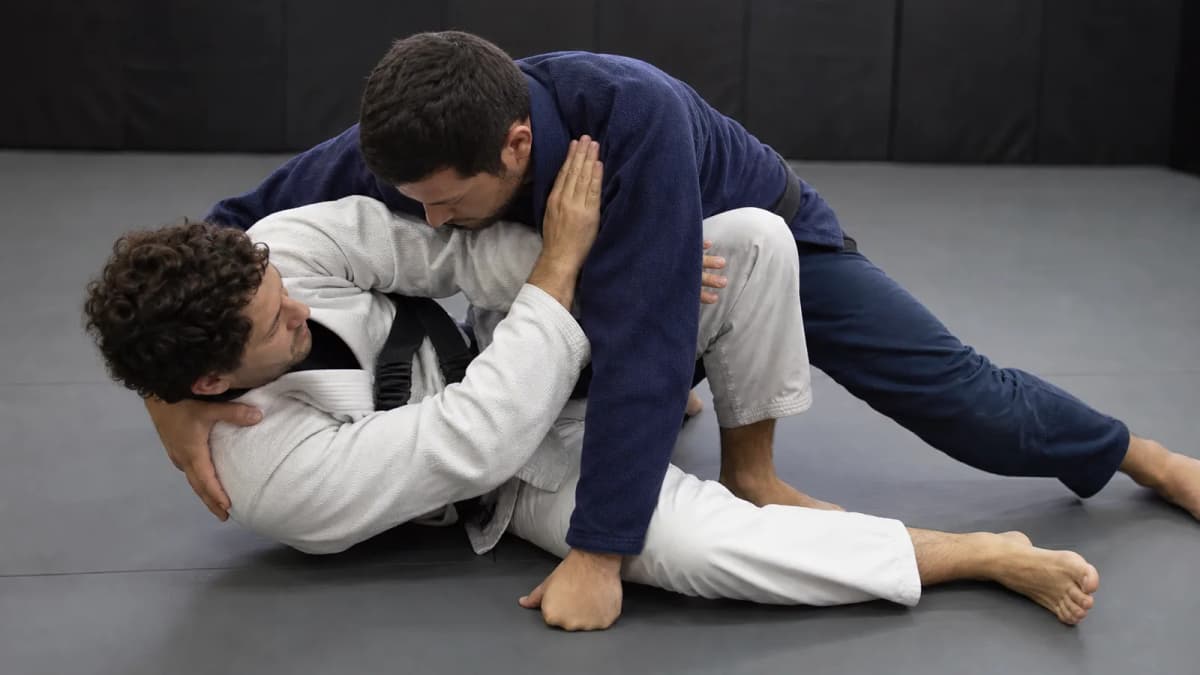 beginner
Step 04
Side Control Escape
Frame-and-shrimp escape from bottom side control to recover knee shield, half guard, or full guard.
Learn technique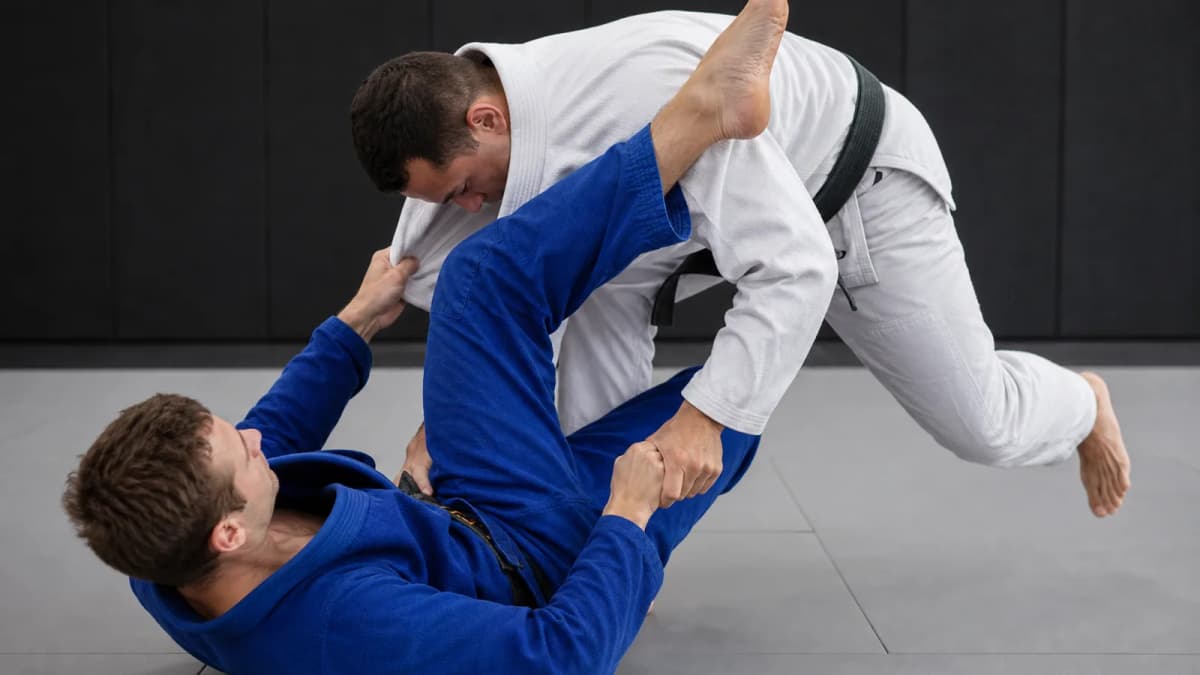 beginner
Step 05
Scissor Sweep
Classic closed-guard sweep that uses opposing forces to topple a kneeling opponent.
Learn technique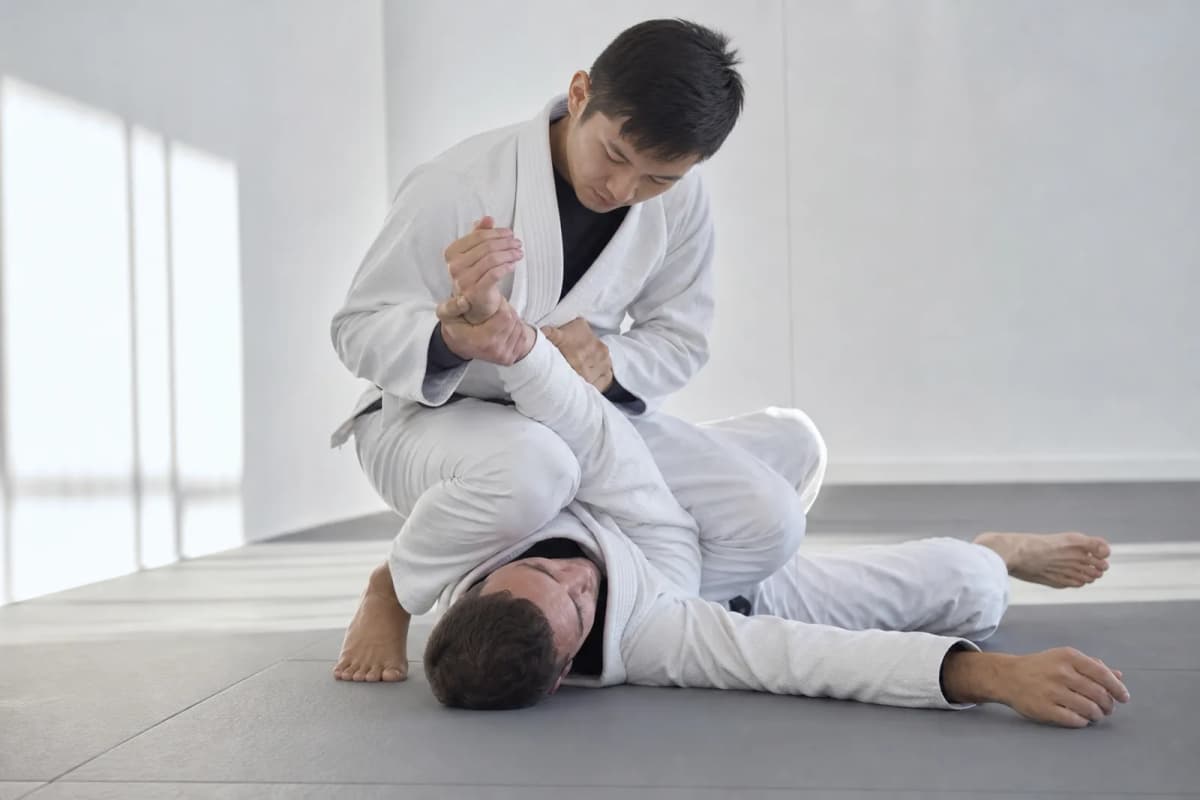 beginner
Step 06
Armbar
Classic elbow hyperextension attack from guard, mount, and back — one of the first submissions every white belt learns.
Learn technique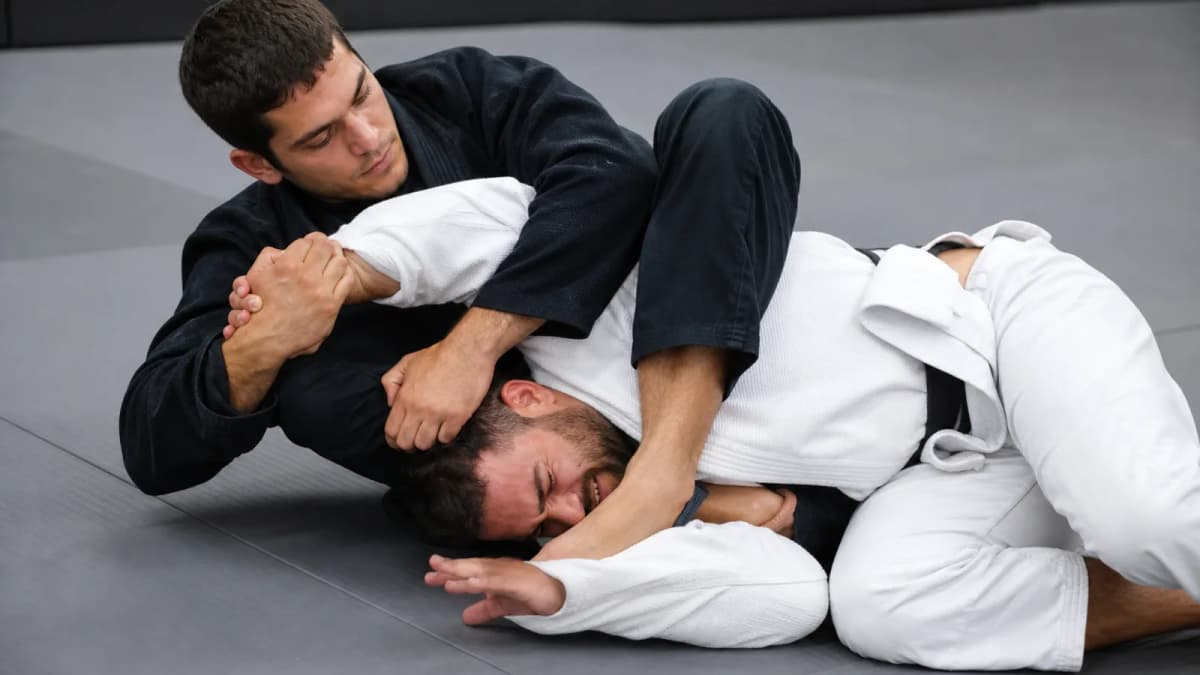 beginner
Step 07
Kimura
Figure-four shoulder lock that controls the arm from guard, side control, and north-south — a staple sweep and submission.
Learn technique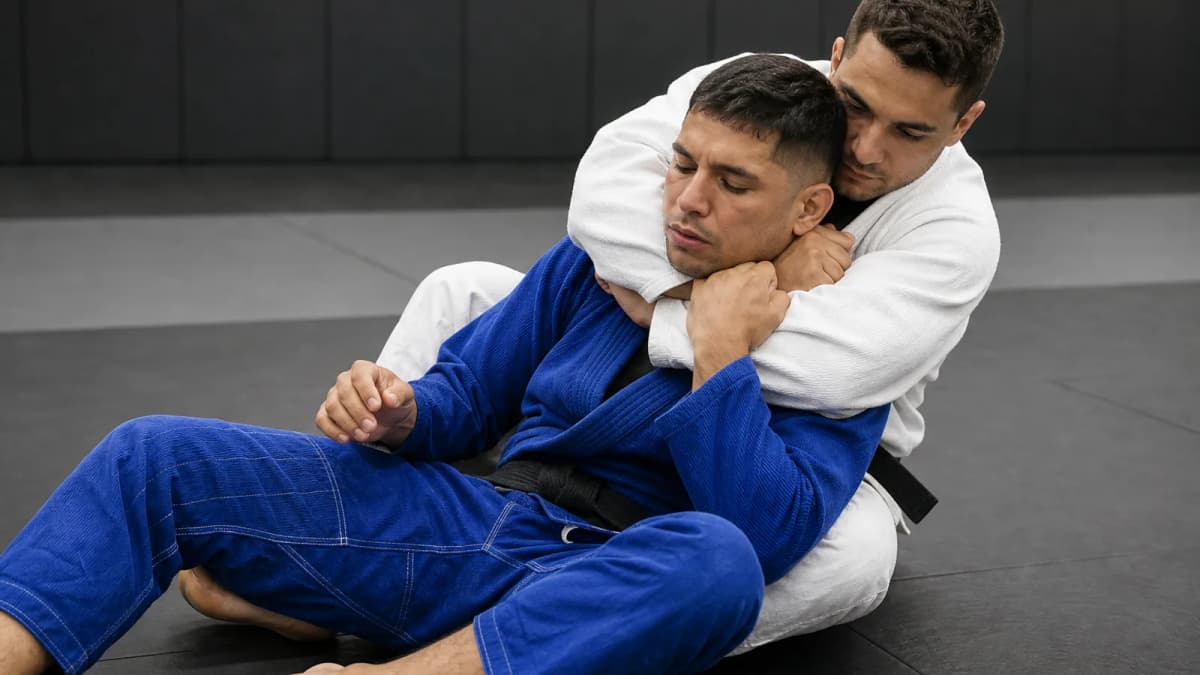 beginner
Step 08
Rear Naked Choke
The most fundamental and high-percentage submission in Brazilian Jiu-Jitsu.
Learn technique
Lineage
Legends of the art
Study the people who built Brazilian Jiu-Jitsu, from the Gracie family to today's champions. Every profile is sourced.
 Legend
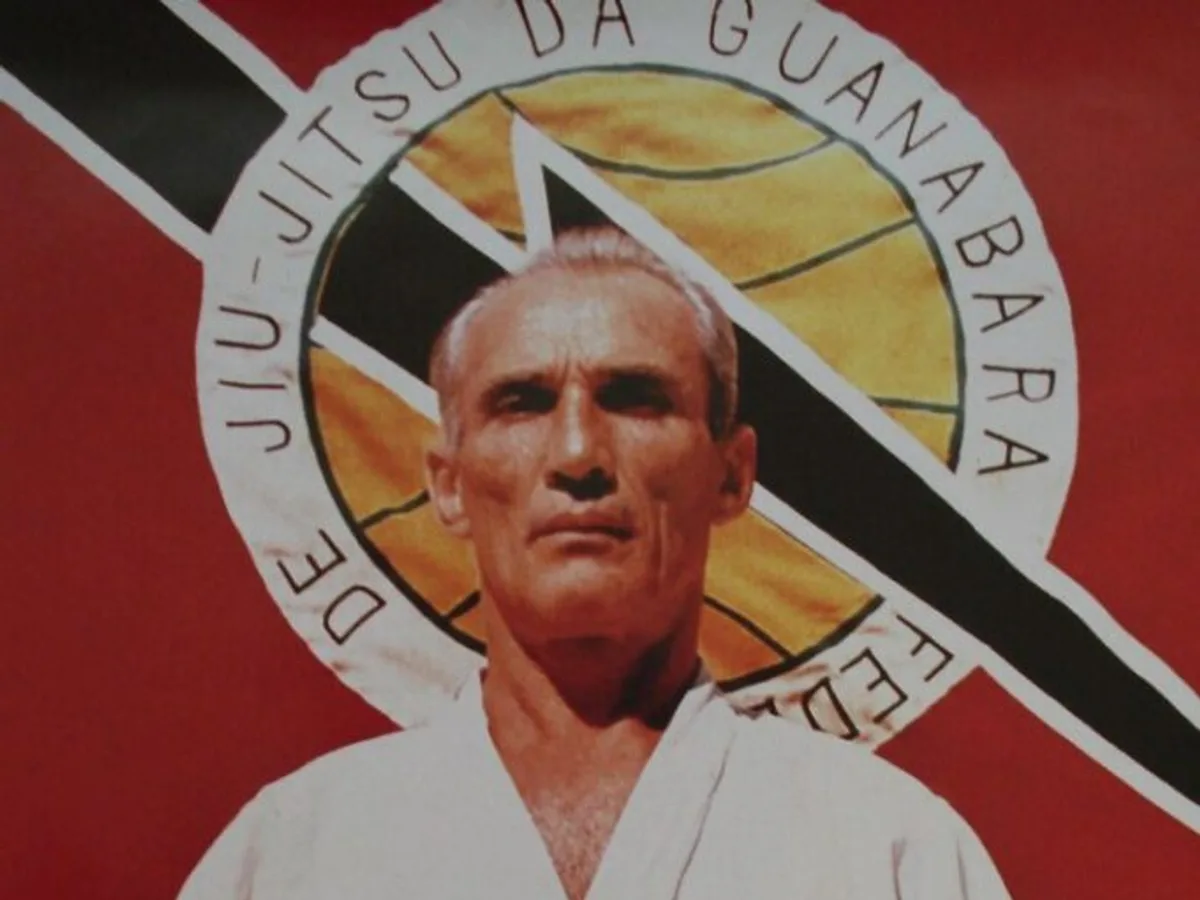
Helio Gracie
Brazilian pioneer who adapted judo groundwork into Gracie Jiu-Jitsu, fought Masahiko Kimura in 1951 and died in 2009 as a 10th-degree red belt.
Brazil · Gracie Jiu-Jitsu
 Legend
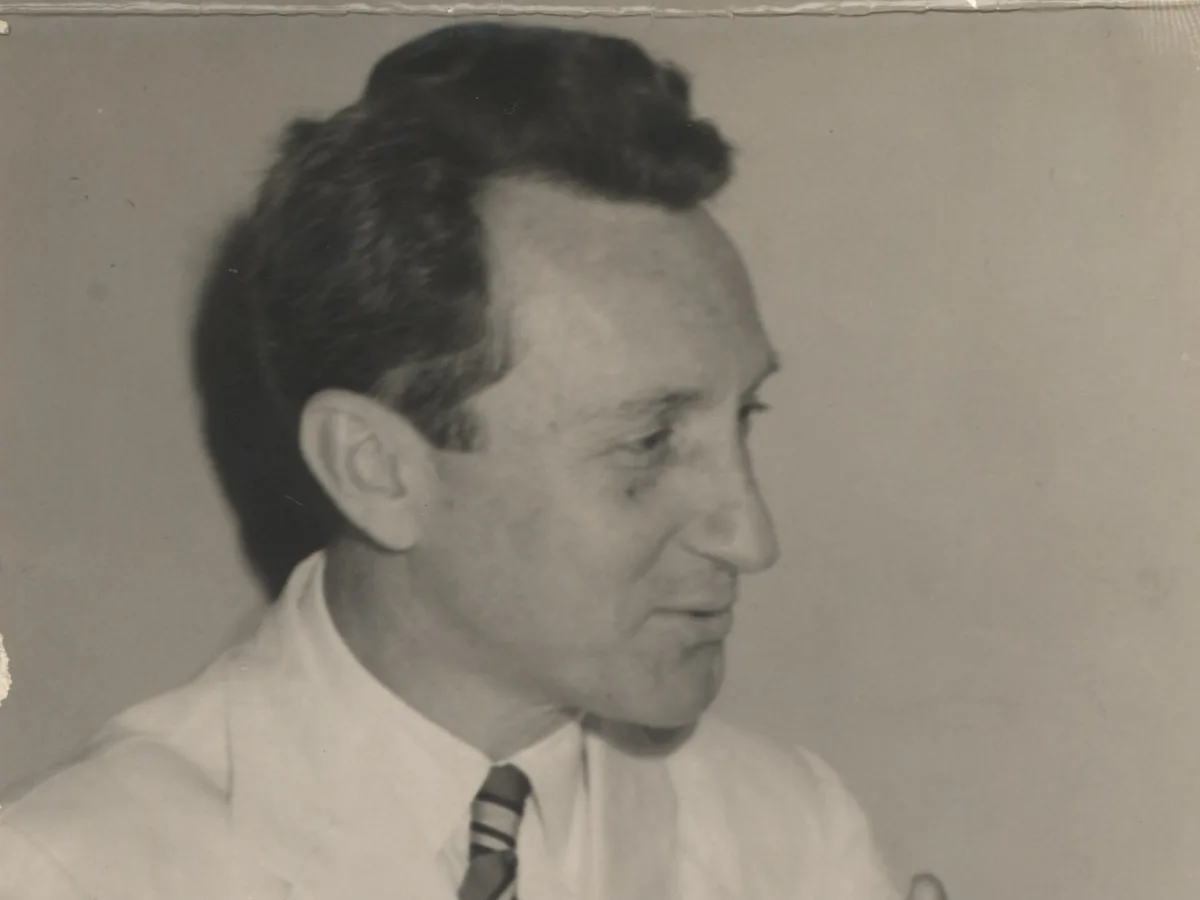
Carlos Gracie Sr.
Patriarch of the Gracie family who learned from Maeda's circle in Belém, taught his brothers including Hélio, and helped found Brazilian jiu-jitsu.
Brazil · Gracie Jiu-Jitsu
 Legend
Rickson Gracie
Hélio Gracie's son, two-time Vale Tudo Japan champion and 9th-degree red belt who retired from MMA undefeated at 11–0.
Brazil · Rickson Gracie United · Middleweight
 Legend
Eddie Bravo
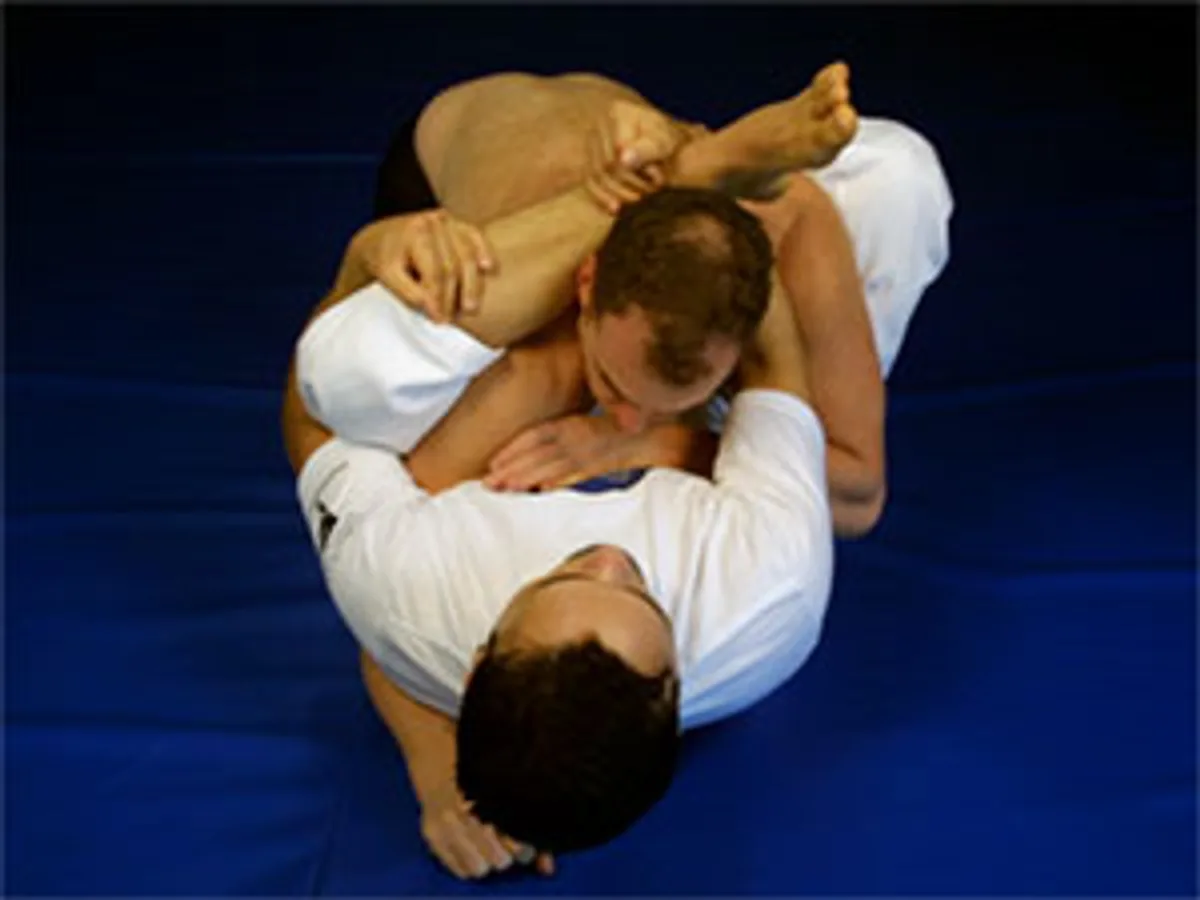
American founder of 10th Planet Jiu-Jitsu and the EBI, famous for submitting Royler Gracie at ADCC 2003 and for the rubber guard and twister.
United States · 10th Planet Jiu-Jitsu · Lightweight (−66 kg)
Community
Find your people
Great jiu-jitsu happens in great rooms. Explore editorially ranked academies and the coaches worth following.
Find a gym
106+ academies with locations, affiliations, instructors, and sources.
Browse gymsTop 10 gyms
An editorial ranking weighing competition history and global reach. Never paid placement.
See the rankingCreators to follow
50+ coaches and athletes teaching jiu-jitsu on YouTube, Instagram, and beyond.
Meet the creatorsGuides
Fresh from the blog
Rule explainers, technique comparisons, and honest advice for every stage of your training.
ADCC rules explained: points, legal moves and Opens
ADCC scoring, the no-points half, guard-pull penalties, match times from Worlds to the Opens, and which submissions each ADCC Opens division allows.
What is reaping in BJJ? Reap and false reap rules
The IBJJF definition of a knee reap, how the false reap differs, and where reaping is legal in IBJJF, ADCC, NAGA and Grappling Industries.
White belt tournament rules: IBJJF, NAGA, GI and ADCC
First BJJ tournament? White belt rules at IBJJF, NAGA, Grappling Industries and ADCC Opens: legal submissions, match length, points and weigh-in.
New to the mats
Beginner questions, answered
Straight answers to what every first-timer asks. Each one links to a full guide.
Do I need to be in shape before starting BJJ?
No. You can start BJJ at your current fitness level and build conditioning through consistent, well-paced classes.
Read the full answerHow many times a week should I train BJJ?
Most beginners should train BJJ 2 to 3 times per week, while progressing students can often train 3 to 5 times per week if they recover well.
Read the full answerHow long does it take to get a blue belt in BJJ?
Most adults reach blue belt after about 1.5 to 3 or more years of consistent training, but the timeline varies by attendance, instruction, competition experience, and gym standards.
Read the full answerShould beginners start with gi or no-gi?
Beginners can start with either gi or no-gi because both build real grappling skills, and most students benefit from trying both over time.
Read the full answerIs BJJ safe for beginners?
It can be, especially in gyms that teach tapping culture, control intensity, and fundamentals before hard sparring.
Read the full answerWhat should I wear to my first BJJ class?
Wear clean athletic clothes without pockets, zippers, or jewelry unless the gym provides or requires a gi.
Read the full answerStay on the mat
Train smarter between classes
Get new technique breakdowns, rule explainers, and upcoming tournaments and camps in your inbox.