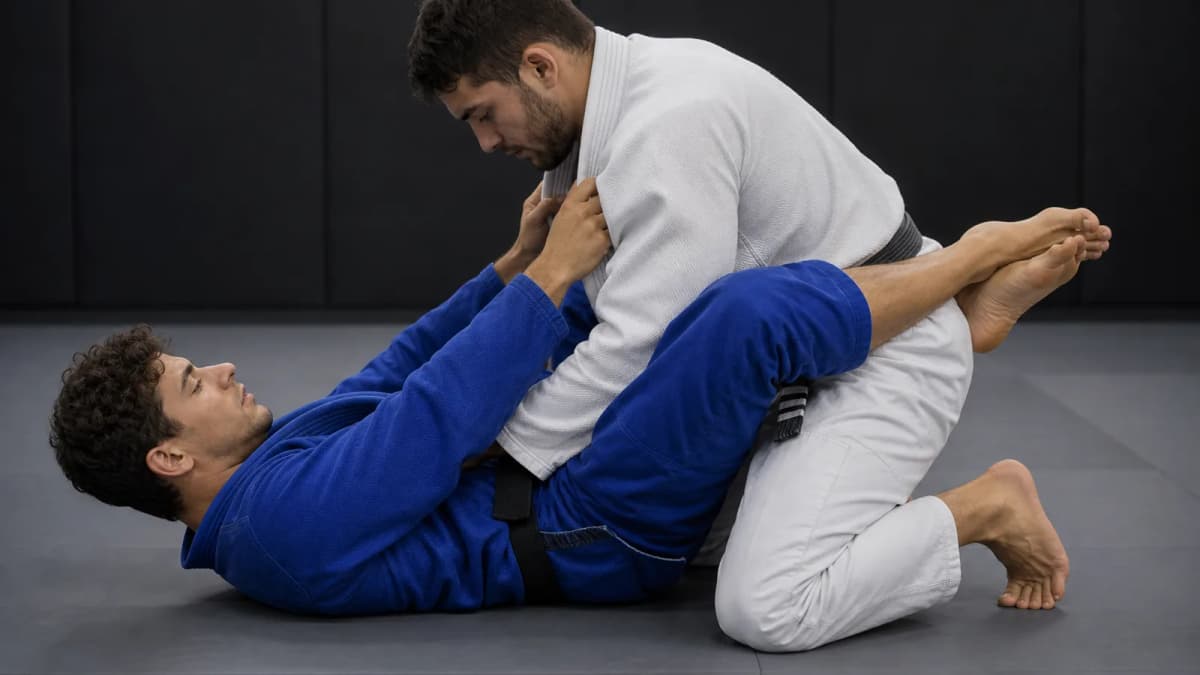
Closed Guard
Fundamental defensive guard with strong control and high-percentage attacks.
Overview
Position Flow
How to Enter
- Pull guard from standing with collar-and-sleeve grips
- Recover closed guard after preventing a guard pass
- Climb from open guard by locking ankles behind the opponent
- Transition from half guard once the knee line is cleared
How to Exit
- Hip-bump sweep to mount or technical stand-up
- Scissor sweep to strong passing positions
- Climb into triangle and armbar finish chains
- Transition to open guard systems when posture breaks stall
Key Controls
- Clamp ankles behind the opponent and engage the hips upward
- Control collar and sleeve (gi) or head and wrist (no-gi)
- Break posture with knee pinch, core crunch, and angle changes
- Use overhooks/underhooks to isolate a shoulder line
Vulnerabilities
- Standing guard breaks if posture is not controlled
- Double-under and stack passes when hips stay flat
- Knee-in-tailbone break if wrist control is lost
- Over-committing grips that expose the back during guard pulls
Ideal When
You want a beginner-friendly control hub that answers “what is this position for?” with posture breaks, two sweeps, and two submissions that share the same entries.
OffenseOffense
Goals
- Break the opponent’s posture before launching attacks
- Create angled positions that expose arms, neck, or balance
Key Techniques
- Hip-bump to Kimura chain
- Triangle choke, armbar, and omoplata series
- Cross-collar choke (gi) and loop choke variations
Pro Tips
- Rotate your hips to create dominant attack lines
- Link sweeps and submissions so the opponent must guess wrong
Common Mistakes
- Staying flat without disrupting posture
- Reaching with arms instead of controlling grips first
DefenseDefense
Goals
- Maintain upright posture with elbows tight to the ribs
- Open the guard safely before attempting to pass
Key Techniques
- Standing guard break with strong lapel or wrist control
- Knee-in-tailbone break into combat base passes
Pro Tips
- Keep head above hips to avoid being toppled
- Control sleeves or biceps to shut down arm attacks
Common Mistakes
- Driving forward with extended arms
- Opening the guard without a follow-up pass prepared
Variations
High guardOverhook guardRubber guardCross-collar guard
Key Concepts
- Angles create leverage—hip movement beats straight-line attacks
- Grip chains trump single isolated grips
- Posture control is the gateway to every sweep and submission
Recommended Drills
- Posture-breaking series with partner standing
- Hip-bump to triangle flow rounds
- Closed-guard retention against knee-in-tailbone break
Related Techniques
Summary
Closed guard rewards patient posture control: dominate grips, create angles, and chain sweeps with submissions before the passer ever clears your legs. Start with the beginner system article if you need a progression order.