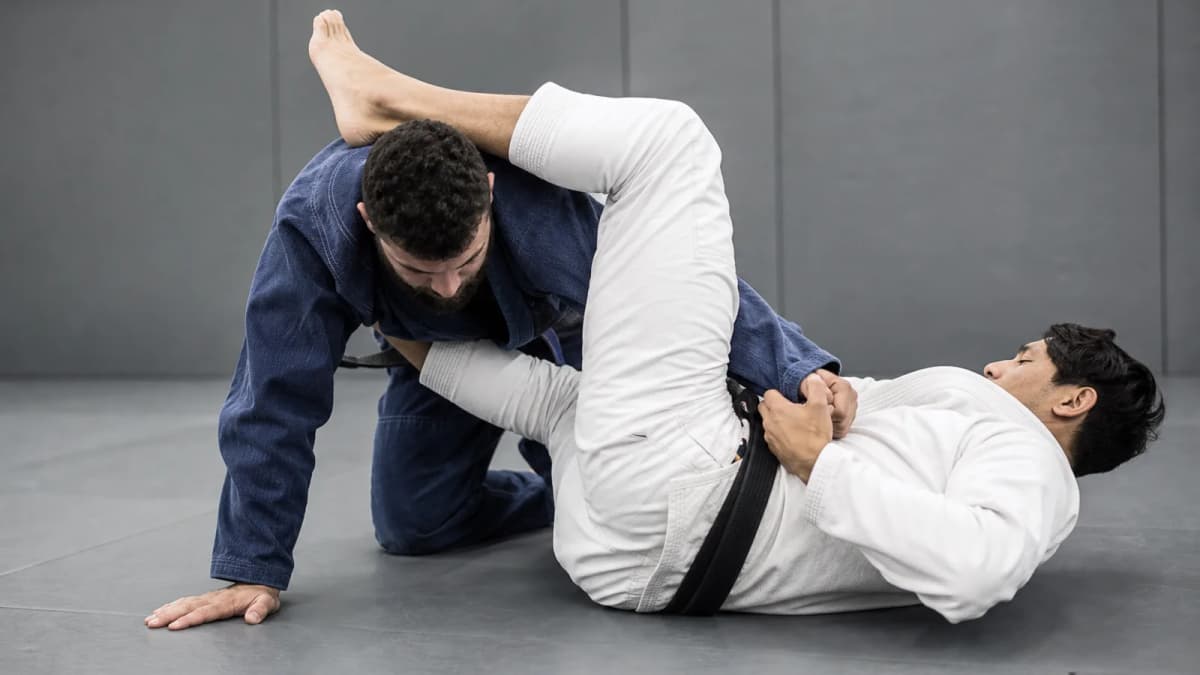
Rubber Guard
High-leg closed-guard system that uses extreme hip flexibility to control posture and create omoplata, gogoplata, and triangle paths.
Overview
Position Flow
How to Enter
- From closed guard, climb a high leg over the shoulder when posture breaks
- Enter after a failed triangle when the shin is already high
- Use a collar or underhook to freeze posture, then bring the leg over
How to Exit
Key Controls
- High leg hooked over the shoulder/back (mission-control style grips vary)
- Opposite-hand control on the wrist, head, or collar
- Hips angled so the high leg cannot be smashed flat easily
Vulnerabilities
- Smash passes when flexibility is forced without grips
- Knee stress if you yank the high leg without hip support
- Getting stacked when the high leg is shallow
Ideal When
You have the hip mobility and want a closed-guard control layer that creates non-standard submission angles.
OffenseOffense
Goals
- Freeze posture with the high leg before hunting finishes
- Chain omoplata, triangle, and gogoplata without resetting to open guard
Key Techniques
- Omoplata entries
- Triangle choke
- Gogoplata when mobility allows
Pro Tips
- Mobility is a prerequisite, not a substitute for grips
- Control the far wrist/head so they cannot simply stand out
Common Mistakes
- Forcing rubber guard with tight hips and injuring your own knee
- Climbing the leg with no posture break first
DefenseDefense
Goals
Key Techniques
- Posture and peel the high foot while basing
- Stack carefully along a safe line
- Stand and clear when grips are weak
Pro Tips
Common Mistakes
- Diving both hands to the high foot and losing base
- Turning the wrong shoulder into a cleaner triangle
Variations
Mission control style rubber guardNew York / East London type transitions in modern systemsRubber guard to conventional triangle chains
Key Concepts
- Flexibility enables the position; control wins the round
- Rubber guard is a system of high-leg control, not one move
- Train mobility progressively to avoid self-injury
Recommended Drills
Related Techniques