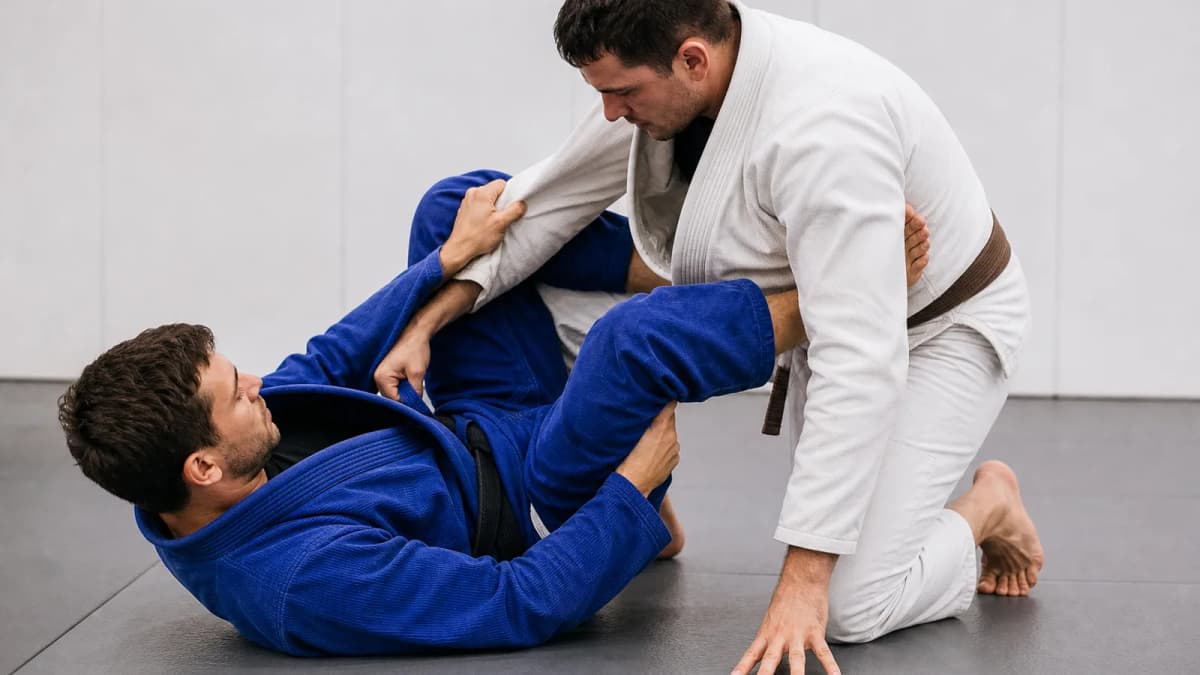
Open Guard
Dynamic guard system built on mobility, hooks, and grip chains.
Overview
Open guard is for managing distance with hooks and grips when the legs are not locked. From the bottom, chain spider, De La Riva, butterfly, and X-guard options. From the top, clear the feet and choose one pass family — torreando or knee cut — instead of improvising every scramble.
Position Flow
How to Enter
- Release closed guard to switch to feet-on-hips control
- Transition from seated guard into spider or lasso grips
- Recover guard after standing guard breaks
- Switch from butterfly guard when the top player disengages
How to Exit
- Technical stand-up into single-leg or takedown entries
- Invert to recover or enter leg entanglements
- Return to closed guard when distance shortens
- Swing into reverse De La Riva or K guard as posture changes
Key Controls
- Double sleeve grips (spider guard) to stretch posture
- Pant grip on the far leg paired with foot-on-hip control
- Collar-and-sleeve combinations for cross-collar drags
- Outside De La Riva hook wrapping the opponent's leg
Vulnerabilities
- Quick torreando passes if hooks are lazy
- Knee-cut pressure when hips fail to follow the passer
- Leg drags when ankles stay exposed and static
- Standing disengagement if grips and angles are weak
Ideal When
You want a modular distance-management hub that connects bottom guard variations and a clear top-side passing roadmap.
OffenseOffense
Goals
- Control distance and posture before launching attacks
- Link sweeps, submissions, and back takes from every guard variation
Key Techniques
- Collar-and-sleeve drag into takedown or back exposure
- Spider guard triangle and omoplata series
- De La Riva hook sweeps leading to leg drags
- K guard entries into leg entanglements or backside control
Pro Tips
- Stay seated or on a hip to keep mobility and leverage
- Constantly re-angle your hips to expose the opponent’s base
Common Mistakes
- Playing flat on the back without hooks engaged
- Reaching aimlessly for collars or ankles without structure
DefenseDefense
Goals
- Break grips before advancing past the leg line
- Stay heavy on hips to negate inversions and leg entanglements
Key Techniques
- Torreando pass with active grip breaks
- Knee-cut pass timed with shin-to-shin stuffing
Pro Tips
- Control both ankles to shut down angle changes
- Step around hooks quickly before they solidify
Common Mistakes
- Standing tall without clearing grips first
- Allowing consistent collar control that breaks posture
Variations
Spider guard with double sleeve gripsDe La Riva and reverse De La Riva systemsLasso guard for powerful control and attack chainsK guard and shoulder-crunch entries for modern inverted play
Key Concepts
Recommended Drills
- Flow between spider, lasso, and De La Riva guards
- Grip-fighting rounds with rapid re-gripping after breaks
- Technical stand-up reps transitioning to single-leg entries
- Inversion entries to develop modern leg entanglement systems
Related Techniques
Summary
Open guard is the Swiss Army knife of bottom positions—master grip chains, hook engagement, and rapid transitions so every pass attempt turns into your next sweep, leg attack, or back exposure. Use the passing roadmap when studying the top side.