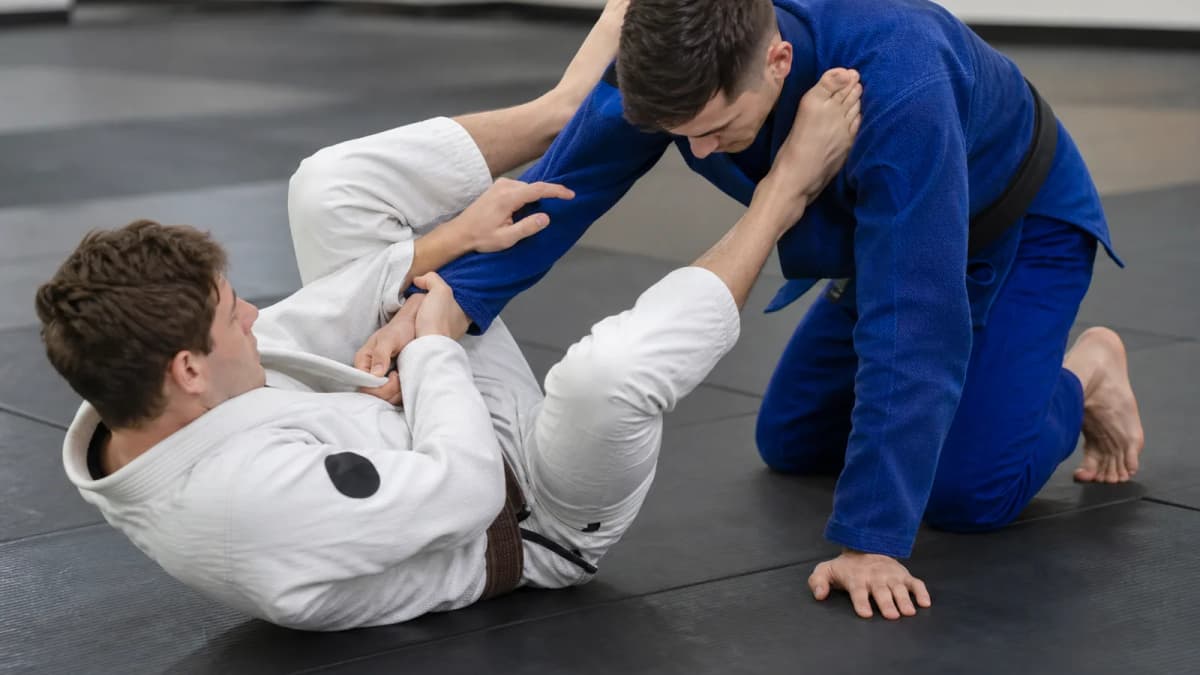
Lasso Guard
Gi open-guard system that wraps a sleeve-controlled arm with your leg — a high-control hub for sweeps, omoplatas, and spider combinations.
Overview
Lasso guard wraps one of the opponent’s sleeved arms with your leg while you control that sleeve. The wrap stalls toreando and knee-cut pressure, creates omoplata and triangle paths, and pairs cleanly with spider guard on the free side.
Position Flow
How to Enter
- Insert the lasso when they posture inside open guard with a gripable sleeve
- Transition from spider guard by feeding the near sleeve deeper and wrapping the leg
- Recover from a failed closed-guard break by catching the sleeve before they stand fully
How to Exit
Key Controls
- Deep sleeve grip on the lassoed arm with four fingers inside
- Shin and foot wrapping the arm so the elbow cannot swim free
- Secondary spider hook, De La Riva hook, or collar grip on the free side
Vulnerabilities
- Opponent grips your belt or pants and stacks through a shallow lasso
- Sleeve peel that frees the arm before the wrap deepens
- Standing passers who kick the free leg aside and walk past a loose wrap
Ideal When
You want gi-specific control that slows athletic passers and creates submission threats without needing closed guard.
OffenseOffense
Goals
- Keep the lassoed elbow trapped so they cannot posture and pass
- Force a reaction on the free side into sweep or submission
Key Techniques
Pro Tips
- Depth on the sleeve matters more than squeezing the wrap
- Use the free-side spider or collar to stop them walking around the lasso
Common Mistakes
- Wrapping a sleeve-less or shallow grip and calling it lasso
- Neglecting the free leg so toreando clears you instantly
DefenseDefense
Goals
- Peel the sleeve and clear the wrapping shin
- Stack or long-step past the free side before submissions start
Key Techniques
- Two-on-one sleeve peels with posture
- Knee-cut or toreando on the free leg while the lasso is shallow
- Stack pressure when they invert without secondary control
Pro Tips
- Address the sleeve first; kicking only the wrap rarely frees a deep lasso
- Keep your free elbow tight to deny triangle and omoplata angles
Common Mistakes
- Posturing straight into the wrap and feeding the omoplata
- Both hands fighting the lasso foot while the sleeve stays attached
Variations
Classic lasso with opposite-side spider hookLasso plus De La Riva on the free legReverse lasso configurations used in modern gi guard play
Key Concepts
- Lasso is a control system, not a single sweep
- Sleeve depth decides whether the wrap sticks under pressure
- Always have a plan for the free side — spider, DLR, or collar
Recommended Drills
- Sleeve-feed to lasso wrap reps from seated open guard
- Lasso retention rounds against toreando pressure
- Omoplata and triangle chains from a locked lasso
Related Techniques
Summary
Lasso guard wins by trapping a sleeved arm with your leg and owning the free side. Feed depth, keep the wrap honest, then cash out to omoplata, triangle, or sweep when they fight the control.