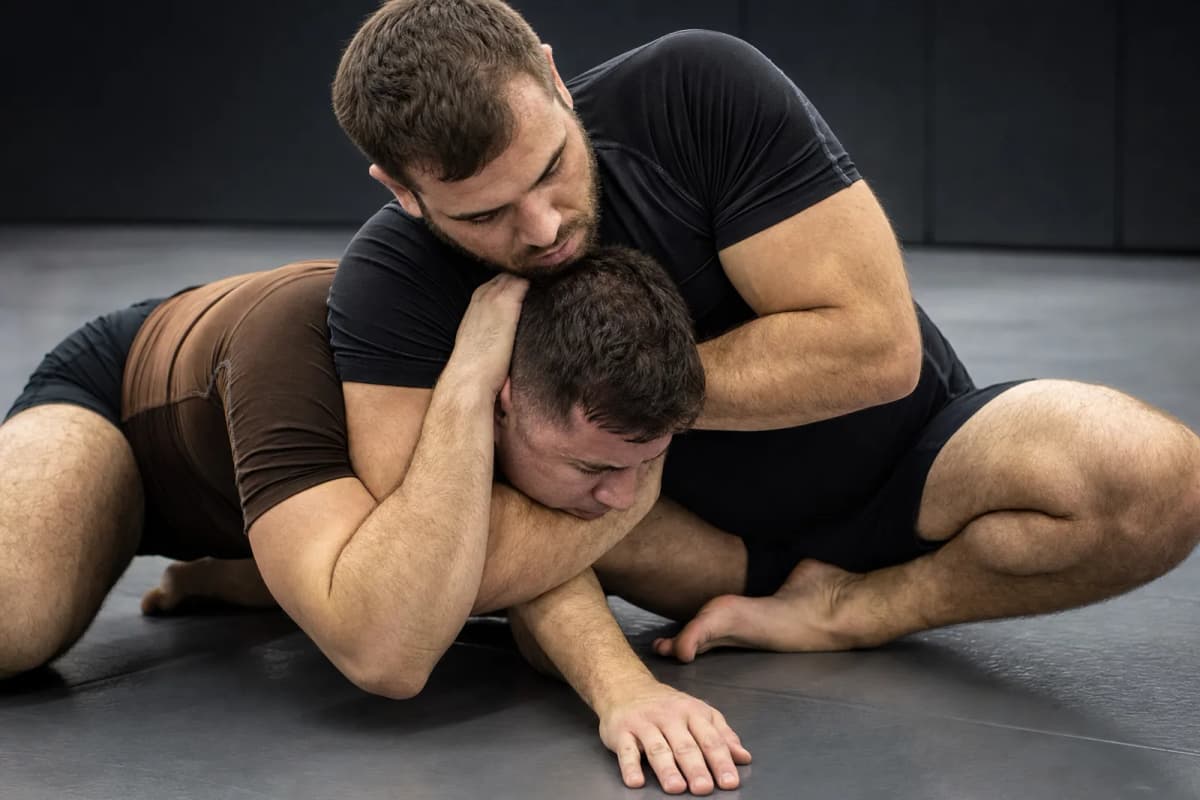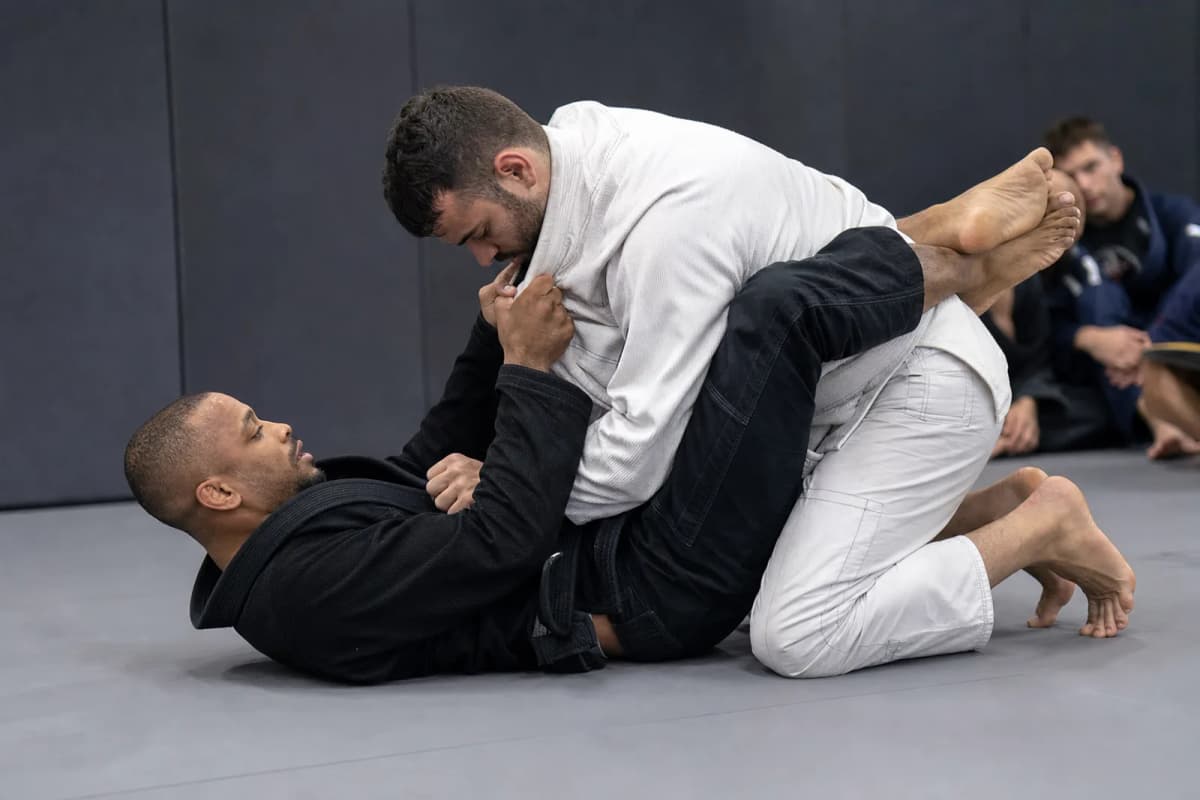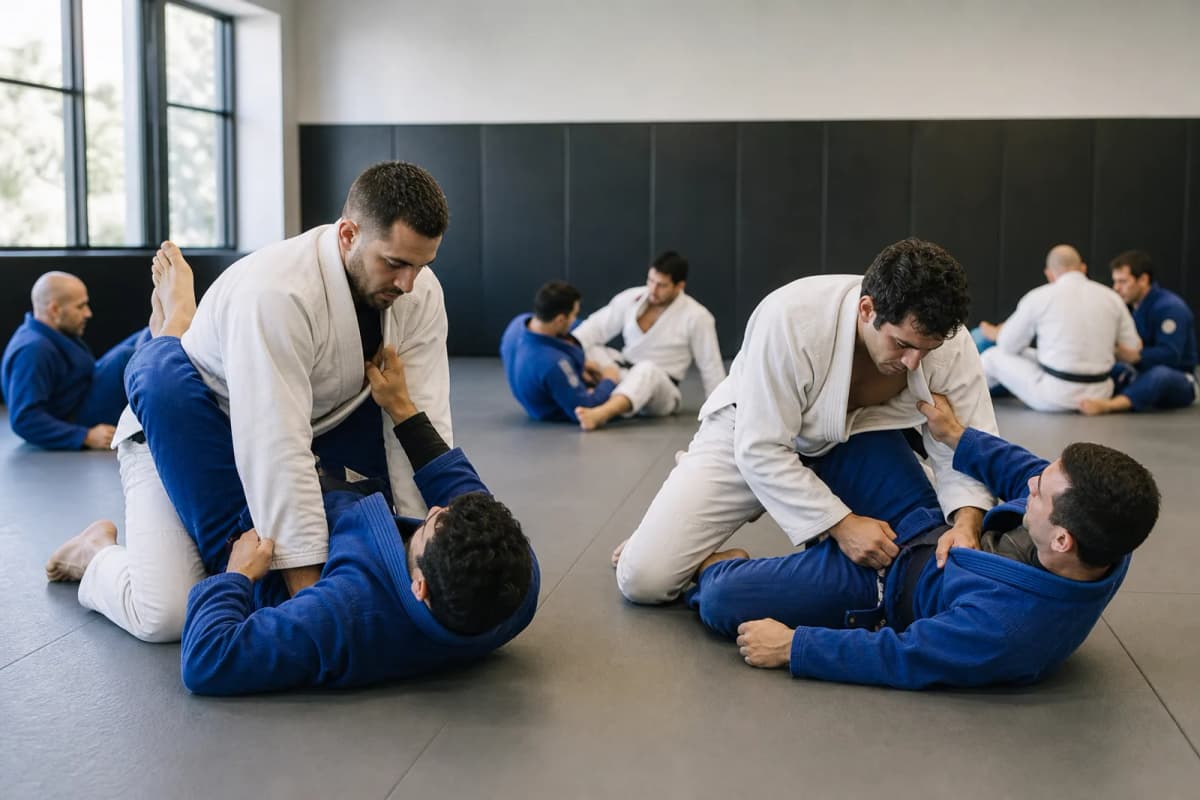
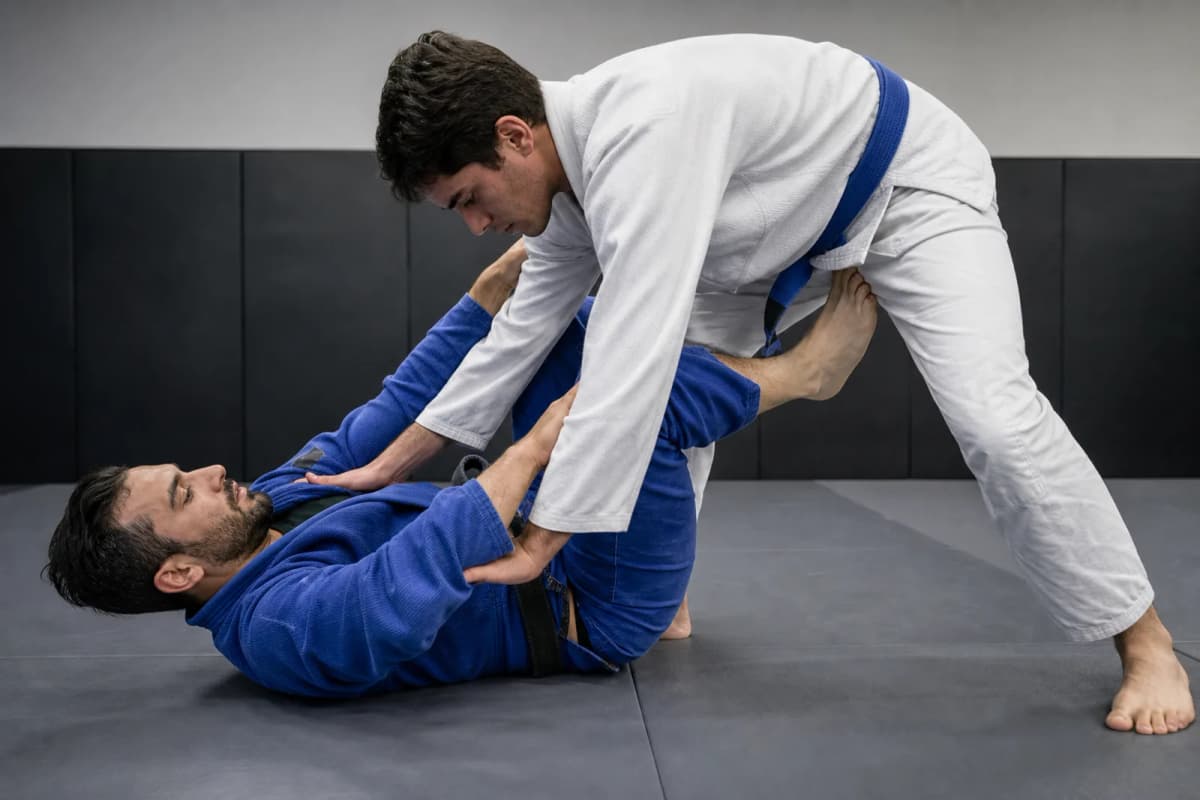
A strong guard frustrates pressure passing, creates offensive chains, and keeps you attacking even when you are on bottom.
Treat your guard like a living structure: grips, hooks, and angles keep your opponent at bay while you hunt for off-balancing moments.
Your first priority is distance management. Inside guards (butterfly, closed) call for tight frames and hip mobility. Outside guards (lassos, collar-sleeve) require posture-breaking grips and aggressive angles.
Grip Hierarchy
Establishing a dominant grip sequence (e.g., sleeve + collar) unlocks predictable guard attacks. Protect these grips with constant tension.
Hip Mobility
Hip-switch drills and Granby rolls keep your torso aligned behind frames, preventing smash passes and exposing back-take angles.
- Keep knees active and inside opponent’s elbows to deny chest-to-chest pressure
- Block their shoulders with shins or forearms when they close distance
- Reset to safe frames whenever grips break or hips become stuck
Guard attacks work best in sequences. Use kuzushi (off-balancing) to force reactions, then funnel into submissions or sweeps. The more committed they are to defending, the easier it is to dictate the tempo.
Collar Sleeve Flow
Pull posture forward, off-balance to the side, then chase triangle, omoplata, or back takes depending on reactions.
Butterfly Sweep Ladder
Underhook and sit up, threaten the hook sweep, transition to arm drag or belt grip to take the back when they post.
Key Takeaways
- Guard work revolves around managing distance and angles—not just collecting grips.
- Every guard entry should lead to a two-step attack plan: off-balance first, finish second.
- Recovery is part of guard success; drill guard re-entries with as much intent as submissions.
Training Drills
Develop relentless guard recovery against pressure passes.
- Partner begins in headquarters or split squat passing stance
- Bottom player pummels for inside hooks and re-establishes frames
- Switch roles every 60 seconds to simulate live pressure
Chain sweeps to submissions without resetting grips.
- Initiate with collar sleeve off-balance to gather reactions
- Transition into triangle, omoplata, or back take as they defend
- If attack fails, hip escape to re-guard and repeat sequence