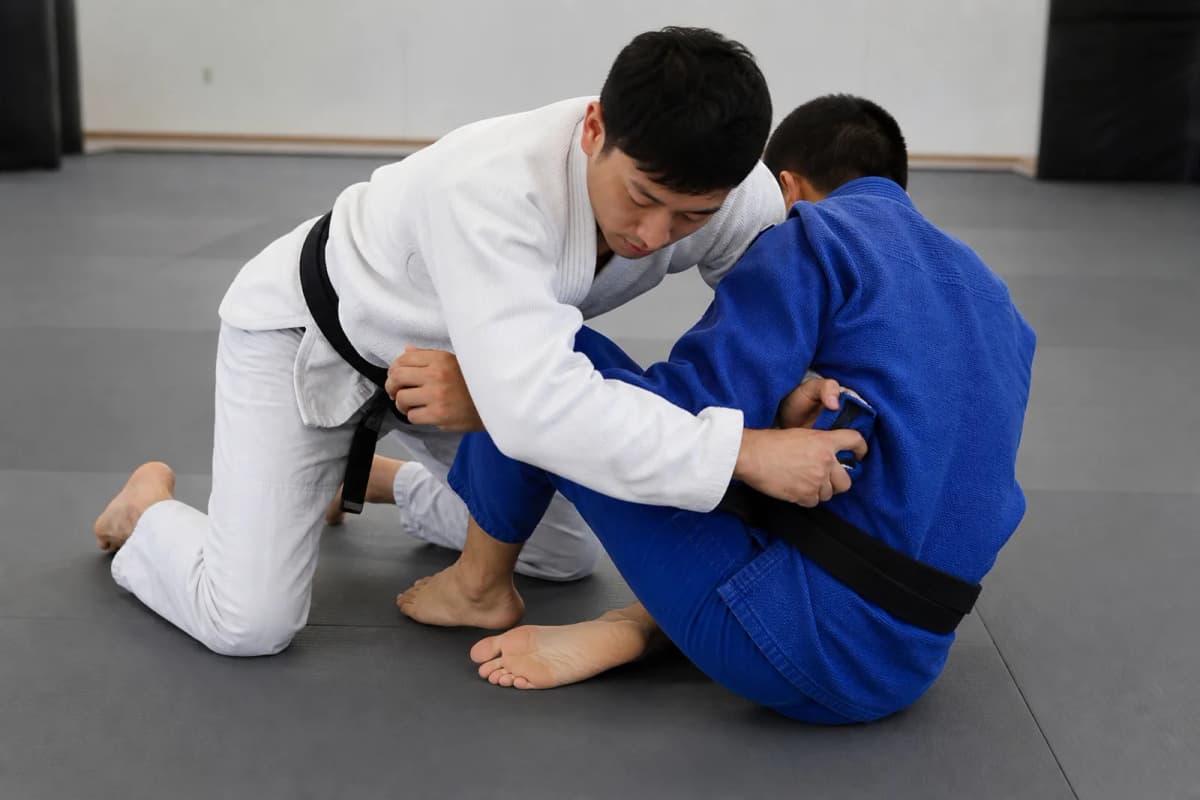
Arm Drag
Pull the opponent’s arm across the body to expose the back — essential no-gi entry from standing and guard.
From Standing / Seated GuardTo Back Control
Overview
The arm drag captures the opponent’s wrist and tricep, pulling the arm across their centerline while you move to the back. It works from standing ties, butterfly guard, and seated guard — making it one of the most versatile no-gi transitions.
#Drag and Move
- Grip wrist and tricep on the same arm
- Pull arm across body while stepping to the back side
- Keep connection through the drag — no gap between chest and arm
#Secure the Back
- Insert near hook and seatbelt grip
- Pull opponent onto the hook with leg retraction
- Threaten RNC to freeze defensive hand fighting
Key Grips & Control Points
- Wrist control on the arm you drag
- Tricep or elbow grip on the same arm
- Head position on the opposite shoulder during the move
Timing & Movement Cues
- Drag when the opponent reaches for your collar or sleeve
- Move to the back as you pull — stationary drags get sprawled on
- Take the back before re-gripping
Typical Counters to Expect
Follow-Up Options
- Back control with seatbelt grip
- Rear naked choke when hooks insert
- Single leg when they turn into the drag
Setups & Entries
- Same-side collar tie into drag in no-gi
- Butterfly guard two-on-one wrist control
- Failed single leg that exposes an overextended arm
Training Drills
- Standing arm drag to back take repetitions
- Drag vs sprawl reaction rounds
- Butterfly guard drag chain with hook insertion
Coaching Notes
- Pull across the centerline, not straight toward you
- Your head goes to the opposite side as the drag completes
- Do not release the tricep until hooks or seatbelt are secure
Related Study
Connect this movement with complementary positions and attacks.
Summary
Arm drag is the simplest back take in no-gi. Grip wrist and tricep, pull across, move behind — then insert hooks before they recover posture.