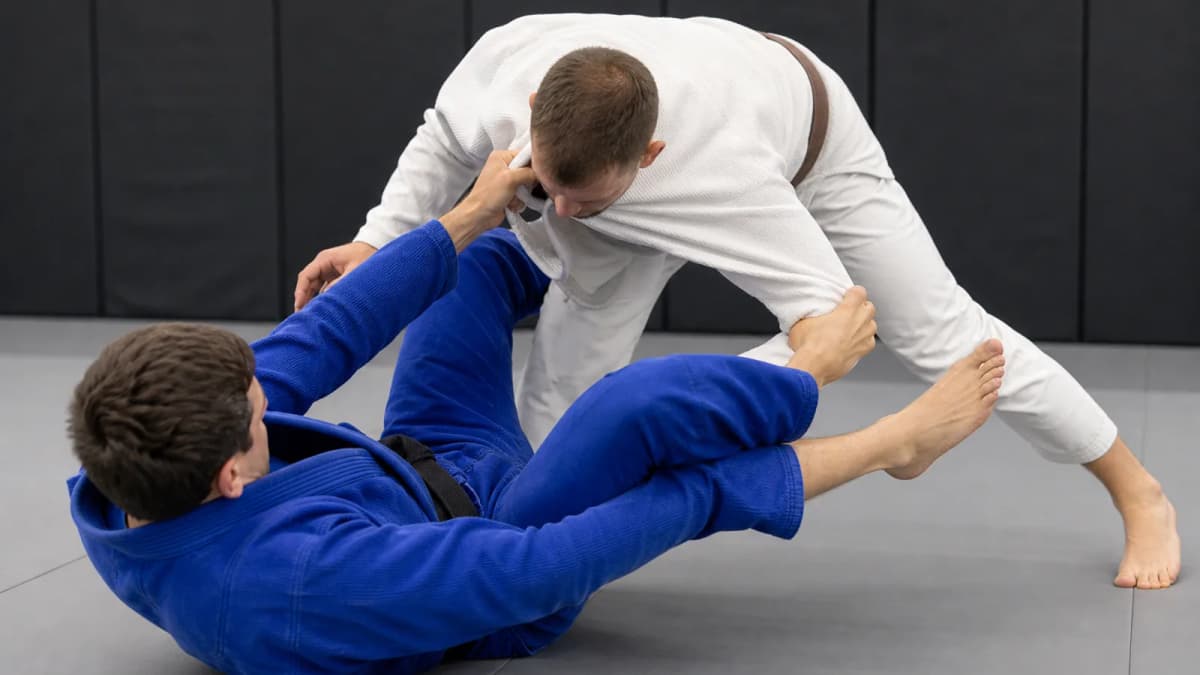
What is the Collar Drag?
The collar drag uses a same-side collar grip to yank the opponent’s posture forward while you angle to their back. It pairs naturally with tripod sweeps and back takes from seated guard — a fundamental gi connection game.
Drag Posture Forward
- Grip same-side collar and opposite sleeve or wrist
- Pull collar across your centerline while hip scooting behind
- Break their posture forward off base
Back or Sweep
- Insert hook and seatbelt if back is exposed
- Tripod sweep if they base back on hands
- Threaten bow and arrow when collar depth is maintained
Key Grips & Control Points
- Same-side collar grip deep behind the neck
- Sleeve or wrist control on the opposite arm
- Foot on hip or mat for base during the drag
Timing & Movement Cues
- Drag when the passer reaches for your legs with upright posture
- Pull collar toward your opposite hip while scooting behind
- Combine drag with tripod lift when they resist backward
Follow-Up Options
- Back control with collar grip maintained
- Tripod sweep when they base backward
- Bow and arrow when back is secured with deep collar
Setups & Entries
- Collar-sleeve guard against kneeling passer
- Failed cross-collar choke that converts to drag
- Seated guard when opponent stands with loose posture
Training Drills
- Collar drag to back take with progressive resistance
- Drag-or-tripod reaction drill
- Seated guard collar fighting rounds
Coaching Notes
- Deep collar grip — shallow grips slip off
- Scoot hips behind during the pull, do not pull with arms alone
- Maintain second-hand control on the far arm
Related Study
Connect this movement with complementary positions and attacks.
Summary
Collar drag is gi grip fighting at its best. Deep collar, hip scoot behind, and take the back or sweep before posture returns.