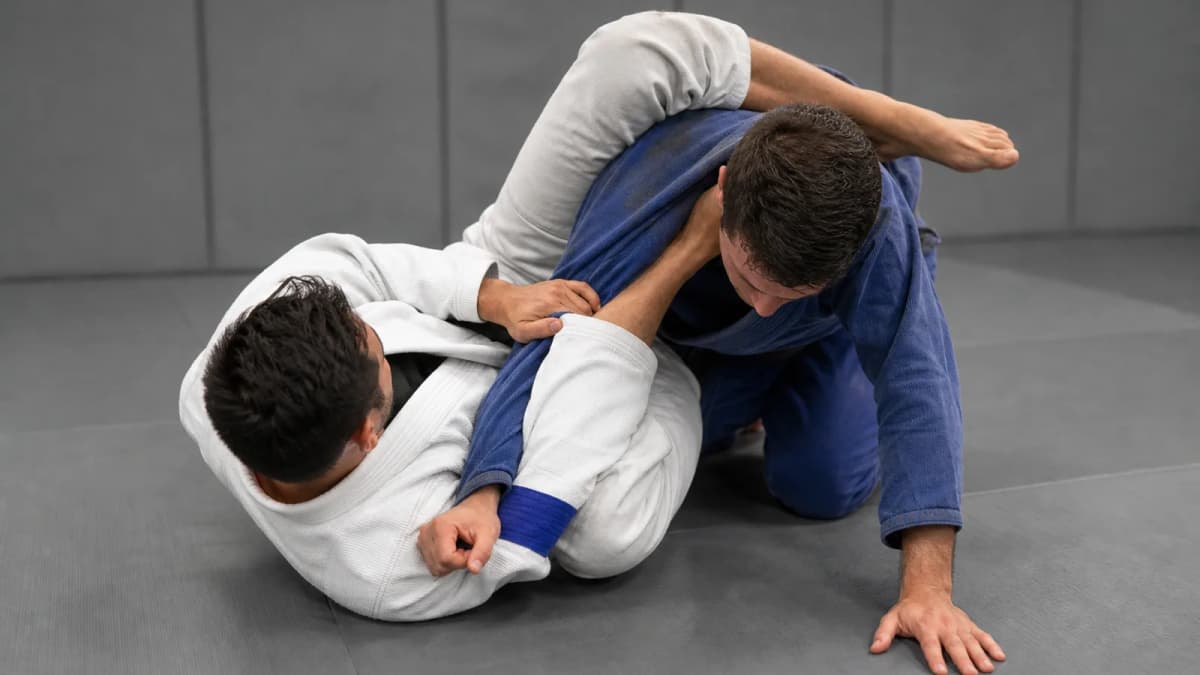
Omoplata
Shoulder lock using your legs from guard — a natural follow-up to triangle and armbar attacks.
shoulder lock
Overview
The omoplata traps an arm with your legs and rotates the shoulder by sitting up and driving forward. It completes the classic guard submission triangle — triangle choke, armbar, and omoplata — giving bottom players multiple finish lines from the same grip setup.
#Setup
- From triangle setup, thread the trapped arm across your body instead of locking the neck.
- Sit up, place the leg over the shoulder, and control the hips with your free leg.
- Grip the waist or belt to prevent them from jumping over your legs.
#Execution
- Pinch knees and sit perpendicular to the opponent.
- Drive forward with chest and hips while lifting the trapped elbow.
- Roll through if they posture up, following into a finish or sweep.
#Finishing
- Keep their posture broken — posture kills omoplata pressure.
- Use the lock as a sweep when they base wide; come up on top into side control.
⚠️
Safety Note
Omoplata loads the shoulder joint. Finish with controlled hip drive in training and avoid explosive twists when their posture is already broken.
Primary Targets
- Shoulder
Key Concepts
- Same entry as triangle — change the finish based on arm position.
- Sit-up momentum matters more than leg strength.
- Treat omoplata as a positional sweep when the submission stalls.
Primary Entries
- Failed triangle when the opponent hides their neck but leaves an arm across.
- Collar-sleeve guard when they post a hand on the mat.
- Spider or lasso guard when one arm extends.
Defenses & Counters
Follow-Ups
- Triangle when they pull the arm back inside the hip line.
- Armbar if they stack forward and straighten the trapped arm.
- Sweep to side control or back take on the roll-through.
- Triangle when they pull the arm back inside.
- Armbar when they stack forward.
Training Drills
- Triangle-omoplata-armbar flow rounds from closed guard.
- Sit-up omoplata entries with hip angle emphasis.
- Roll-through sweep to top control repetitions.
Related Techniques
Deepen your study with complementary positions and attacks.
Summary
The omoplata completes the guard submission toolkit. Learn it as part of a chain — when the triangle closes the neck or the armbar straightens the arm, the omoplata attacks everything in between.