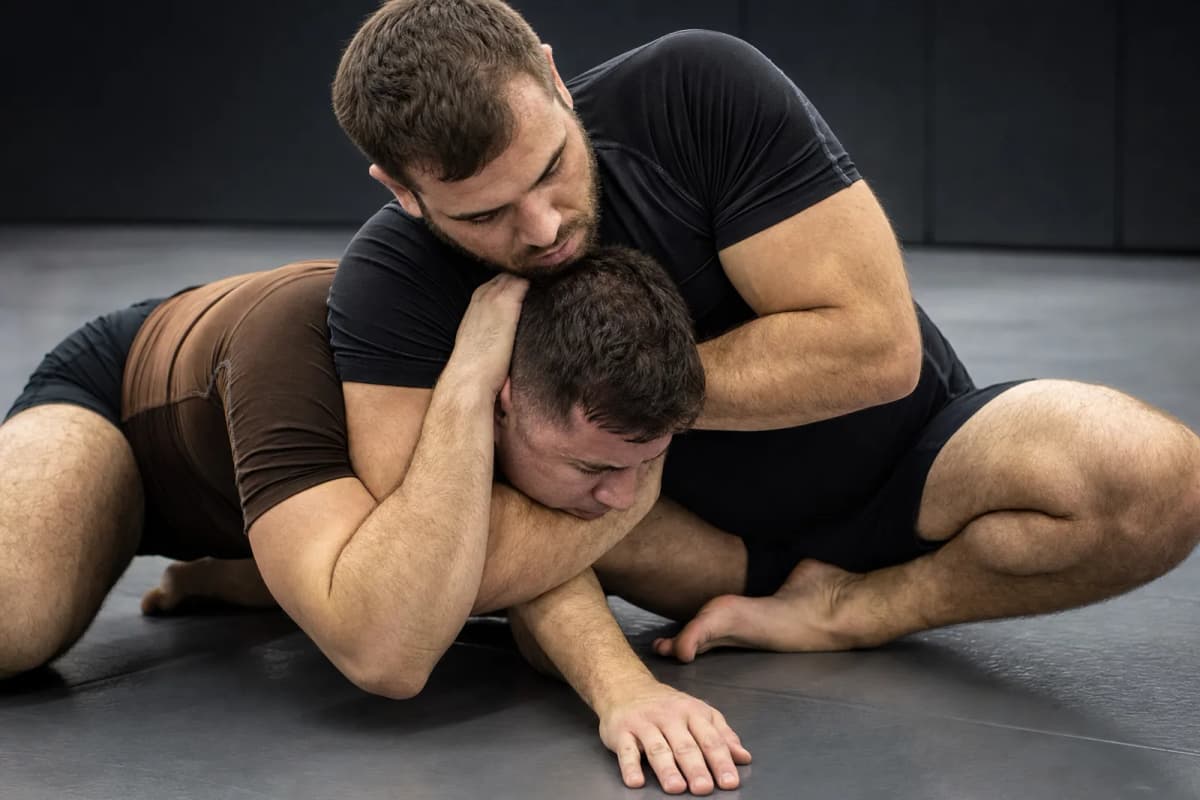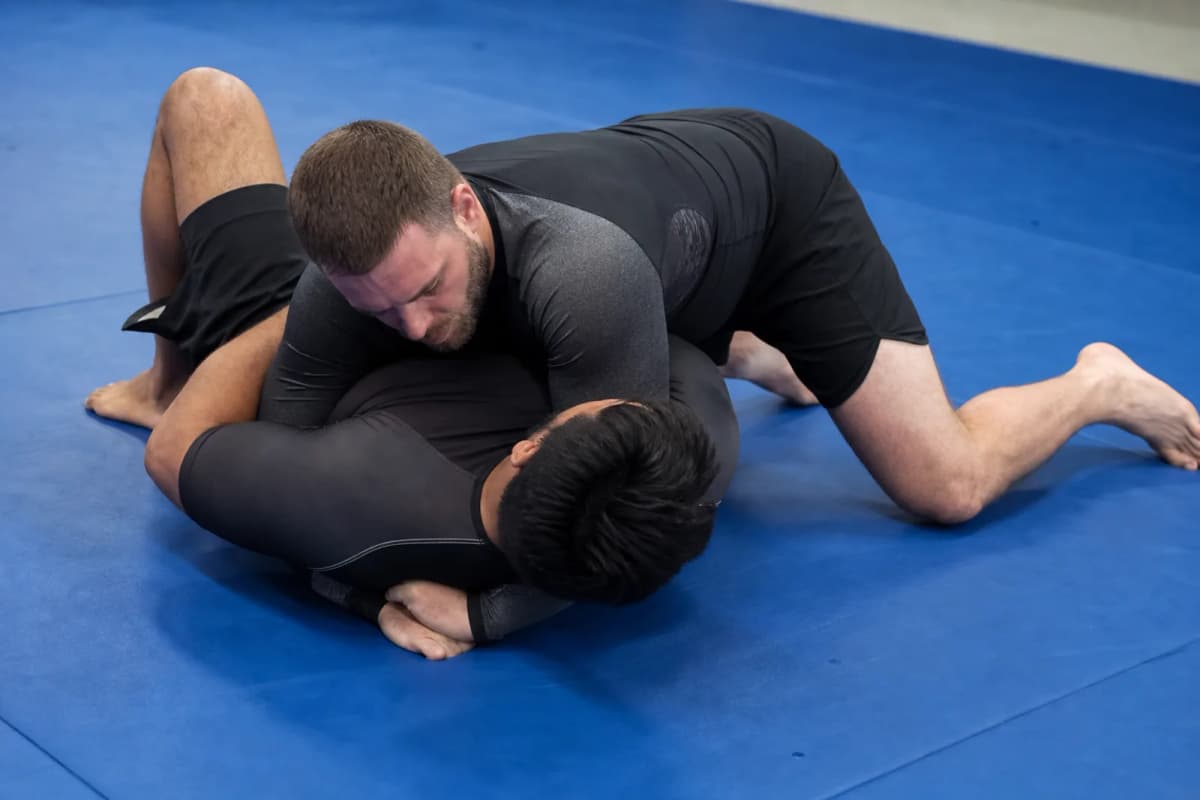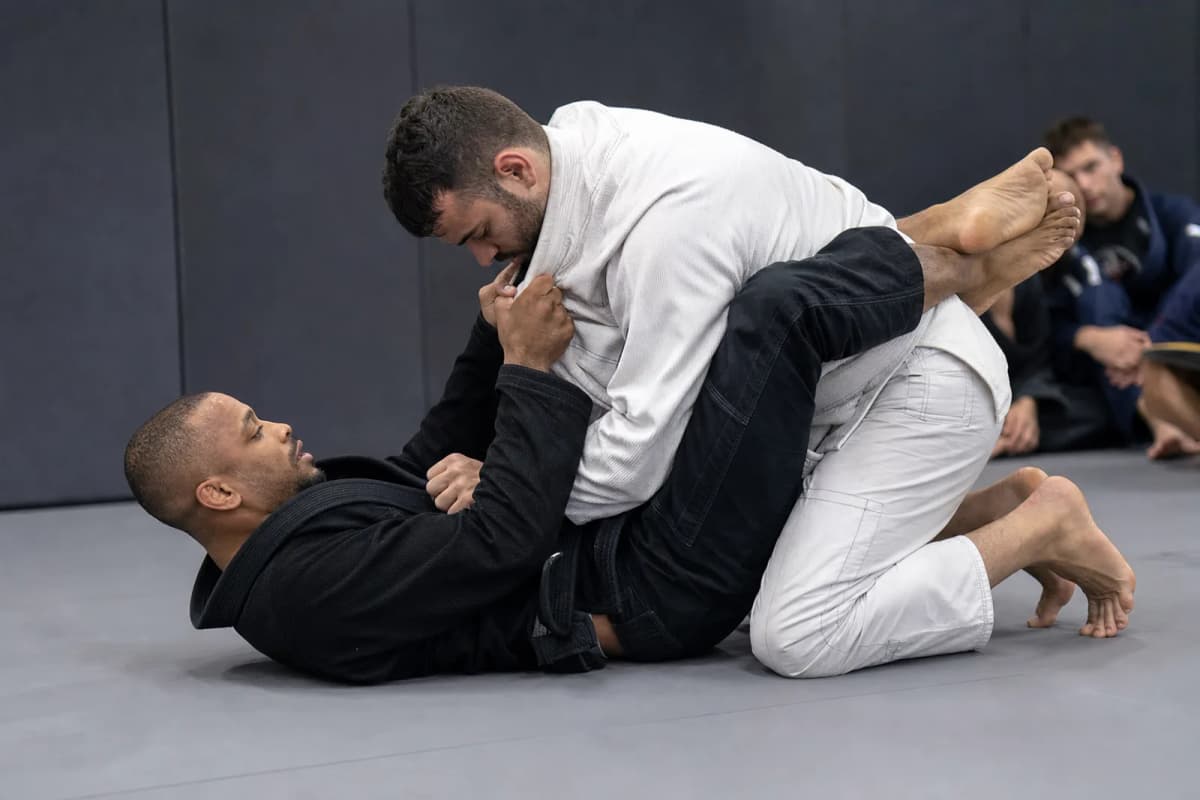
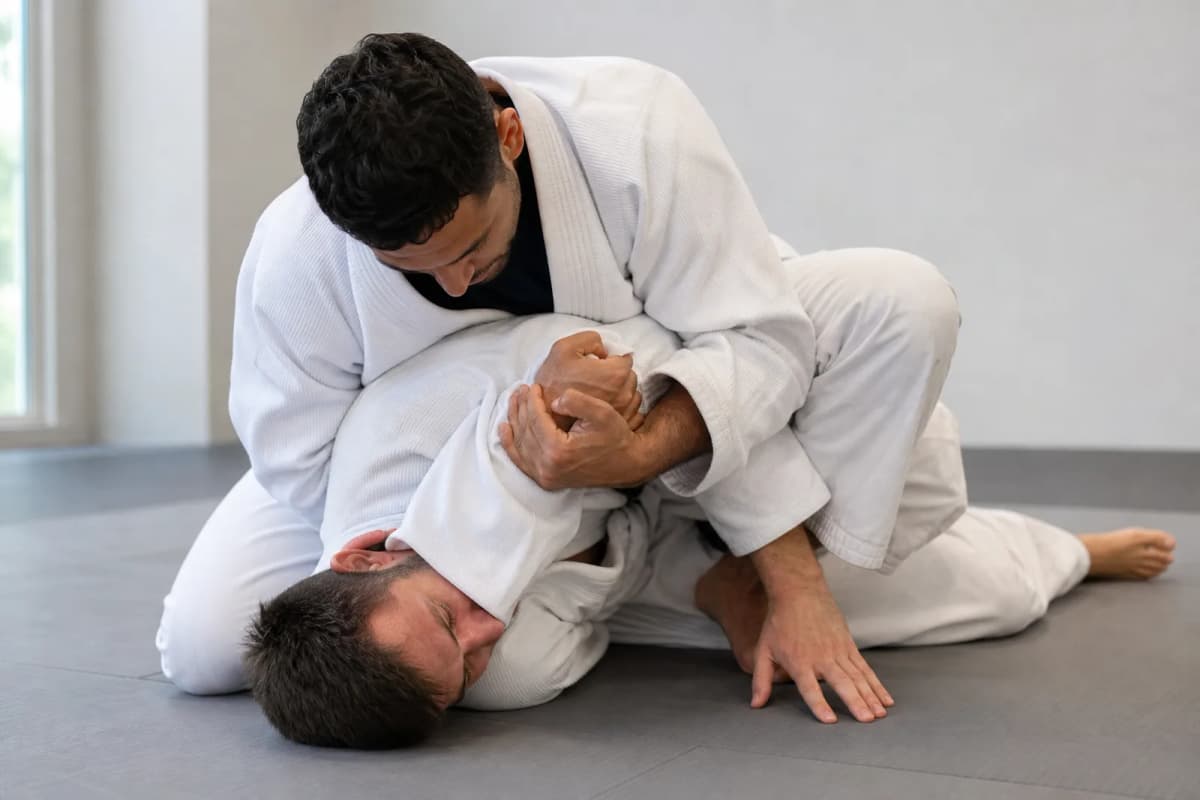
Use the omoplata when your legs already control the shoulder from guard; use the kimura when you can sit up and finish with a figure-four grip.
Both finish the same shoulder family, but one is a leg lock on the shoulder and the other is an upper-body figure-four.
An omoplata wraps the opponent’s arm with your legs so your hips and shin create shoulder rotation while you control posture from the bottom. It rewards strong hip angles, a trapped elbow, and the ability to sit up or climb onto the shoulder after the wrap.
A kimura from guard uses a figure-four grip on the wrist and elbow so you can rotate the shoulder with your hands and torso. It rewards sitting up, clearing the elbow from the ribs, and keeping the wrist pinned while your hips create the angle.
Omoplata cue
Your legs already beat posture and the arm is trapped across your body in a shoulder-lock shape.
Kimura cue
You can sit up, get two-on-one control of the wrist/elbow, and rotate before the opponent squares back up.
- Choose omoplata when triangle or armbar attempts leave the arm wrapped by your legs
- Choose kimura when the opponent posts a hand, reaches across, or gives you a clear wrist to isolate
- Favor omoplata when you want a shoulder lock that also threatens sweeps and top transitions
- Favor kimura when you want a faster grip-based finish or a bridge into back takes and armbars
- Switch if the elbow escapes your preferred control instead of muscling one finish through
Both attacks fail when you chase the hand and lose the elbow.
On the omoplata, the common error is crossing the legs and yanking before the hips cut the shoulder line. Keep the elbow trapped, flatten posture, then rotate through the shoulder with controlled hip pressure.
On the kimura from guard, the common error is sitting up without breaking the elbow free from the ribs. Clear the elbow first, lock the figure-four, then use your hips and shoulder angle to finish slowly.
Key Takeaways
- Omoplata is the better choice when your legs already own the shoulder line.
- Kimura from guard is the better choice when you can sit up into a figure-four.
- The strongest guard players switch between both without forcing one finish.
Further Study
Leg-based shoulder lock from guard with chain attacks.
Figure-four shoulder attack from closed or open guard.
The other major guard finishing fork that feeds these attacks.