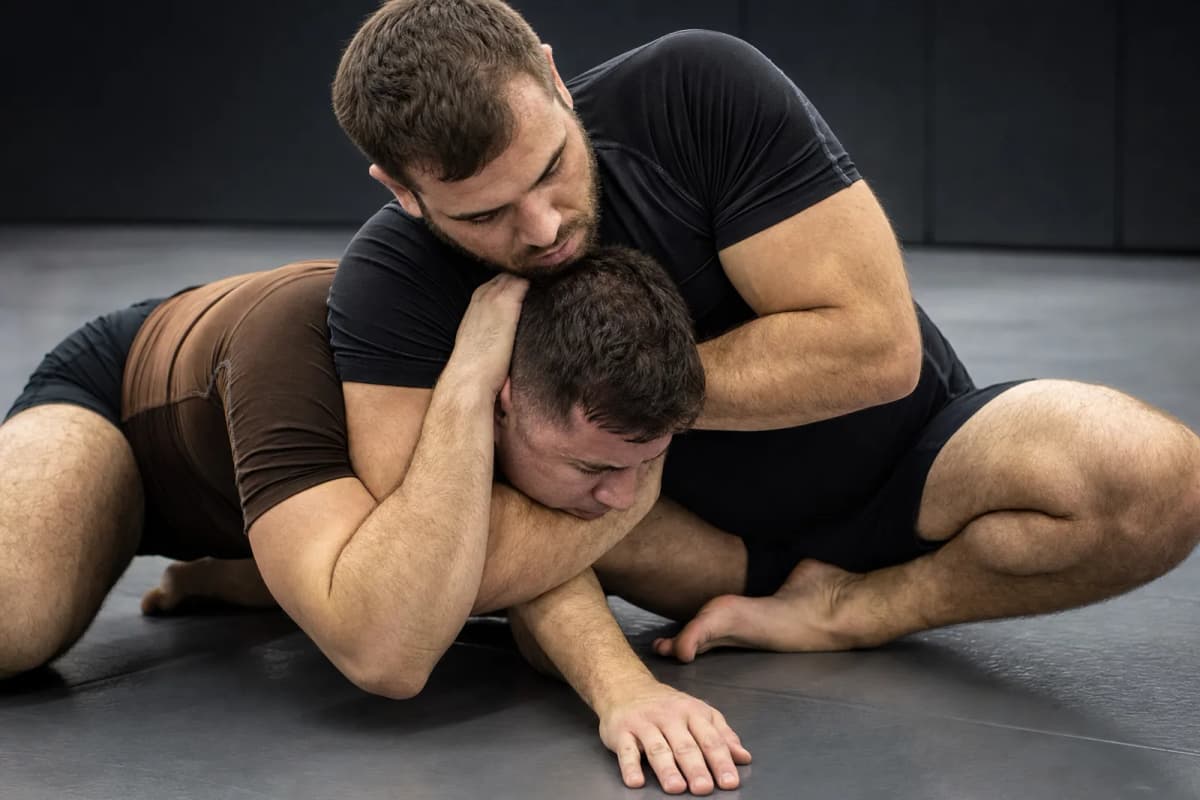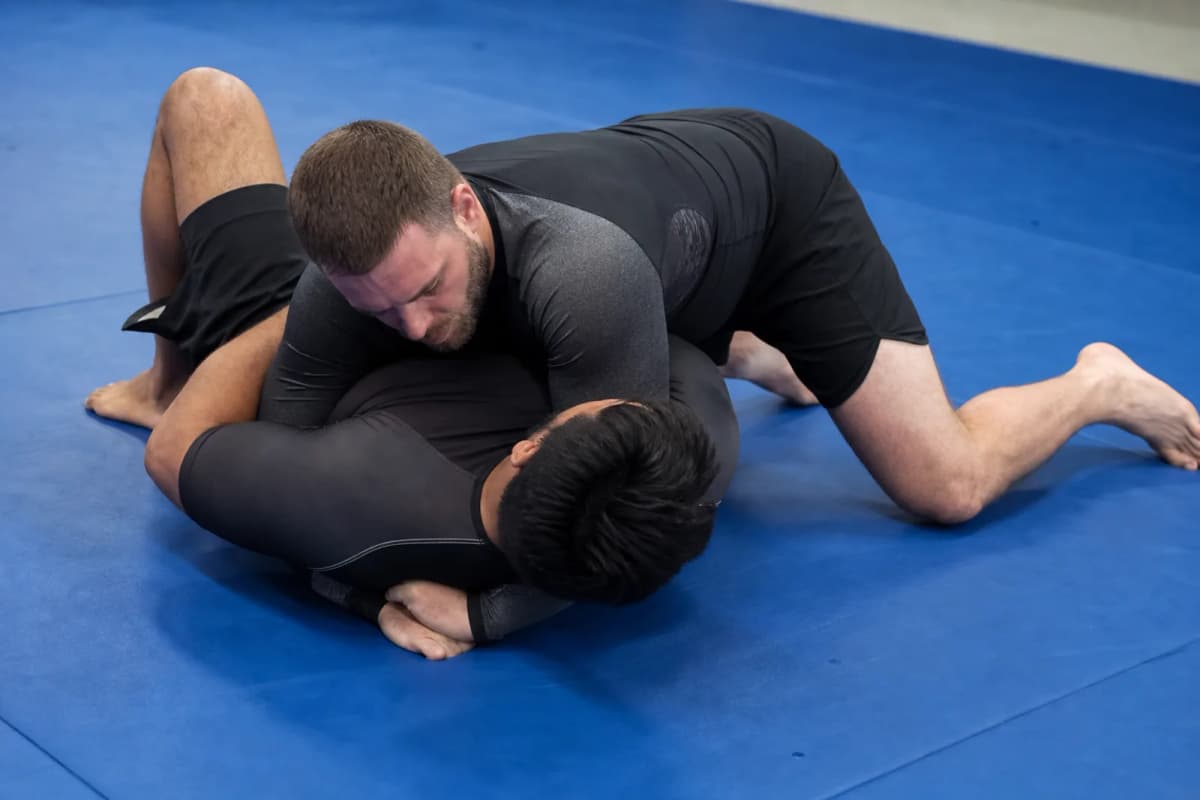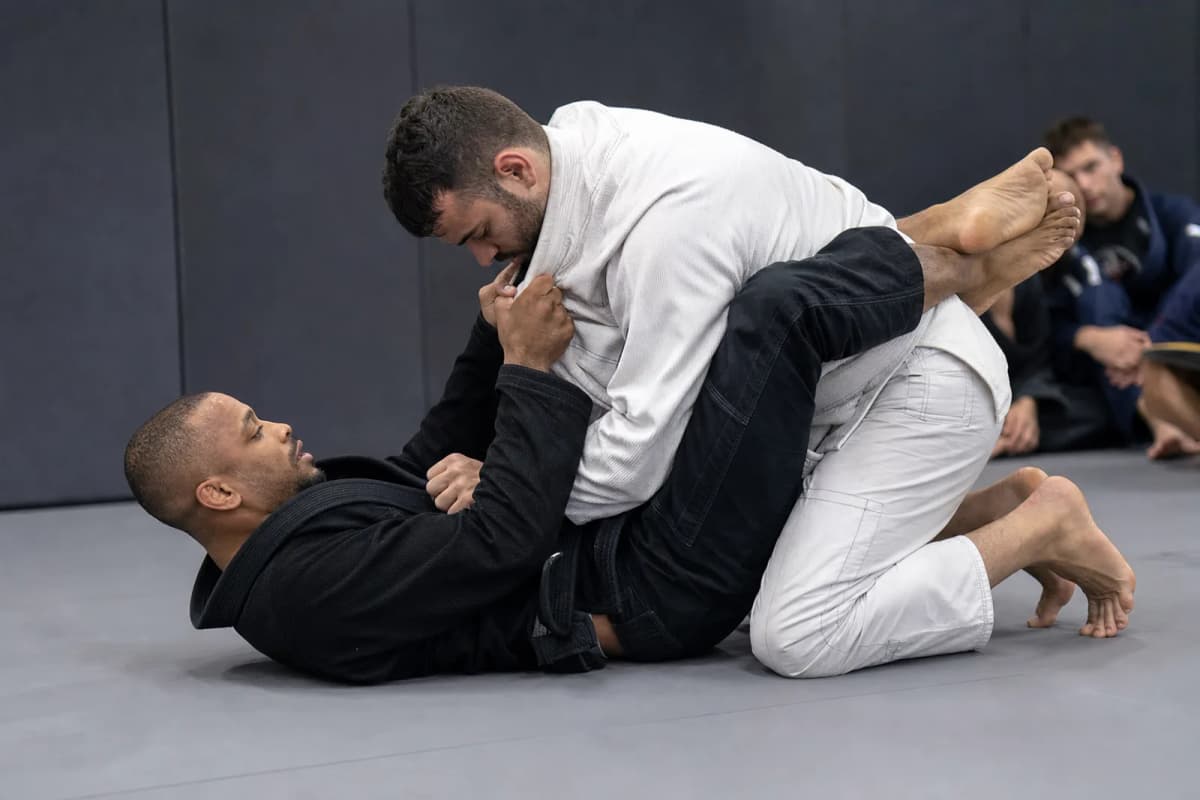
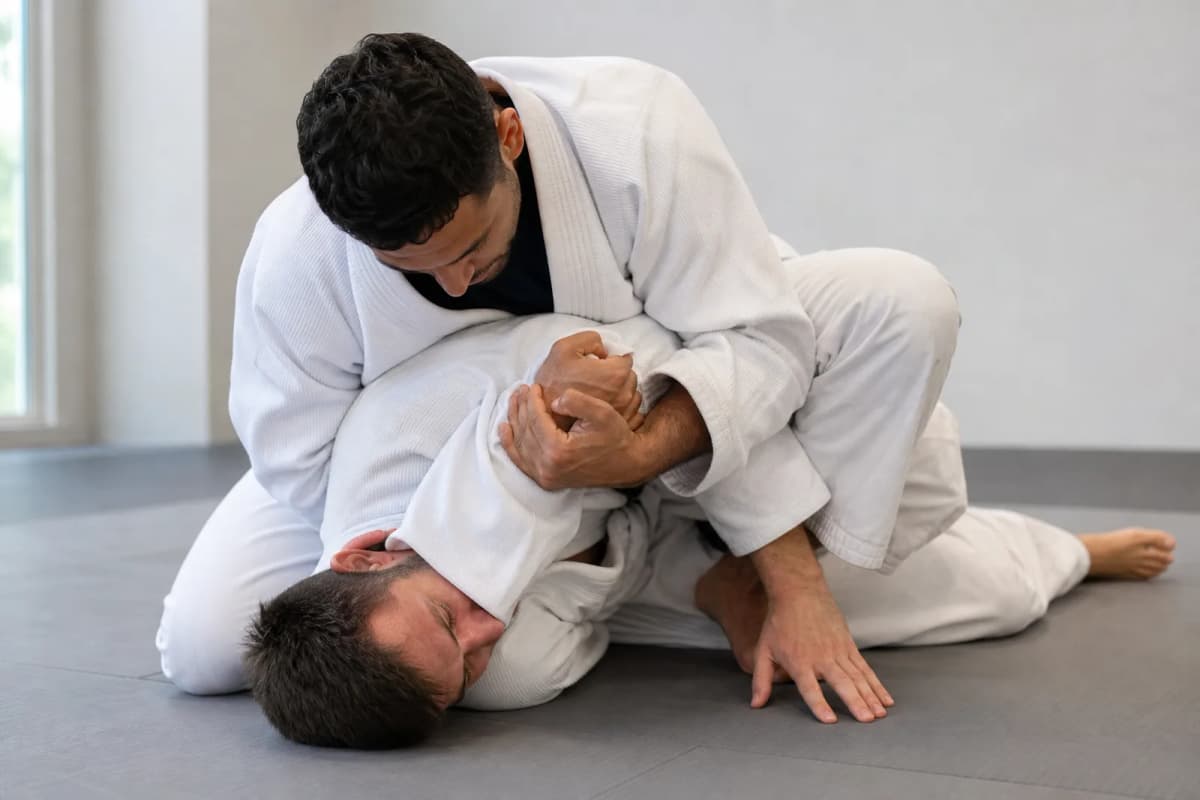
The kimura is the better choice when you can rotate the shoulder across the centerline; the americana is the better choice when top pressure traps the elbow flat beside the head.
Both attacks are shoulder locks, but they rotate the shoulder in opposite directions and reward different body positions.
A kimura uses a figure-four grip to drive internal shoulder rotation while controlling the wrist and elbow line. It works best when you can sit up, angle off, or pull the arm behind the opponent before they square back up.
An americana uses a figure-four grip to drive external shoulder rotation. It is usually strongest from side control or mount because your chest, head, and hips can pin the opponent while their hand is pushed toward the mat.
Kimura direction
The elbow is separated from the ribs and the hand is steered behind the opponent, which makes the shoulder rotate inward.
Americana direction
The elbow stays bent near the mat and the hand is walked down, which makes the shoulder rotate outward.
- Use the kimura when the opponent posts an arm, reaches across your body, or exposes the elbow during a guard or scramble exchange
- Use the americana when you already have stable side control or mount and can pin the wrist without losing chest pressure
- Favor the kimura when you want a control system that can become a sweep, back take, armbar, or omoplata transition
- Favor the americana when the opponent frames poorly from bottom and gives you time to isolate the elbow
- Switch attacks if the shoulder line changes instead of forcing one lock through strong defensive posture
Most failed shoulder locks come from chasing the hand while losing the elbow.
For the kimura, the common error is pulling with the arms while the opponent keeps their elbow glued to the ribs. Move your hips and shoulder line first, then use the grip to rotate the joint.
For the americana, the common error is lifting your chest to hunt the wrist. If your pressure disappears, the bottom player can turn, recover frames, or straighten the arm before the lock becomes tight.
Do not finish with arm strength
Both locks need shoulder positioning, elbow isolation, and slow rotational control before finishing pressure matters.
Respect tap speed
Shoulder locks can become dangerous quickly once the elbow is isolated, so apply pressure gradually in training.
Key Takeaways
Further Study
Study the figure-four shoulder control that connects to sweeps, back takes, and submissions.
Review the top-pressure shoulder lock most often attacked from side control and mount.
A primary control position for isolating the americana and forcing defensive frames.
A dominant top position where shoulder locks become available once elbows separate.