Choose the cross collar choke when deep collar grips and posture control are available; choose the Ezekiel when a sleeve-and-forearm wrap can finish while their hands are busy defending collars.
Both are gi blood chokes. The grip path and their hand fight choose the branch.
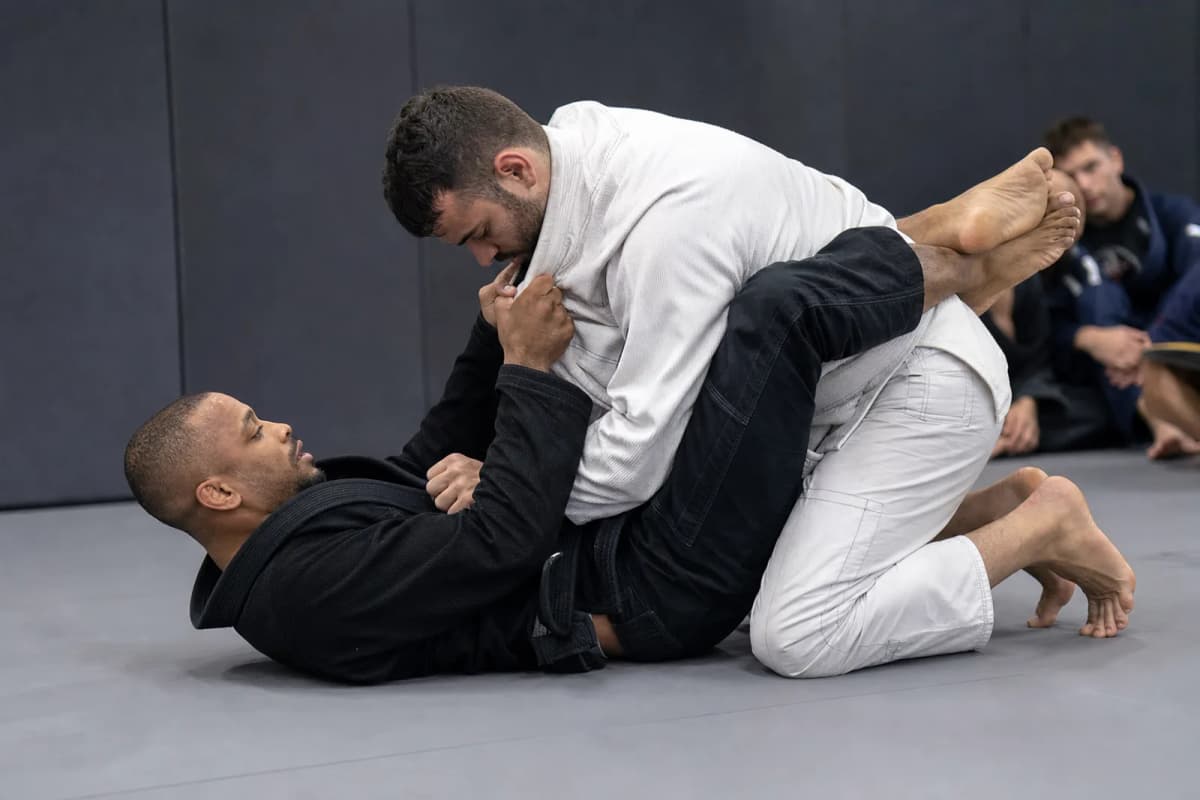
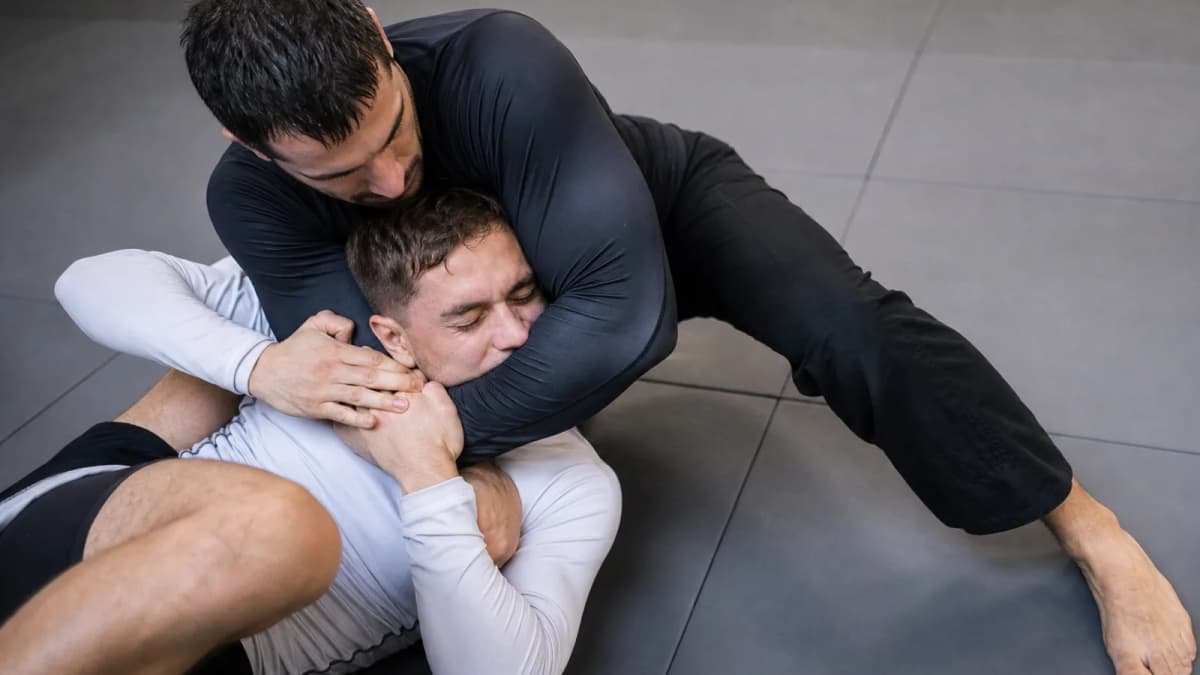
A cross collar choke uses deep collar grips to compress the neck while you break posture or climb to a finishing angle. It is strongest when you can feed fabric behind the neck and keep their spine bent.
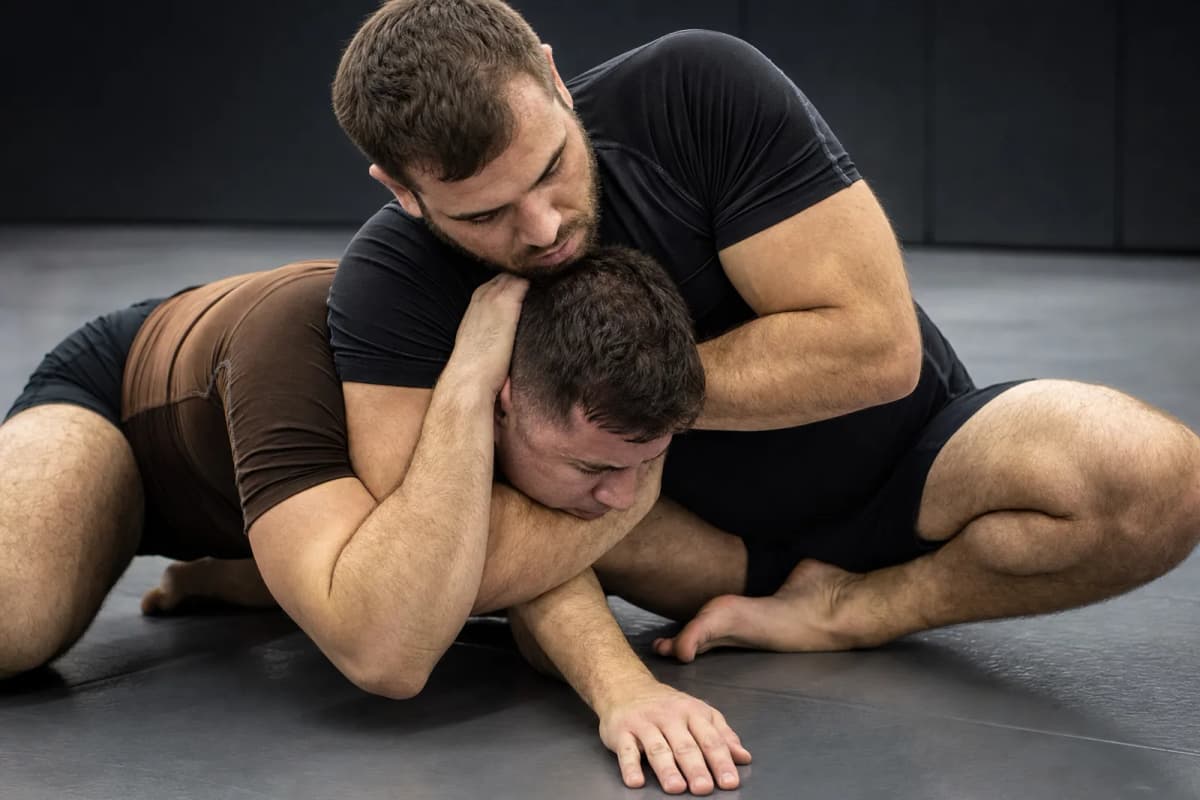
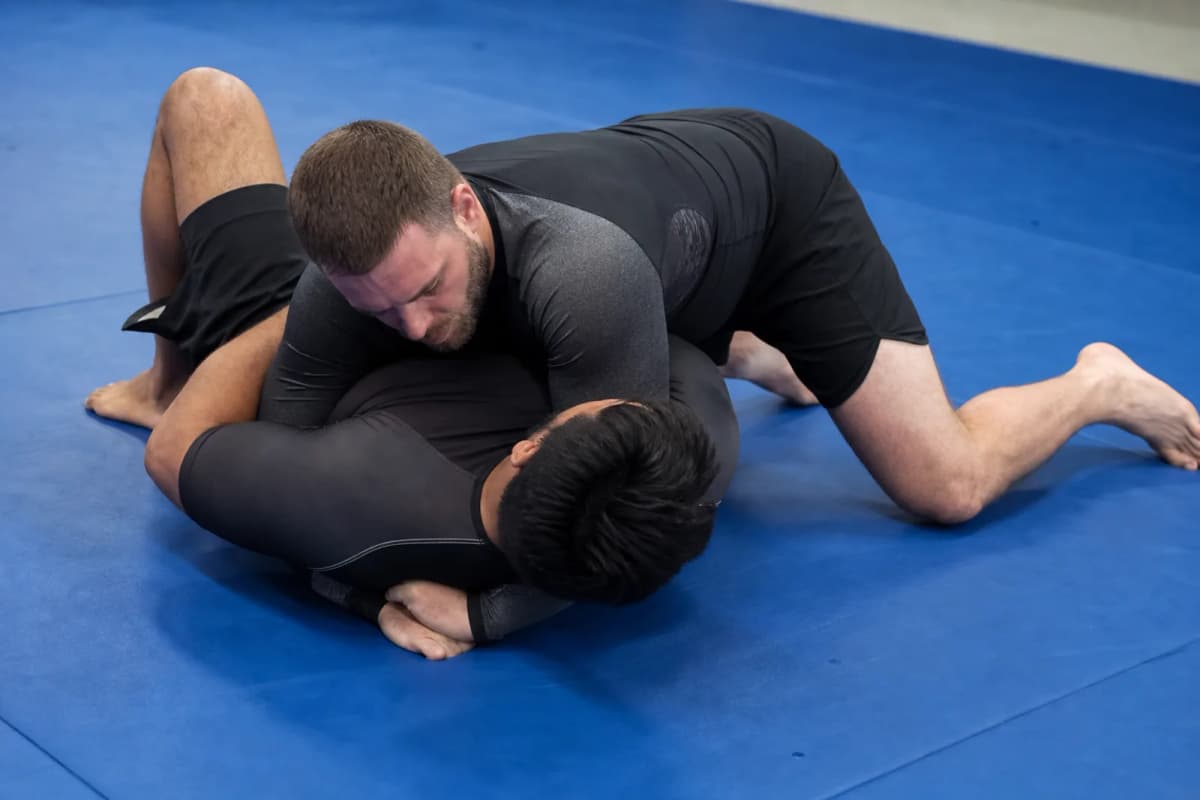
An Ezekiel choke uses your own sleeve and forearm as the strangling structure. It is strongest when collar feeding is contested but you can hide a compact wrap under the chin from mount, side control, or a closed-guard surprise.
Cross collar cue
You can feed a deep collar, control posture, and keep both hands on the gi without losing the pin or guard angle.
Ezekiel cue
Their hands are glued to the collars, your chest pressure is stable, and a sleeve wrap can sneak under the chin.
- Choose cross collar when you already own a deep collar and can break posture
- Choose Ezekiel when collar defenses are strong but mount or side control is stable
- Favor cross collar as the default beginner finishing path in the gi
- Favor Ezekiel as a counter to predictable collar defense
- Switch immediately if the grip path stalls instead of muscling a flat choke
Most failed attempts come from finishing before the structure is set.
On the cross collar, the common error is yanking with shallow grips. Feed depth first, then create the angle and posture break.
On the Ezekiel, the common error is abandoning chest pressure to force the sleeve wrap. Keep the pin, hide the wrap, then expand.
Both chokes improve when you treat them as one gi finishing menu with arm attacks as exits if the neck disappears.
Key Takeaways
- Cross collar is the default when deep collar grips are available.
- Ezekiel punishes collar-obsessed hand fights from stable top control.
- Structure and posture beat arm strength on both finishes.
Further Study
Sleeve-and-forearm gi choke mechanics.
Foundational collar strangle from guard and mount.
Top pin where both choke branches often appear.
Head-and-arm finishing fork once mount is stable.