Choose the mounted triangle when you can climb and close your legs around the neck; choose the arm triangle when shoulder pressure and a side angle finish the head-and-arm squeeze.
Both finishes trap the head and one arm. Your height on the body and available angle choose the branch.
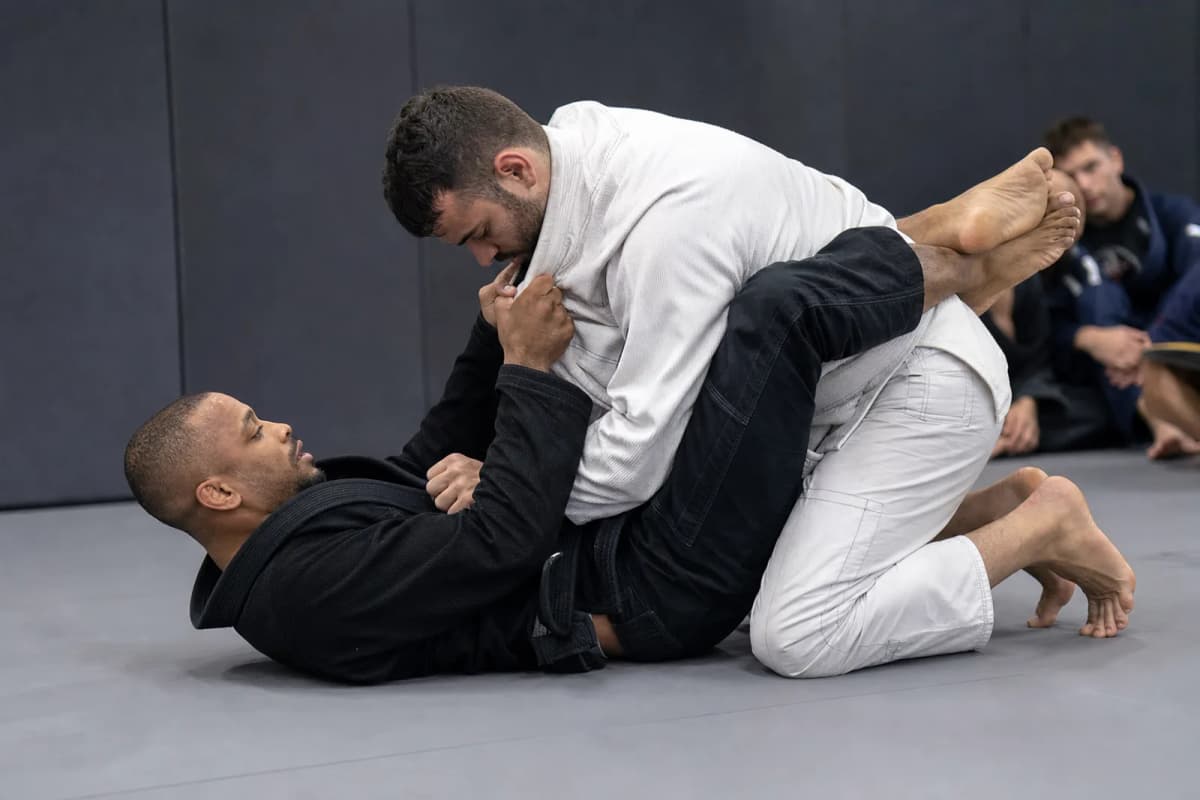
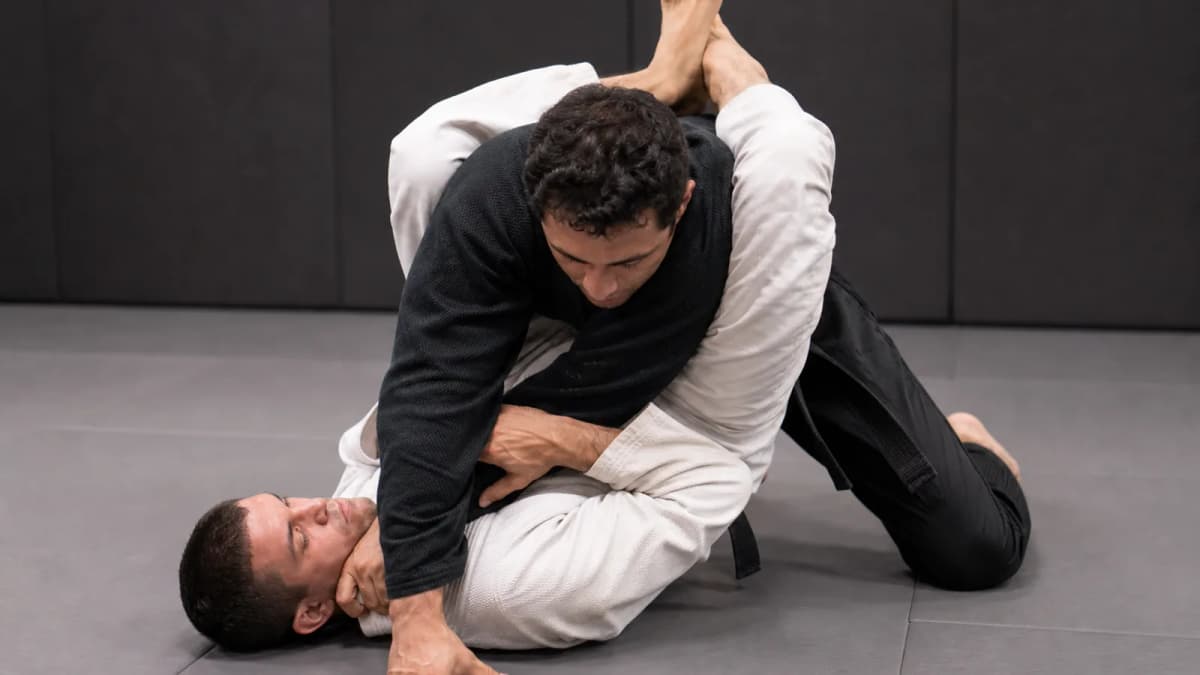
A mounted triangle uses your legs as the strangling structure while you stay on top. It is strongest when you can climb high, keep one arm trapped, and lock a clean figure-four without losing the mount seat.
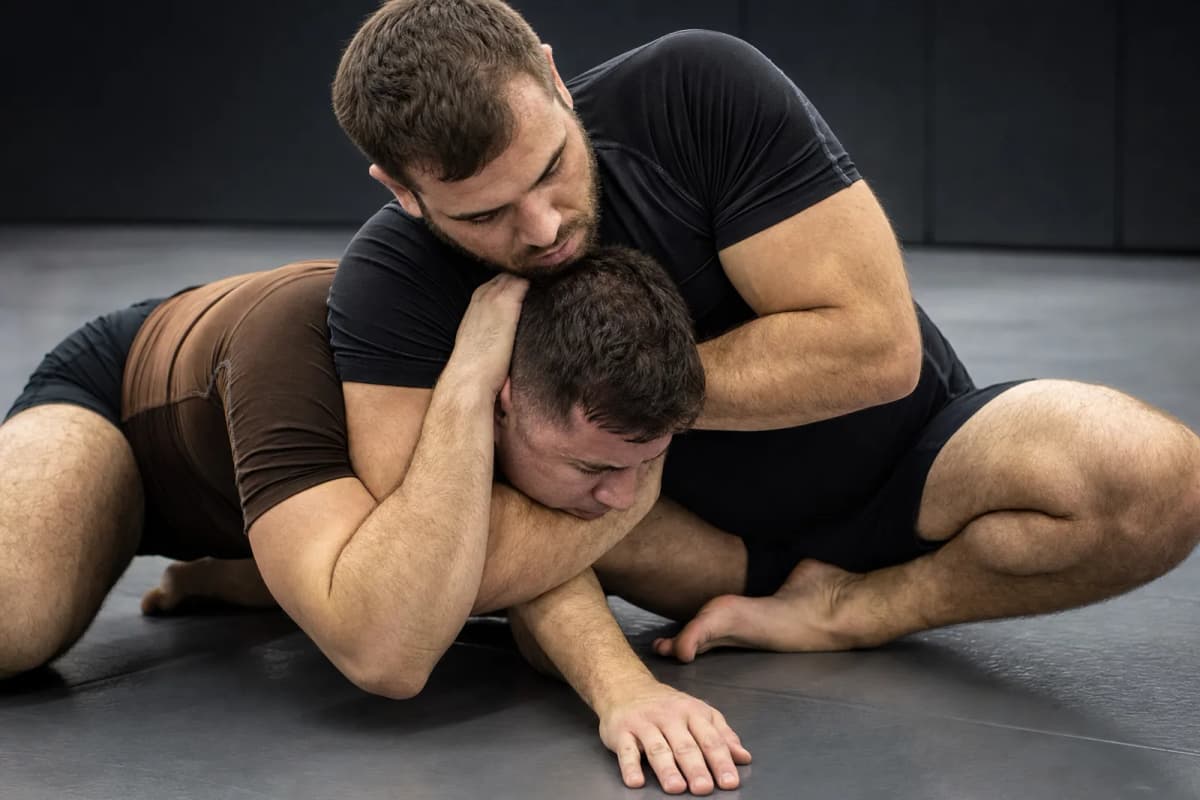
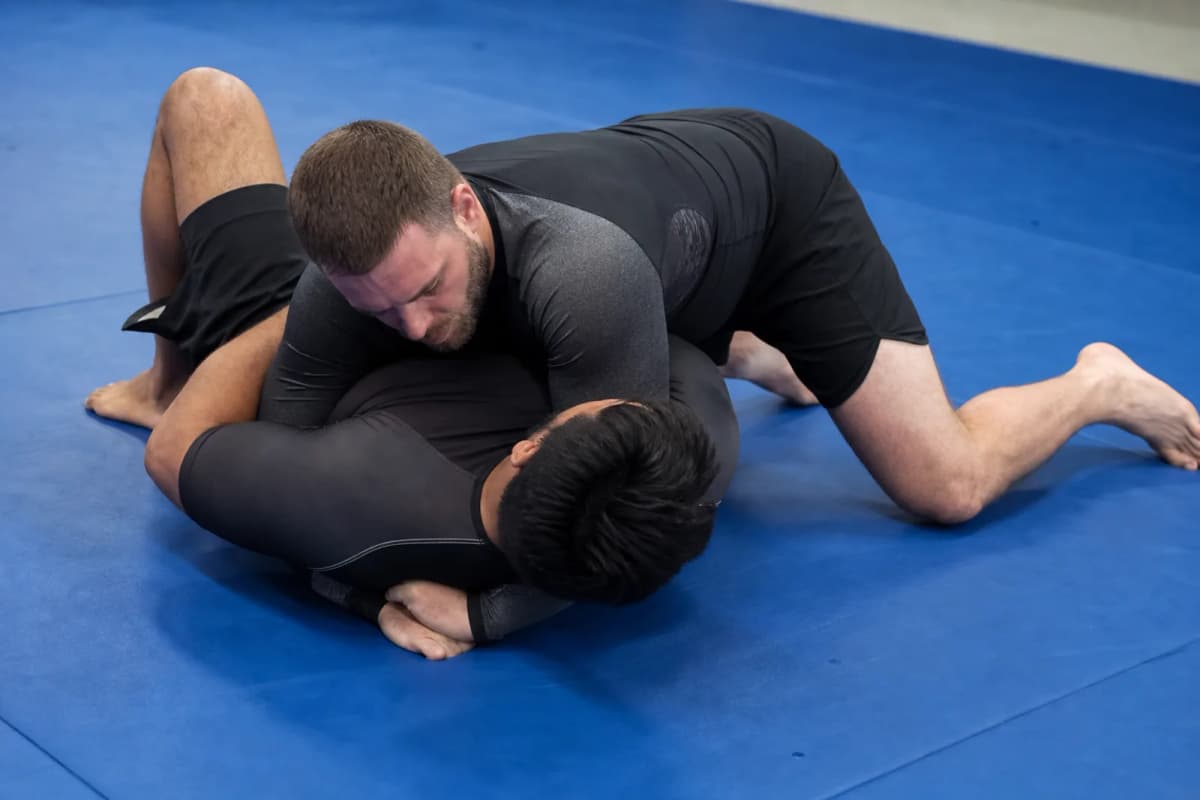
An arm triangle uses your shoulder and their trapped arm to compress the neck as you slide off to a tight angle. It is strongest when the head-and-arm pocket is already formed and you can clear your hips to the side without giving up the pin entirely.
Mounted triangle cue
You are high on the chest, one arm is inside your legs, and you can throw a leg over the shoulder line toward a triangle lock.
Arm triangle cue
Their arm is across their own neck, your shoulder can replace the missing space, and a side slide tightens the pocket.
- Choose mounted triangle when climbing to S-mount or high mount is available
- Choose arm triangle when the head-and-arm pocket is already formed lower on the body
- Favor mounted triangle when you want to stay on top through the finish
- Favor arm triangle when the cleaner path is sliding to a shoulder-pressure angle
- If either stalls, improve isolation or switch to armbar instead of forcing a flat squeeze
Both chokes fail when people squeeze before the structure is closed.
On the mounted triangle, the common error is crossing the ankles before the shin clears the neck. Climb, cut the angle, then lock.
On the arm triangle, the common error is staying square on the mount and hoping shoulder pressure alone finishes. Clear the hip angle and keep the trapped arm glued.
Retention still comes first. If they are bridging you off, return to the mount retention basics before hunting either choke.
Key Takeaways
- Mounted triangle is the climb-and-lock branch that keeps you on top.
- Arm triangle is the shoulder-and-angle branch off a formed head-and-arm pocket.
- Isolation and angle beat raw squeeze on both finishes.
Further Study
Triangle finishing mechanics from mount and S-mount.
Head-and-arm strangle from mount and side control.
How to keep the pin long enough to choose a finish.
Related finishing fork when the arm becomes the clearer target.