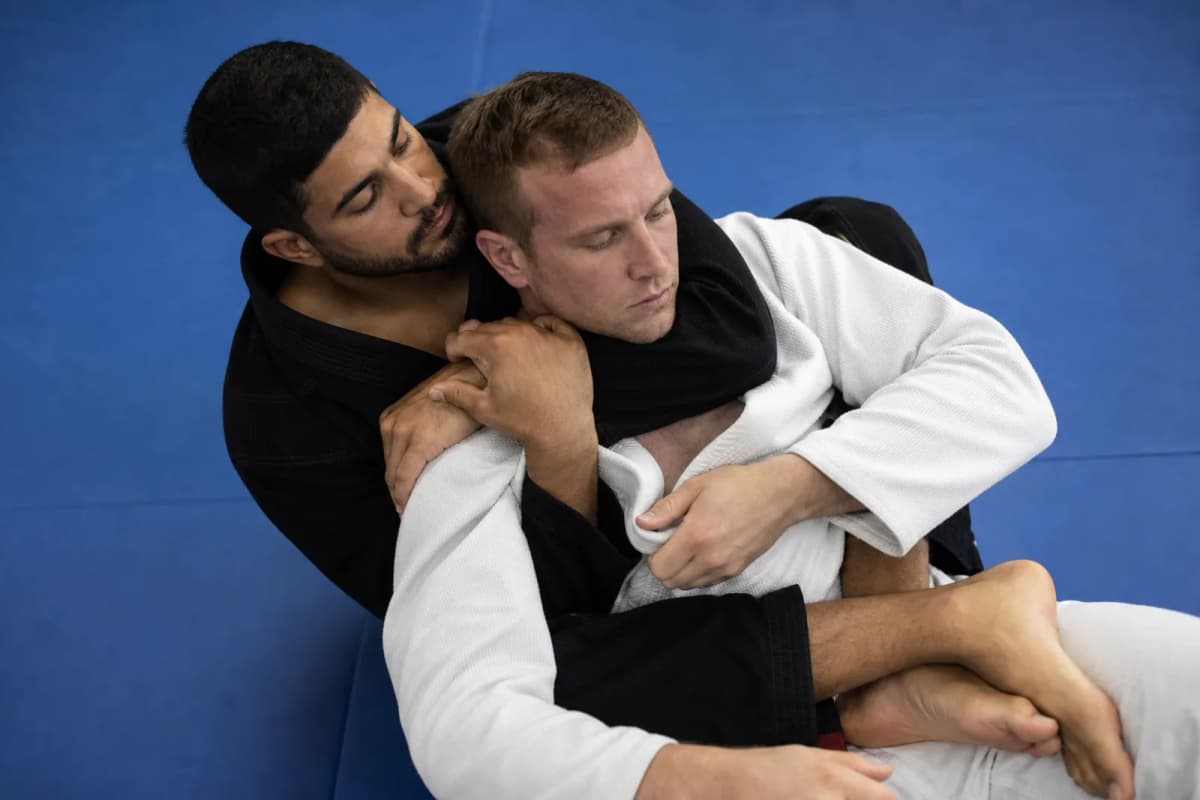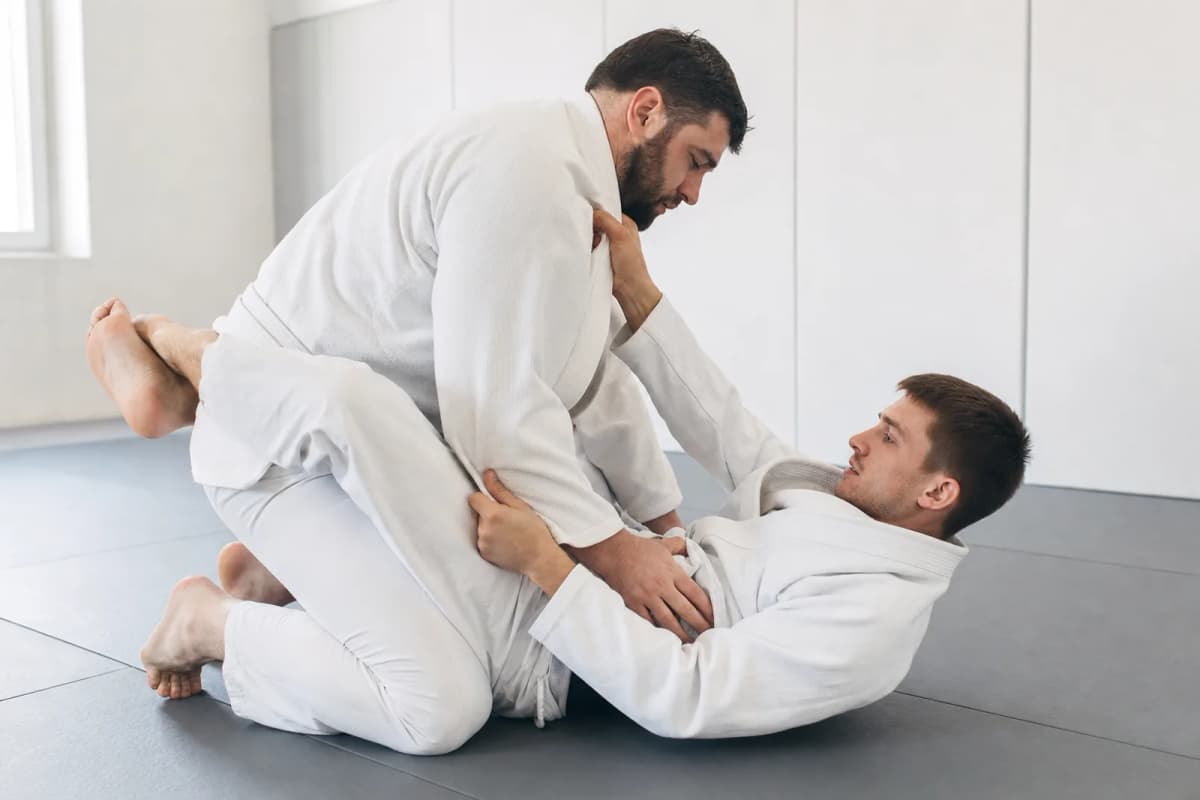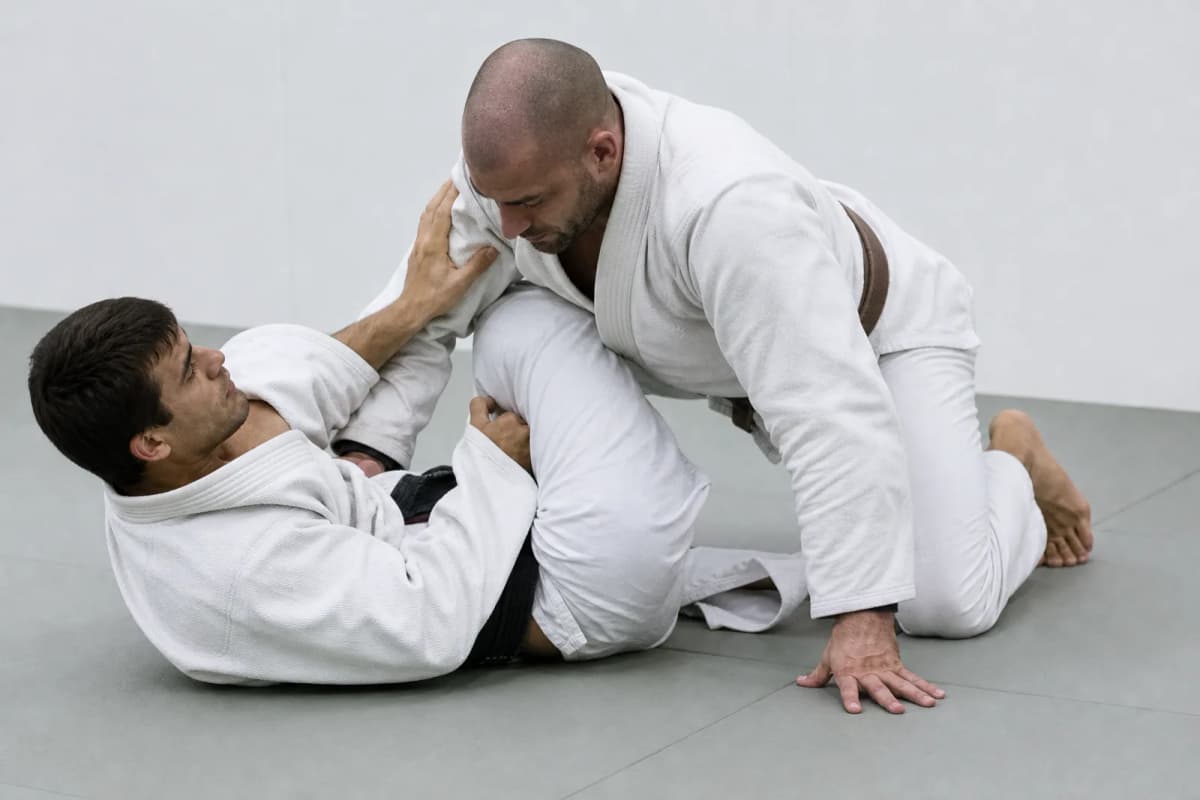
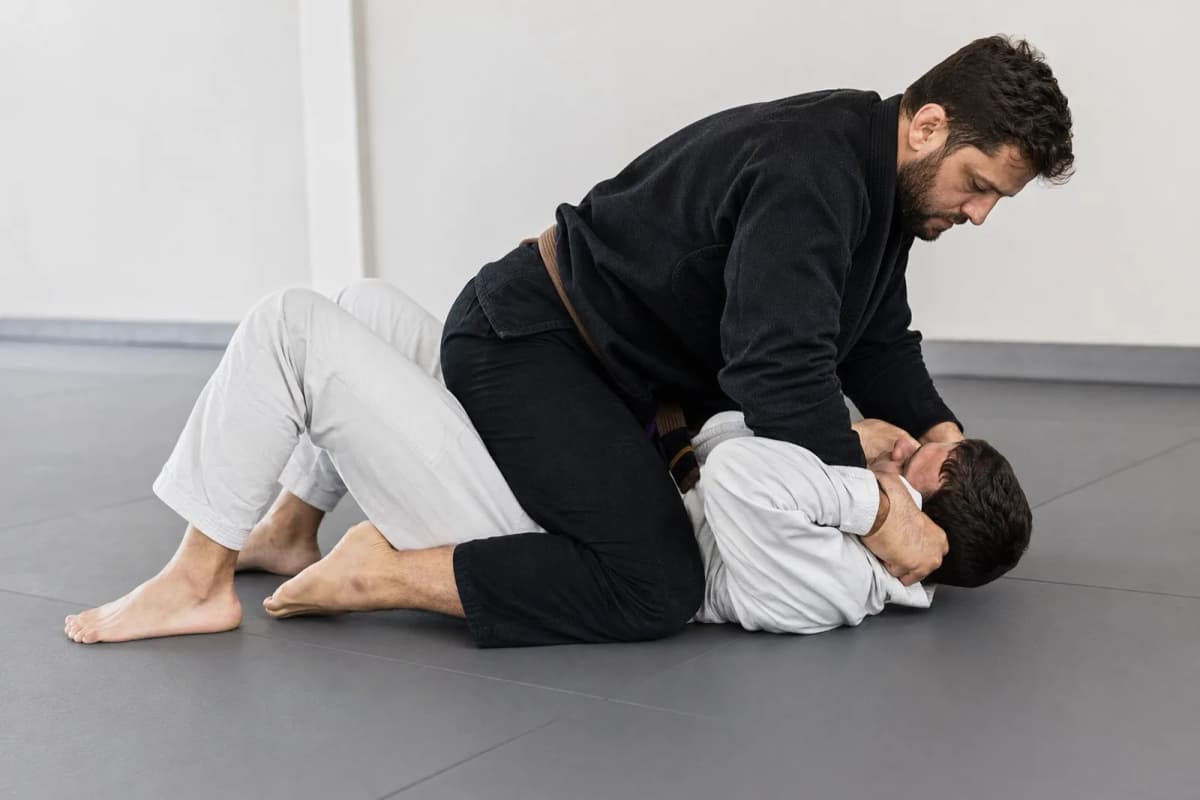
Retain mount by controlling hips and arms, distributing weight intelligently, and choosing high-percentage attacks that do not hand the bottom player an easy elbow escape.
Mount is a pin and a finishing platform. Retention is the job that makes attacks honest.
Most beginner mount failures happen because people reach for arms before they own the hips. If the bottom player can shrimp, frame under your armpit, or bridge into a wide post, the submission hunt becomes a giveaway.
Treat mount as a control cycle: stabilize, remove frames, climb or switch as they turn, then attack. Submissions are the reward for that cycle — not a replacement for it.
- Low mount with knees pinched — stop the first bridge and shrimp
- Head-and-arm or hip control — deny frames under your neck and armpits
- Climb toward high mount when elbows flare
- Technical mount when they turn to a hip
- Americana / cross-collar / low arm attacks only after the pin is stable
- S-mount and mounted triangle once they overcommit to defending the neck or near arm
If you are being bridged or framed off, abandon the finish and reset control.
- Keep hips heavy and low when they bridge — do not post high and wide
- Address elbow-escape frames early before they connect knee to elbow
- Hide posting hands so the trap-and-roll has nothing to catch
- Move to technical mount instead of fighting a losing low-mount scramble
- Attack without abandoning chest pressure; if the chest lifts, the escape starts
Signal you are winning
Their elbows are high or flared, your knees are pinched, and they cannot build a clean frame under your armpit.
Signal you are losing
You are perched on a high post, their knee is under your hip, or both of your hands are reaching for the same arm.
Prefer attacks that keep your weight centered: americana series, cross-collar or palm pressure in the gi, and short armbar entries that do not require both hands to abandon the hips at once.
When they turn hard, technical mount is usually better than forcing a stalled low-mount choke. From there you can take the back, finish an armbar, or return to mount if the turn stalls.
Spend most mount rounds on surviving their first escape attempt. Add one submission chain only after you can consistently ride the bridge and arrive in technical mount when they turn.
Key Takeaways
- Mount retention is hip control and frame denial before submissions.
- Technical mount is the upgrade when they turn — not a failure of low mount.
- If chest pressure disappears, reset control before finishing.
Further Study
Position hub covering entries, controls, and finishing paths.
The turn-side upgrade that opens back takes and armbars.
The escape you must stop early to keep the pin.
High-percentage shoulder lock that can keep weight centered.
How to choose head-and-arm finishes once mount is stable.
Where mount often goes when they turn and expose the back.