Build a back-control finishing system around a reliable seatbelt, hip positioning, and a short list of chokes so hand-fight defenses still leave you attacking.
Back control is the highest-percentage finishing seat in BJJ when chest-to-back and hip control stay honest.
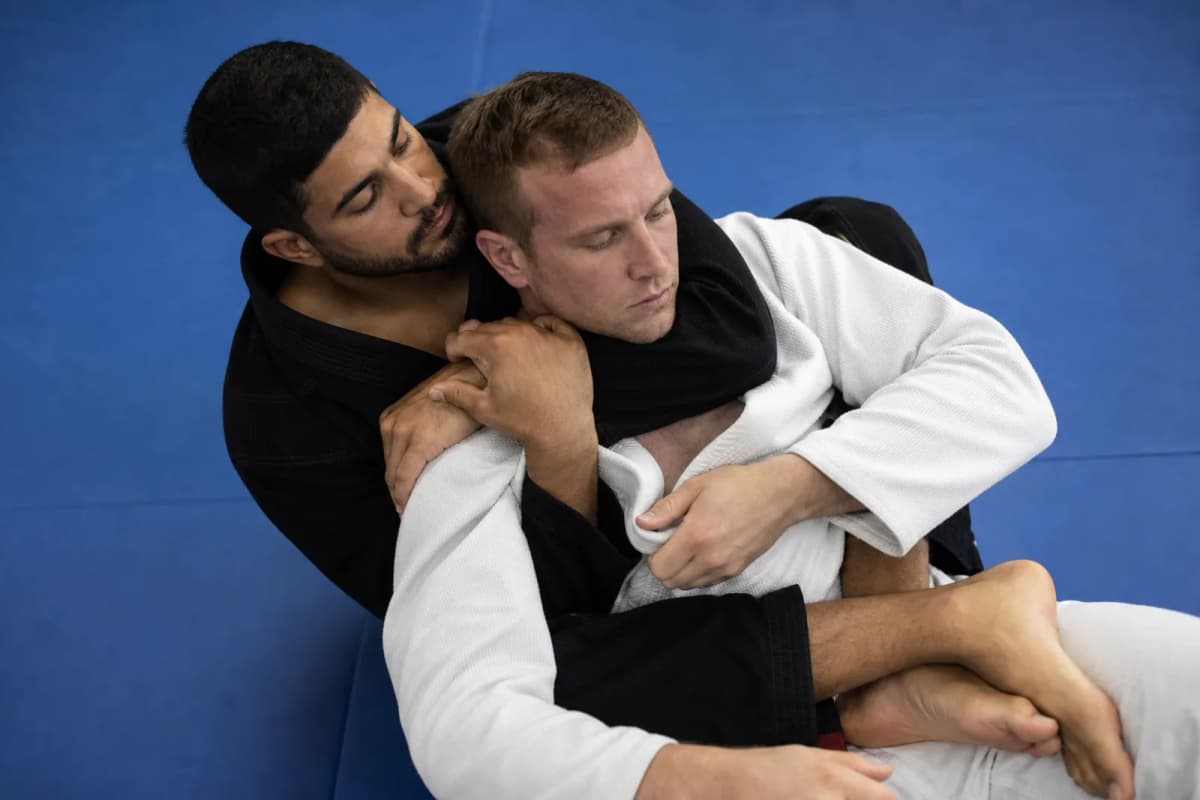
Beginners often skip to the choke and lose the position. The system starts earlier: win the seatbelt, insert the first hook, then decide between second hook and body triangle before you spend both hands on the neck.
A good finishing system assumes the opponent will hand-fight. Your job is to keep hip control so every defensive peel opens another choke or an arm attack — not a scramble to turtle.
- Win seatbelt and chest-to-back connection
- Insert the first hook on the choking side
- Add the second hook or a body triangle to freeze the hips
- Clear the chin line without abandoning hip control
- Finish rear naked choke when the neck is free
- Switch to short choke or bow-and-arrow when they peel the long wrap
- If the neck disappears, improve seatbelt and hips before re-attacking
If hooks are loose and the seatbelt is soft, fix position before finishing pressure.
- Keep your head glued beside theirs so shoulders stay pinned
- Pinch hooks inside the thighs or lock a body triangle when they thrash
- Choose seatbelt side intentionally — choking arm usually opposite the underhook side of the belt
- Do not cross feet in front of their hips where a grapevine counter lives
- Climb higher on the back when they posture forward to clear hooks
Signal you are winning
Chest is flat on their back, hips are controlled, and one of their hands is busy peeling while the neck is still available.
Signal you are losing
They are sliding shoulders to the mat, your hooks are floating, or both of your hands are fighting one wrist with no hip control left.
Keep the menu small. Rear naked choke is the primary no-gi finish. Short choke covers the moments when a deep palm-to-palm wrap is unavailable. In the gi, bow-and-arrow or another collar option punishes the hand-fight that opens the lapel.
When they overcommit to defending the neck, technical mount and armbar transitions are part of the same system. Returning to mount is a win if the back becomes unstable — read the mount retention guide for that branch.
In positional rounds, earn two clean hooks or a body triangle before any choke attempt. Only after that connection is reliable should you add hand-fight switches into short choke or collar finishes.
Key Takeaways
- Seatbelt and hip control are the system; chokes are the endings.
- One RNC plus one short or collar option covers most defenses.
- When the neck disappears, improve position before forcing the finish.
Further Study
Position hub for entries, hooks, and finishing paths.
The control grip that makes every back finish possible.
Primary no-gi finishing choke from the back.
Compact finish when the long RNC wrap is unavailable.
Decision criteria inside this finishing system.
How many back seats are won before the choke starts.