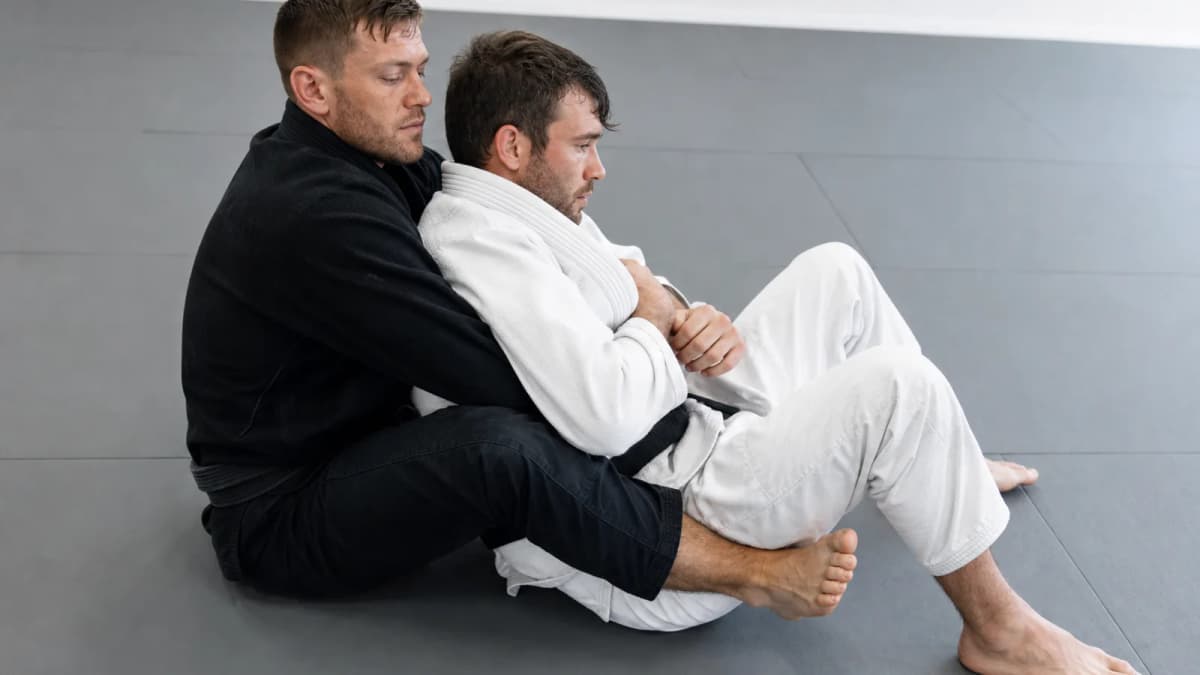
Body Triangle
Back-control variation that locks the legs in a triangle around the torso to immobilize the hips and raise submission percentage.
Overview
The body triangle replaces standard hooks with a figure-four around the opponent’s waist. It reduces hip escapes, keeps chest-to-back connection during hand fights, and creates a stable platform for rear naked chokes and collar attacks.
Position Flow
How to Enter
- Lock the triangle when hooks start slipping during a back take
- Climb from seatbelt control after the opponent turns to turtle
- Switch from dual hooks when they try to stomp one hook free
How to Exit
- Rear naked choke once the hand fight is won
- Bow-and-arrow or collar chokes in the gi
- Return to dual hooks if the triangle becomes illegal or stalls under a ruleset
- Mount if they overcommit to peeling the legs and expose the front
Key Controls
- Figure-four across the belly or hip line with the top foot locked behind the knee
- Seatbelt grip with chest glued to the upper back
- Head next to theirs so they cannot shoulder-walk out of the lock
Vulnerabilities
- Opponent attacks the locking foot and reverses the body lock
- Sliding too low onto the hips and losing upper-body connection
- Rules restrictions on squeezing the triangle as a crushing finish
Ideal When
You have the back but need hip control that survives aggressive bridging and hand fighting.
OffenseOffense
Goals
- Immobilize the hips so the hand fight is one-directional
- Finish strangles without resetting hooks every scramble
Key Techniques
- Rear naked choke with short-choke variations
- Gi collar attacks when the seatbelt frees a lapel
- Armbar transitions when they over-defend the neck
Pro Tips
- Keep the lock high enough to control the torso, not just squeeze the gut
- Win the seatbelt before hunting finishes — the triangle is the platform
Common Mistakes
- Crossing feet without the figure-four lock and calling it a body triangle
- Squeezing for a submission crush instead of using the lock for control
DefenseDefense
Goals
- Peel the locking foot and create hip space
- Slide shoulders to the mat and clear the seatbelt
Key Techniques
- Hand fight the figure-four ankle while bridging to the locking side
- Shoulder walk and hip escape toward the open side
- Trap the top leg and turn into the attacker when the lock loosens
Pro Tips
- Address the body triangle early; late peels happen under choke pressure
- Do not ignore the seatbelt while only fighting the legs
Common Mistakes
- Pulling straight down on the locking foot with no hip escape
- Turning the wrong direction into a tighter strangle
Variations
High body triangle across the ribsLow body triangle near the hips for scramble controlBody triangle to mount when the opponent faces into you
Key Concepts
- Body triangle is control first, squeeze second
- Chest-to-back connection still decides the choke
- Know your ruleset before treating the lock as a finishing crush
Recommended Drills
- Hook-to-body-triangle transitions on a cooperative partner
- Seatbelt hand-fight rounds with a locked body triangle
- Escape rounds focused only on peeling the figure-four foot
Related Techniques
Summary
Use the body triangle when hooks are not enough. Lock the figure-four, stay chest-to-back, and finish the hand fight from a hip that cannot walk away.