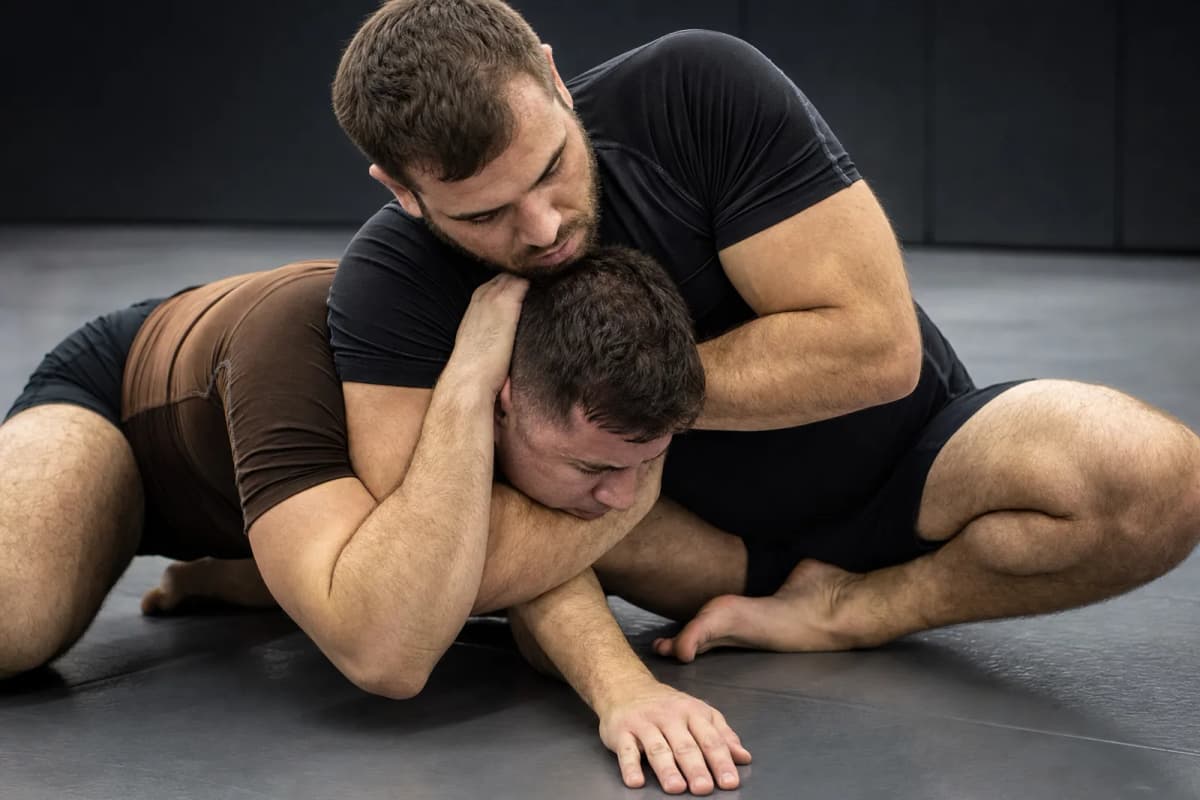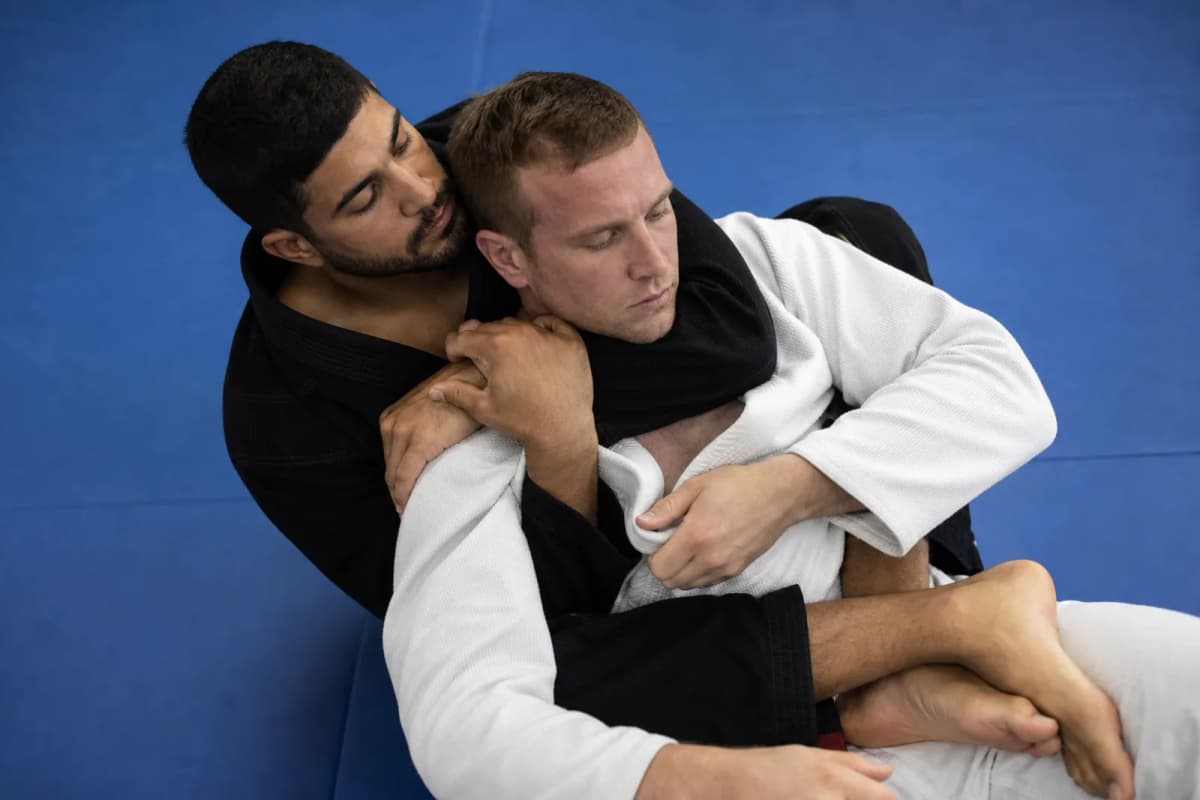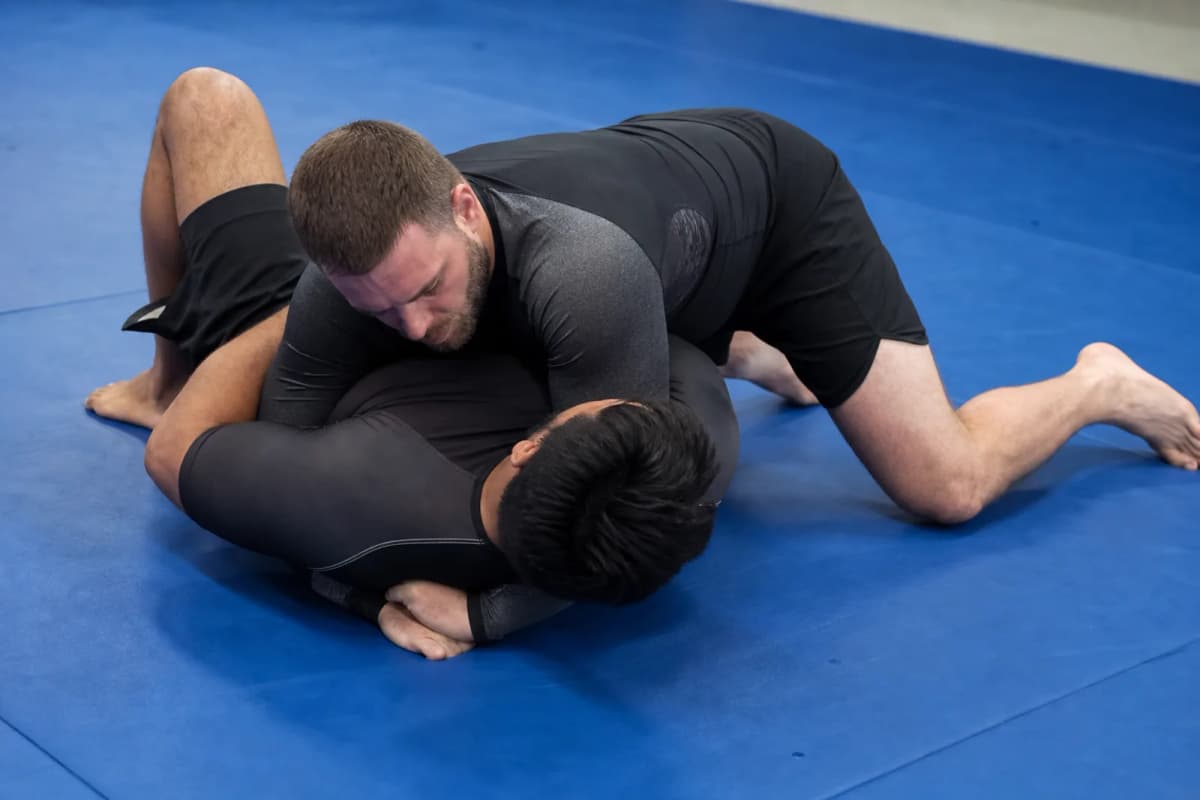
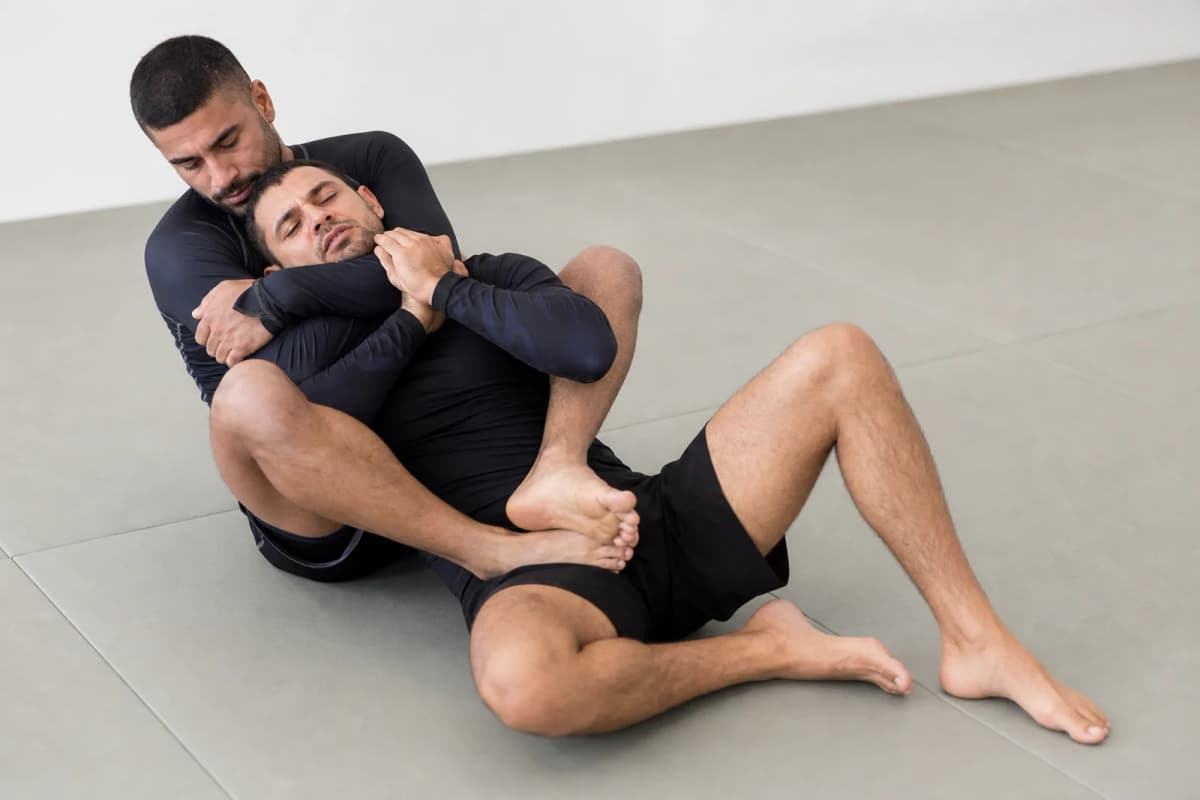
Use the classic rear naked choke when the choking arm can wrap deep and finish cleanly; use a short choke when neck pressure is available but the arm cannot fully connect elbow to elbow.
Both finishes attack the neck from back control. The difference is how much of the choking arm you can wrap and which hand configuration closes the loop.
A rear naked choke typically threads one arm under the chin, then uses the free hand to help lock the choking arm so the biceps and forearm compress the neck. The finish is strongest when the choking elbow is deep, the shoulder is tight to their back, and your hips stay attached.
A short choke uses a tighter hand configuration when you cannot get the classic deep wrap. Palm-to-palm, wrist-to-biceps, or similar short grips let you create neck pressure from a shallower arm position, often after the opponent has blocked a full rear naked choke entry.
Rear naked choke cue
The choking arm is deep under the chin, your shoulder is glued to their back, and you can connect a clean finish without muscling the neck.
Short choke cue
You have seatbelt and back exposure, but the arm cannot fully wrap; a shorter grip still creates legal, controlled neck pressure.
- Use the rear naked choke when seatbelt control is stable and you can clear the chin for a deep choking arm
- Use the rear naked choke when hooks or a body triangle already remove escape space and you can finish patiently
- Use a short choke when hand fighting stalls the classic wrap but your forearm still sits on the neck line
- Switch to a short choke instead of yanking a shallow rear naked choke that only cranks the jaw
- Favor control first: improve hip position and remove chin frames before changing grip names
- If the opponent turns into you and kills the back, abandon the finish and rebuild back control rather than chasing the neck from bad angles
Most failed back chokes come from finishing before control, not from choosing the wrong grip name.
With the rear naked choke, the common error is squeezing while the chin is still tucked and your hips are floating. Clear the chin, keep chest-to-back connection, and finish only after the choking arm is deep.
With short chokes, the common error is treating any shallow forearm on the face as a choke. If the neck line is not loaded and the body is not controlled, you are hand fighting, not finishing. Rebuild seatbelt and hip position first.
Control before squeeze
Secure seatbelt and hooks or a body triangle before you hunt finishes. Panic squeezes teach bad habits.
Respect training partners
Apply neck pressure gradually. Short grips can feel abrupt, so finish slowly and release immediately on the tap.
Key Takeaways
- The rear naked choke is the primary finish when the choking arm can wrap deep.
- Short chokes are useful secondary options when the wrap stalls but neck pressure remains.
- Seatbelt, hips, and space management matter more than memorizing hand configurations.
Further Study
The primary no-gi back finish built around a deep choking arm and clean lock.
A compact back-choke option when the classic wrap cannot fully connect.
The control platform that makes both finishes available.
Upper-body control that keeps you attached while you clear the chin.
A lower-body control option that reduces escape space during hand fighting.