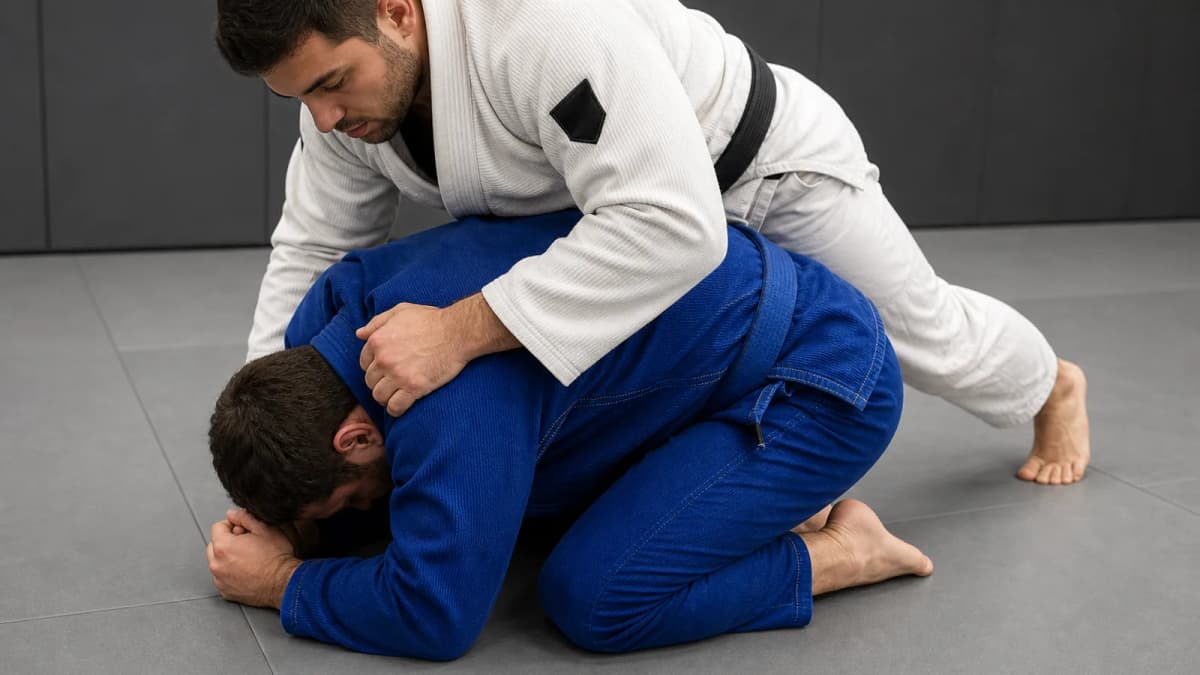
Turtle
Defensive quadruped posture protecting the guard — gateway to escapes, reversals, and back-take battles.
Overview
Turtle is a defensive position on hands and knees used to prevent guard passes and protect the back. It leads to granby rolls, reversals, leg entries, and intense front-headlock battles when the top player attacks.
Position Flow
How to Enter
- Turn in when side control or mount is lost
- Prevent back take during scramble
- Stand-up wrestling escape from bottom
How to Exit
- Granby roll to recover guard
- Sit-out to single leg or front headlock
- Stand up with proper hand fighting sequence
Key Controls
- Elbows tight protecting ribs
- Head tucked with chin to chest
- Knees and feet loaded for explosive movement
Vulnerabilities
- Clock choke and crucifix when elbows lift
- Hooks inserted when hips rise too high
- Darce and anaconda when head is exposed
Ideal When
You need a safe defensive shell to reset to guard or stand — but staying too long invites back attacks.
OffenseOffense
Goals
- Explode to guard recovery or stand-up
- Reverse with sit-outs and granby rolls
Key Techniques
- Granby roll
- Sit-out to single leg
- Peek-out to guard
Pro Tips
- Stay compact — wide elbows expose chokes
- Move immediately; static turtle gets attacked
- Look for underhooks during stand-up sequences
Common Mistakes
- Hips too high exposing hooks
- Staying in turtle without a exit plan
DefenseDefense
Goals
- Break turtle down without exposing neck
- Insert hooks or attack front headlock
Key Techniques
- Clock choke (gi)
- Hook insertion and seatbelt
- Darce from front headlock
Pro Tips
- Control hips before chasing the neck
- Use spiral ride to break base before hooks
Common Mistakes
- Diving for hooks with no hip control
- Leaving space for granby roll recovery
Variations
Quarter turtle4-point with staggered knees
Key Concepts
- Turtle is transitional — not a resting place
- Elbow position determines choke vulnerability
- Top player wins with hip control before neck attacks
Recommended Drills
- Turtle rotation and granby recovery reps
- Hook insertion vs sit-out battles
- Stand-up hand fighting from turtle
Related Techniques
Summary
Turtle buys time but demands action. Stay tight, move quickly to guard or stand, and never expose your neck while hips are high.