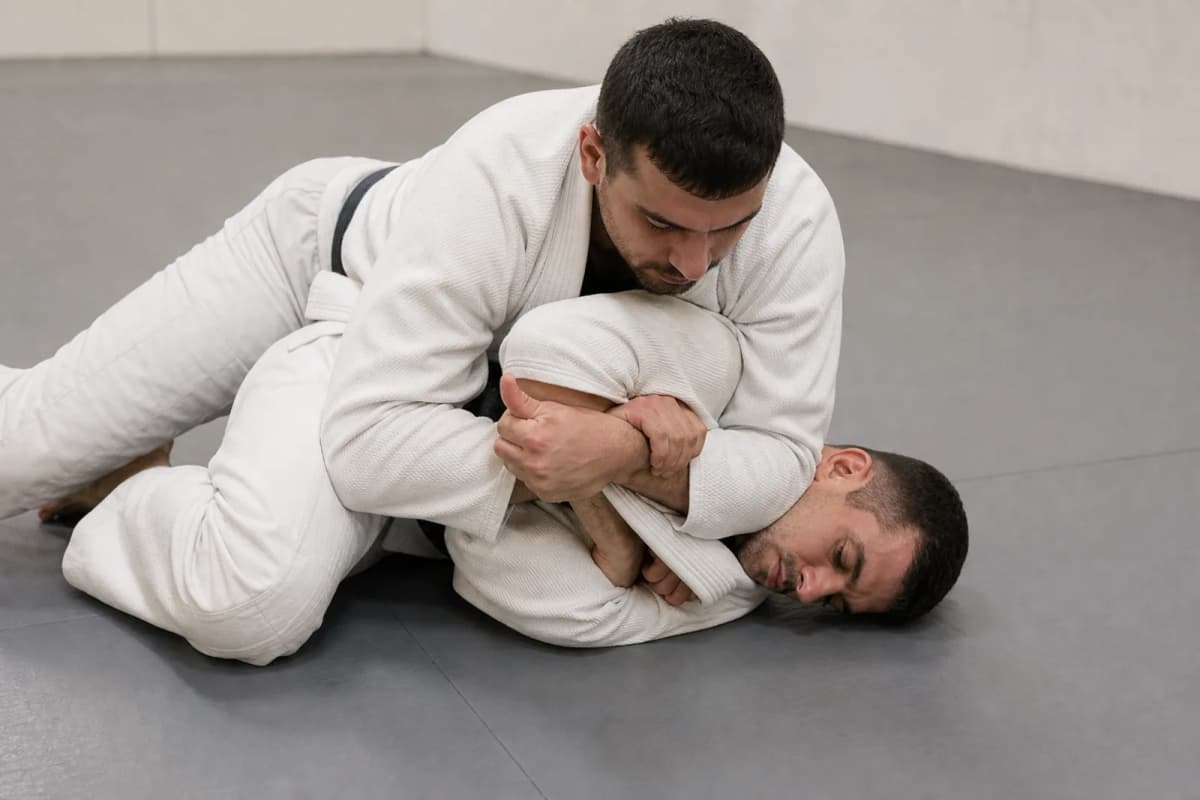
What is the Americana?
The americana isolates an arm bent at 90 degrees and rotates the shoulder by lifting the elbow while pinning the wrist. It is a fundamental mount submission that teaches how top pressure and limb isolation create joint locks.
Setup
- From mount or side control, pin the opponent’s wrist to the mat near their hip.
- Slide your chest over the trapped arm and grip your own wrist in a figure-four.
- Keep their elbow on the ground and remove space under the shoulder.
Execution
- Lift the elbow toward their head while keeping the wrist pinned.
- Apply slow, steady pressure — the tap comes from shoulder rotation, not speed.
- Maintain hip pressure so they cannot turn away.
Finishing
- If they lift the elbow, switch to a kimura by changing the rotation direction.
- Transition to mount if finishing from side control with partial control.
⚠️
Safety Note
Americana loads the shoulder joint. Apply slow, steady rotation in training and release immediately on tap — never rip the elbow toward the head.
Primary Targets
- Shoulder
Key Concepts
- Pin the wrist before attempting rotation.
- Chest weight over the shoulder prevents escape.
- Americana and kimura are two directions of the same shoulder attack.
Primary Entries
Defenses & Counters
- Expect them to turn toward you and free the elbow — switch to kimura before the wrist escapes.
- Watch for bridges that create space under your chest; re-pin the shoulder before rotating.
- If they straighten the arm, abandon the americana angle and attack the extended arm.
Follow-Ups
- Kimura when they turn into the lock and reverse the elbow line.
- Armbar if they straighten the arm to escape the pin.
- Re-establish mount when a bridge opens space during the attempt.
- Kimura when the opponent turns toward you.
- Armbar when they extend the arm to escape.
- Mount stabilization when they bridge during the lock attempt.
Training Drills
- Mount americana entries with partner posting different arms.
- Side control pin-to-lock flow with timed resistance.
- Americana-to-kimura switch drill when partner turns.
Related Techniques
Deepen your study with complementary positions and attacks.
Summary
The americana is simple but unforgiving when the arm stays flat. Pin the wrist, cover the shoulder, and rotate with patience from dominant top positions.