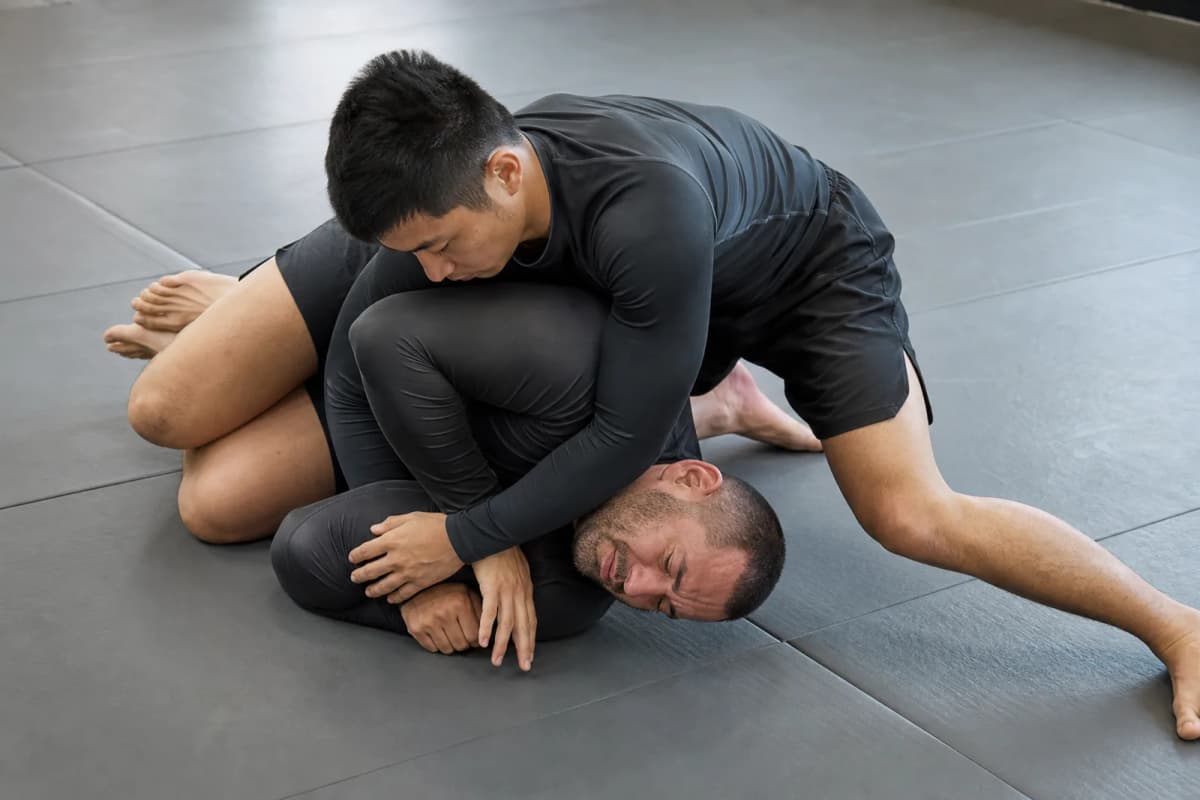
Wrist locks are illegal for IBJJF white belts. The official Illegal Moves table allows them from adult blue belt up.
Wrist-lock legality is belt-sensitive in IBJJF and more open in ADCC championship rules.
The IBJJF Technical Fouls & Illegal Moves table — published with the Rule Book on the IBJJF Books and Videos page — marks the wrist lock for kids, teens, juveniles, and adult white belts. In adult IBJJF competition the mark lifts from blue belt up.
Official ADCC Championship rules list any arm bar, shoulder lock, or wrist lock as legal. That never replaces checking the packet for your exact bracket.
- Small-joint attacks can injure before a clear tap signal
- Posted hands and stiff frames create opportunistic finishes that beginners may not see coming
- White-belt divisions prioritize safer, clearer finishing mechanics
- Competitors need legal grip-break and positional options when a wrist becomes exposed
Train slowly from common posts
Learn wrist control from closed guard, mount, and grip fights with slow torso pressure — not explosive yanks on fingers.
Keep white-belt exits ready
If you trap a posted hand in a white-belt IBJJF match, abandon the illegal finish and transition to a legal arm attack, sweep, or pass.
Key Takeaways
- IBJJF marks wrist locks illegal for white belts (and younger columns).
- Adult IBJJF divisions allow them from blue belt up — confirm the rulebook.
- ADCC championship rules allow any wrist lock.
Further Study
Official IBJJF Rule Book (v6.0) and Technical Fouls & Illegal Moves downloads. Confirm your age, belt, and gi/no-gi column.
Official ADCC legal techniques, illegal techniques, scoring, and time limits.
Technique page with mechanics, safety notes, and legality.
A related shoulder attack that often appears from the same grips.
A common place where posted hands expose wrist-lock opportunities.
A broader white-belt legality checklist with technique links.