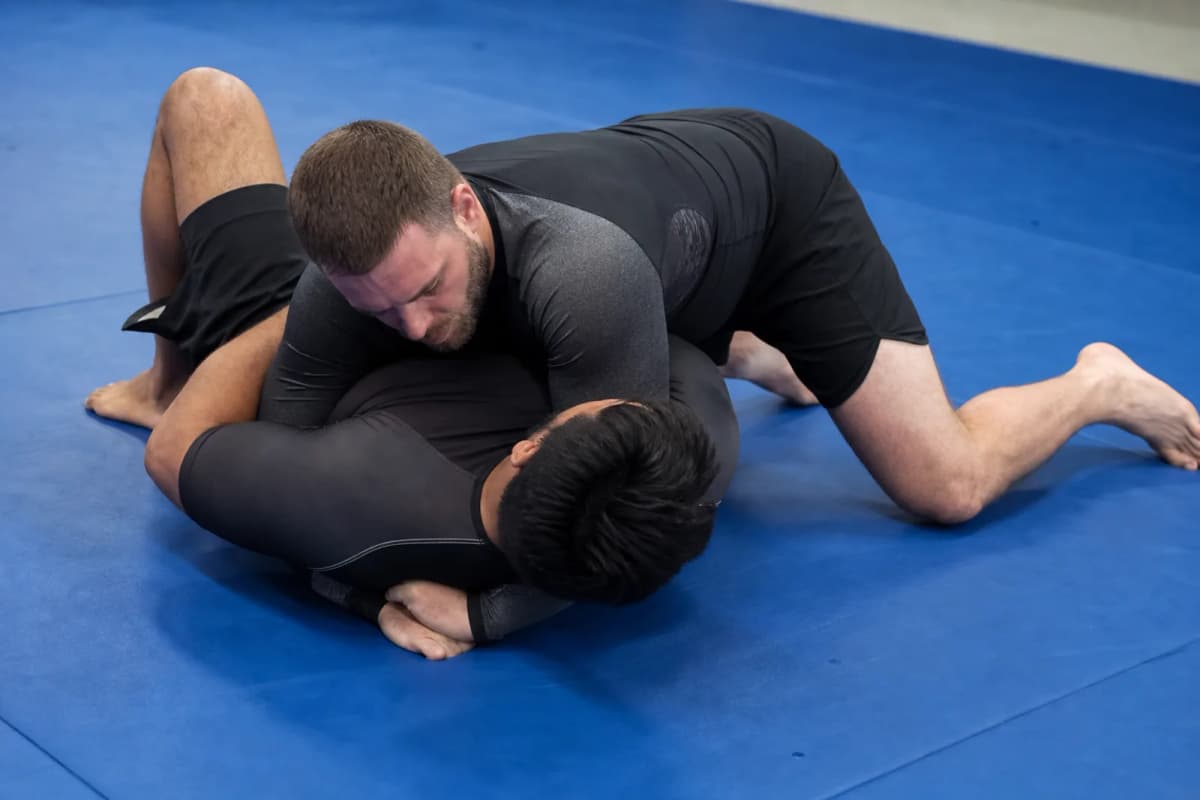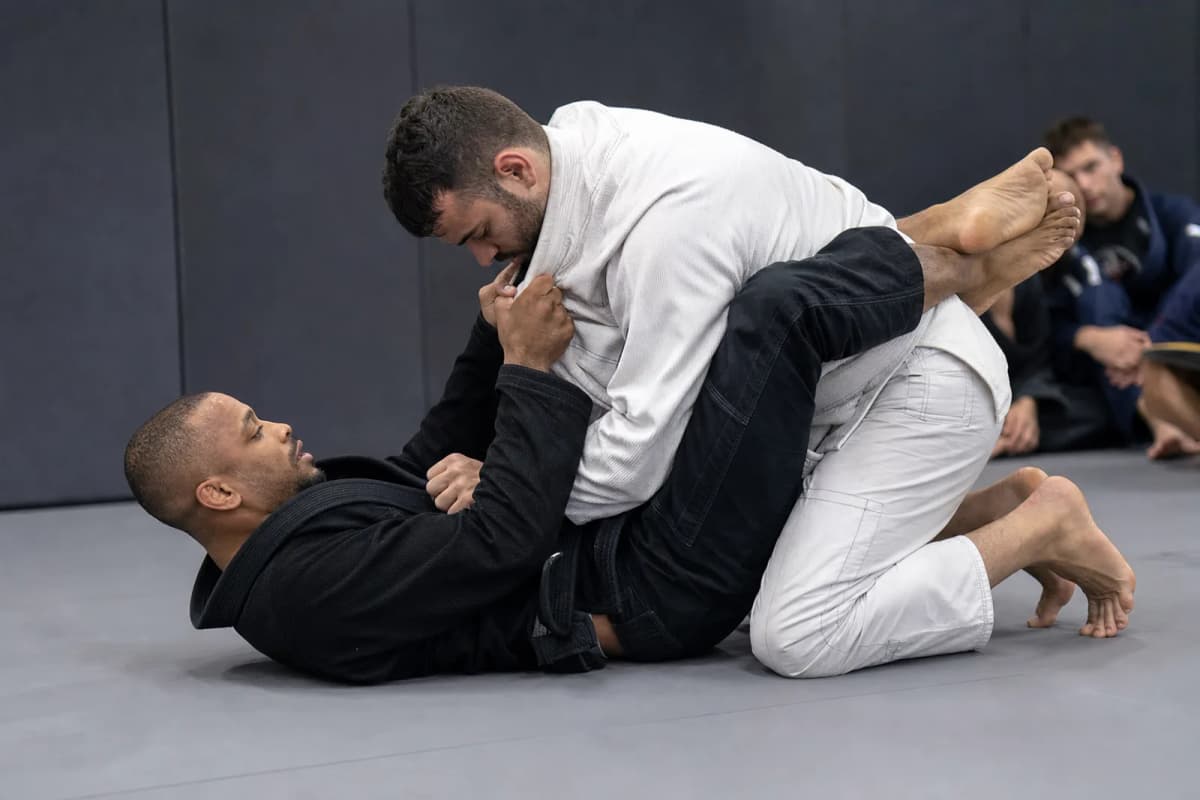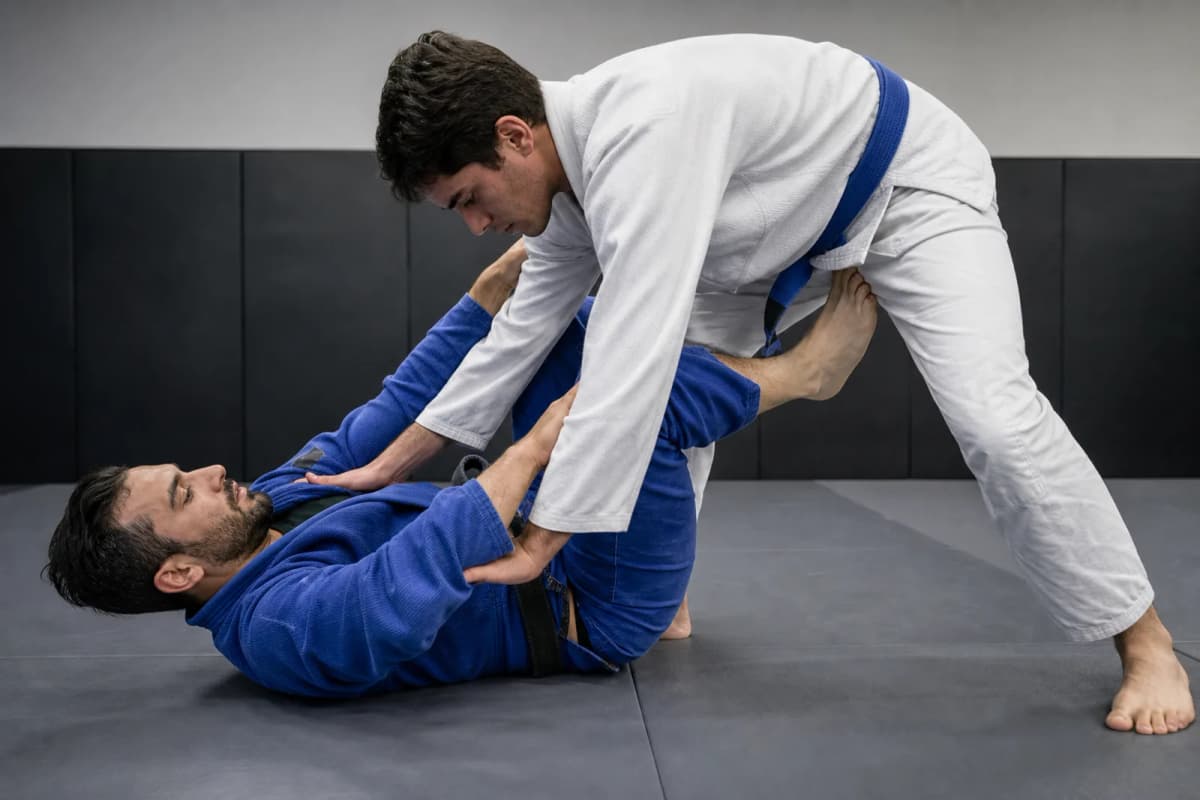
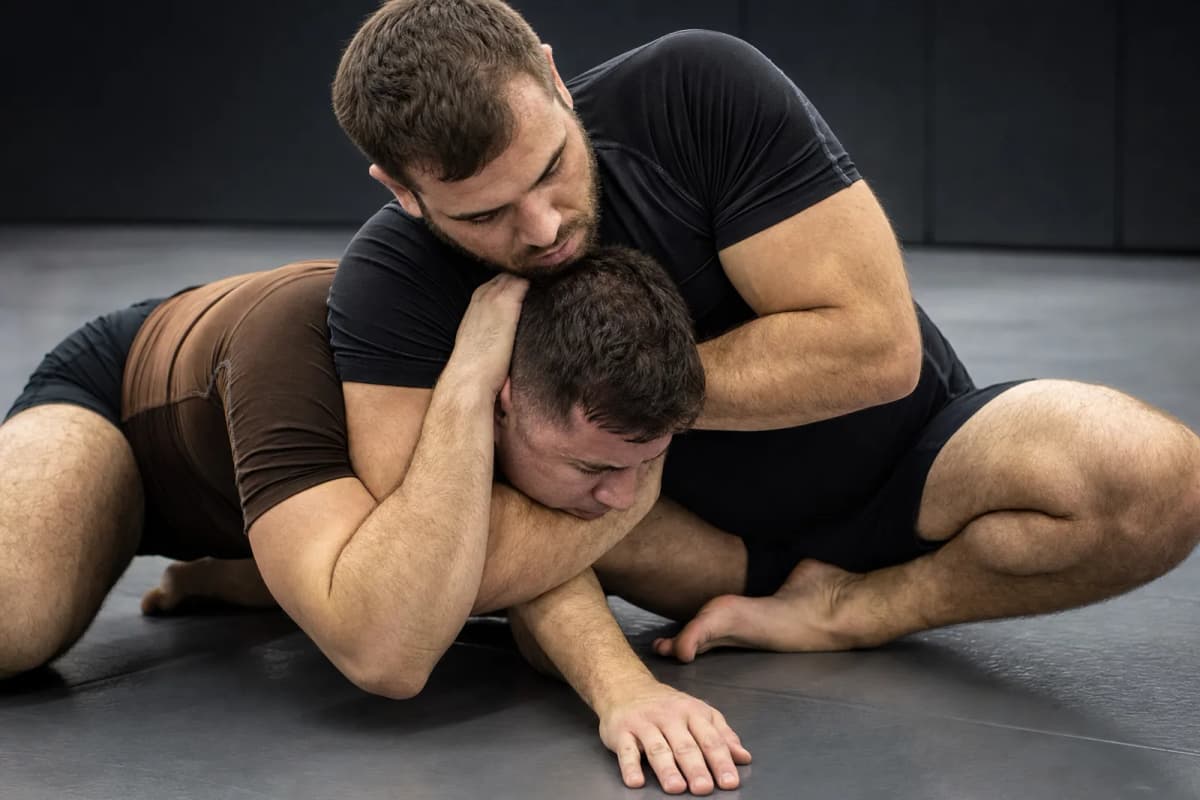
Choose the triangle when you control the neck and one arm inside your legs; choose the armbar when the isolated arm and your hips line up for elbow extension.
Both finishes start from the same guard posture break. The opponent’s hand and head position choose the branch.
A triangle choke traps one arm and the head between your legs so you can constrict the neck while controlling the shoulder. It is strongest when the opponent’s posture is broken, one arm is inside, and you can create an angle that locks the shin behind the neck.
An armbar isolates the arm so your hips cut across the shoulder and your legs control the body while you extend the elbow. It is strongest when the arm is trapped across your centerline and you can keep the thumb pointing up while pinching your knees.
Triangle cue
One arm inside, head available, and you can climb your hips high enough to close the neck.
Armbar cue
The arm is isolated, the shoulder line is under your hips, and the opponent cannot easily stack you back into posture.
- Choose triangle when the opponent reaches inside your guard and leaves the head low
- Choose armbar when the opponent posts a stiff arm or the elbow clears their centerline
- Favor triangle when you want a choke that also threatens shoulder control and armbar transitions
- Favor armbar when the neck is hard to climb but the elbow is already exposed
- Switch immediately if the trapped arm or head escapes instead of forcing a stalled finish
Most failed attacks come from finishing before the angle is set.
On the triangle, the common error is crossing the ankles and squeezing before the hips cut the angle. Get the shin behind the neck, control the posture, then close the figure-four and adjust.
On the armbar, the common error is yanking the wrist while the hips stay square. Pinch the knees, keep the thumb oriented correctly, and extend through the hips only after the shoulder is trapped.
Both attacks improve when you treat omoplata and kimura as emergency exits. If the opponent pulls the arm free or postures hard, keep the isolation and rotate into the next legal finish.
Key Takeaways
Further Study
Elbow hyperextension mechanics from guard, mount, and back.
Iconic guard choke with posture and angle details.
Shoulder-lock follow-up when the arm escapes the first two finishes.
The shoulder-lock decision that often follows this fork.