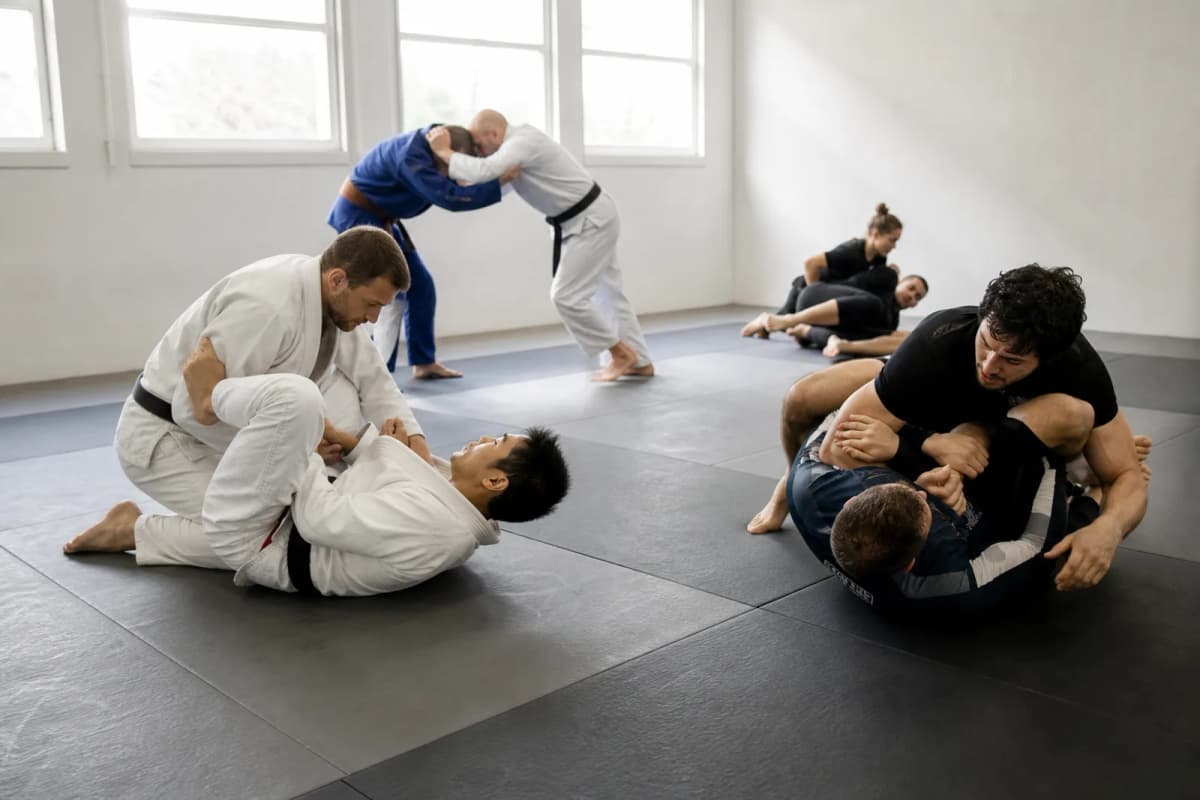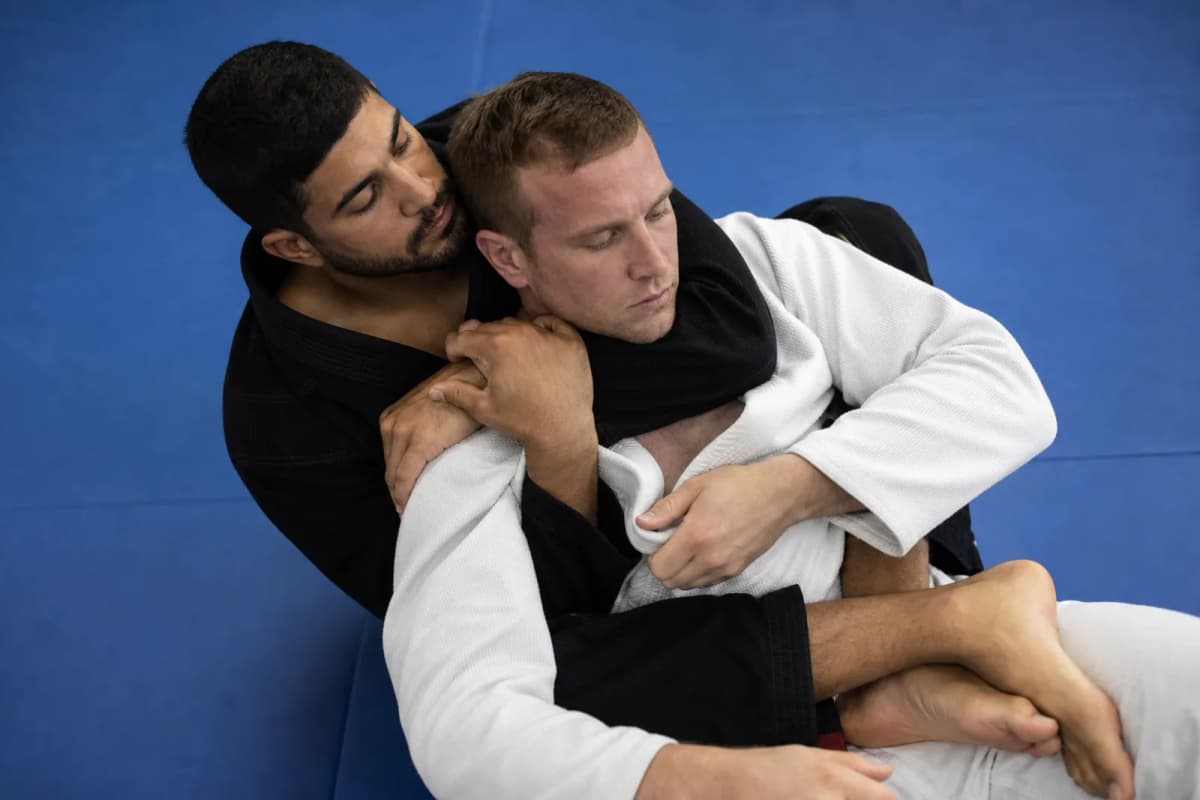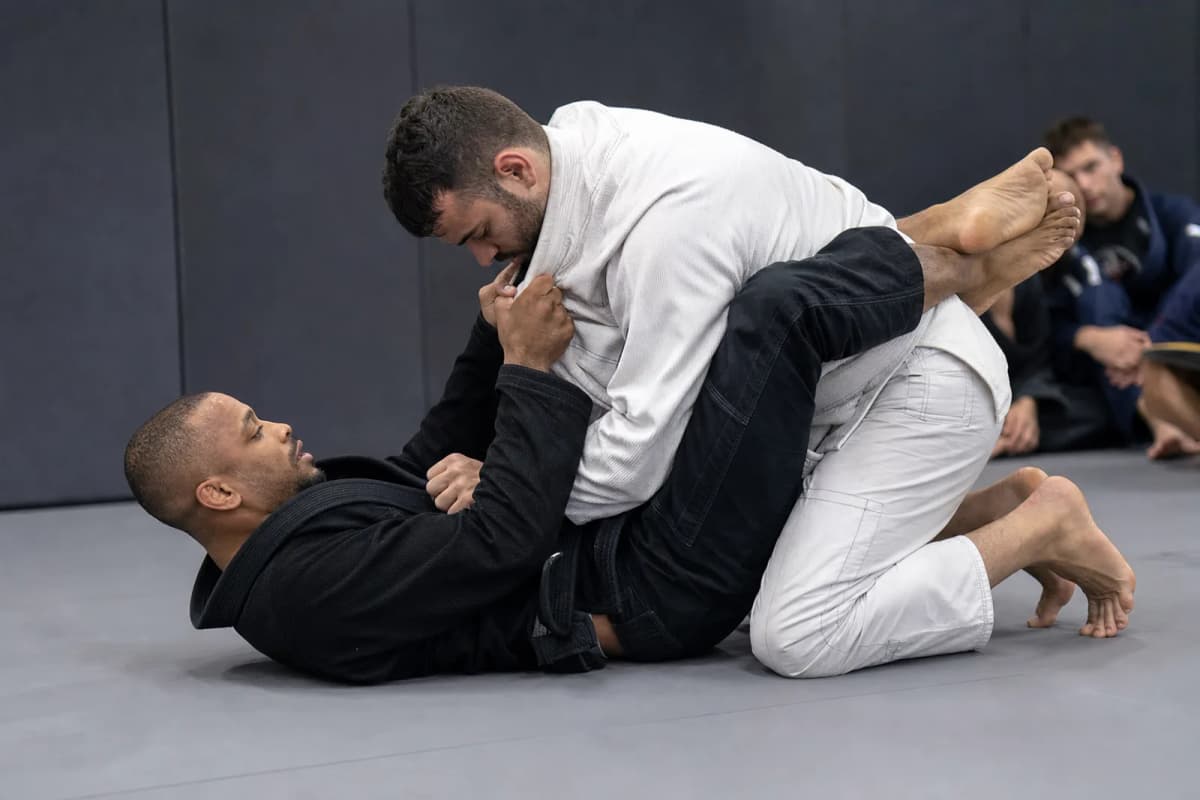
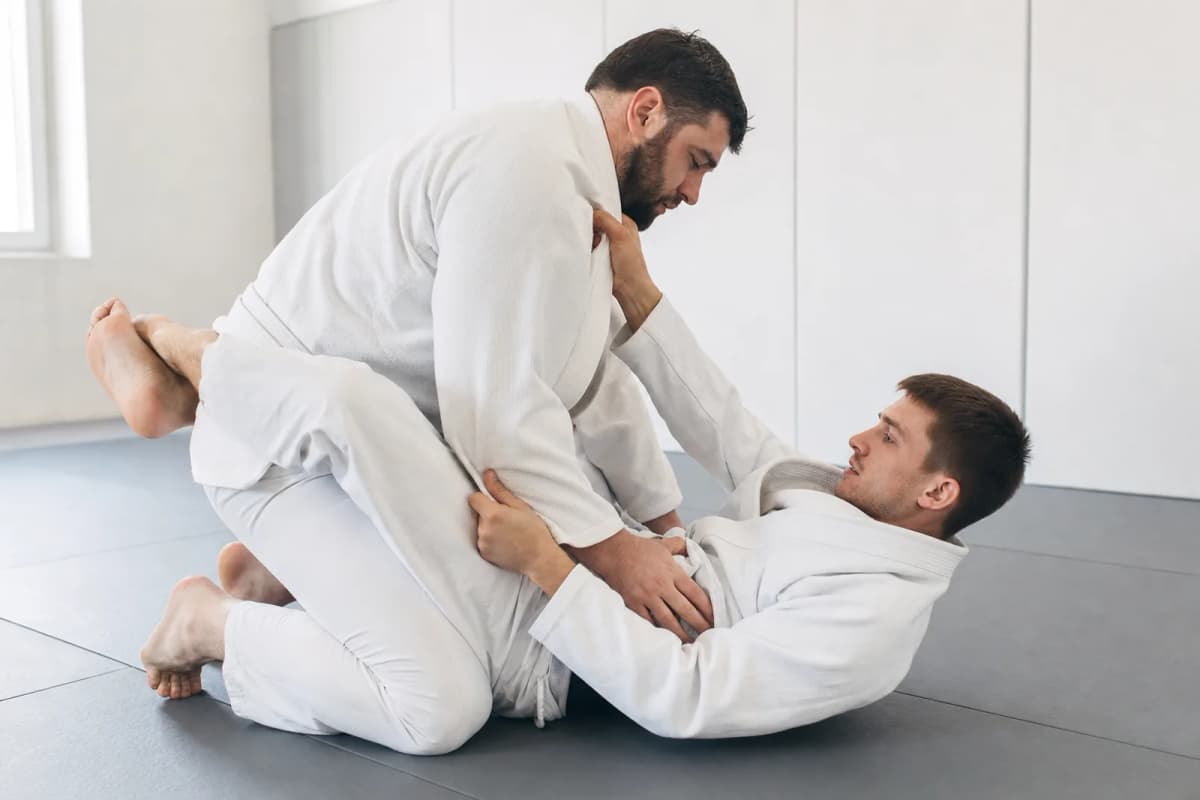
Build a simple closed-guard system around posture breaks, scissor and hip-bump sweeps, and two high-percentage submissions so every defense creates another threat.
Closed guard is a control hub, not a waiting room. You manage posture, create angles, and force the top player to choose between bad posts and broken balance.
A beginner system should answer one question: if they defend my first attack, what happens next? If the answer is “I stall,” the system is incomplete.
Start every exchange by controlling posture with your legs and grips. Submissions and sweeps both fail when the top player sits tall with a free spine.
- Posture break and hip angle — the entry to everything else
- Scissor sweep when they kneel heavy and give you a shin-shield lane
- Hip-bump sweep or kimura when they post a hand to stand or base
- Armbar when the arm crosses your centerline after a failed post
- Triangle when one arm stays inside and the head drops into range
- Omoplata as the shoulder-lock exit when the arm escapes the first two finishes
Break posture, threaten the scissor sweep, and punish posts with hip bumps, armbars, or triangles.
Think in reactions, not isolated techniques. A failed scissor often creates the posting arm for a hip bump. A failed hip bump often leaves the wrist for a kimura or the neck/arm for a triangle.
Rounds 1–2
Posture-break only. Score the session by keeping their head and hands low.
Rounds 3–4
Sweep chains only: scissor ↔ hip bump. Follow to mount or knee on belly.
Key Takeaways
- Closed guard works when posture control and reactions share the same entries.
- Learn sweeps before you collect more submissions.
- A defense against one attack should walk them into the next.
Further Study
Position hub with retention, offense, and related attacks.
Primary beginner sweep when the opponent kneels heavy.
Punish the posting hand and open kimura entries.
High-percentage finish once the arm crosses your centerline.
Choke branch when one arm stays inside and the head drops.
When to stay closed versus when to open and play distance.