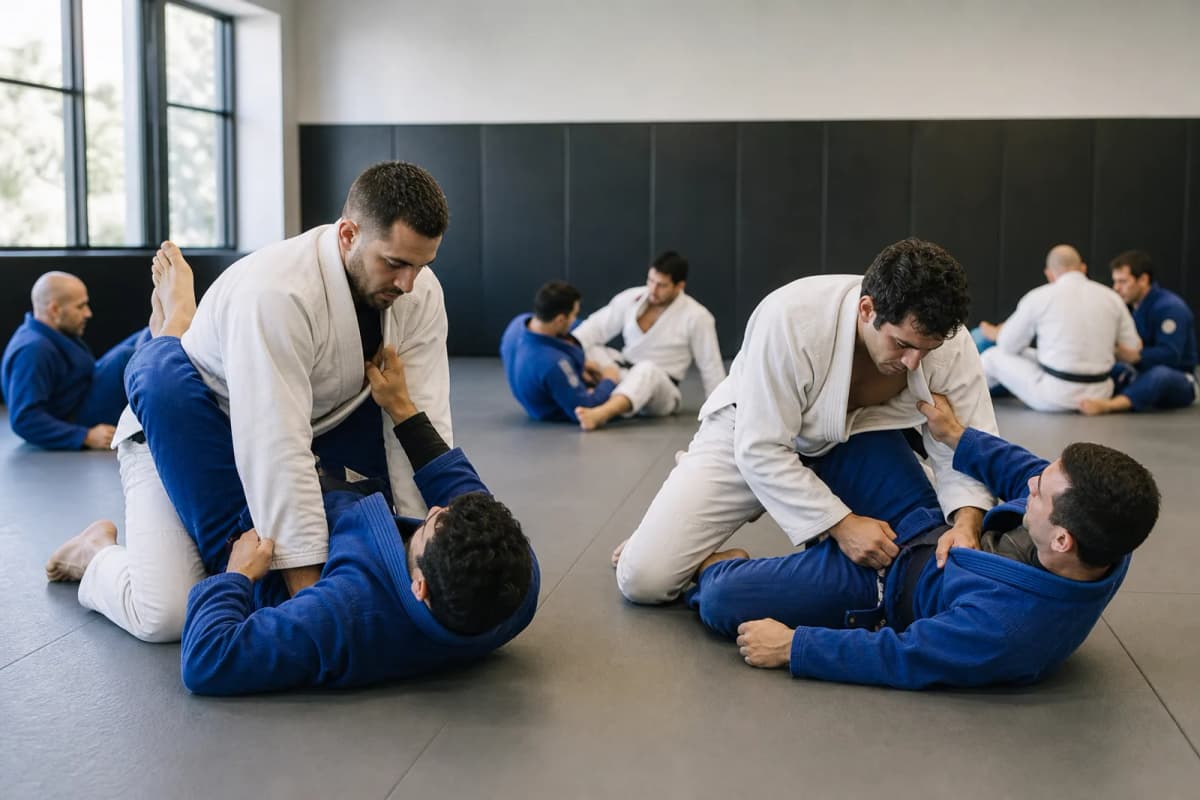
Closed guard is strongest when you can lock the waist and break posture; half guard is strongest when one leg is trapped and you need frames, underhooks, and modern retention to stop the pass.
Closed guard contains the opponent with locked legs. Half guard traps one leg and builds frames or underhooks to stop the pass and create offense.
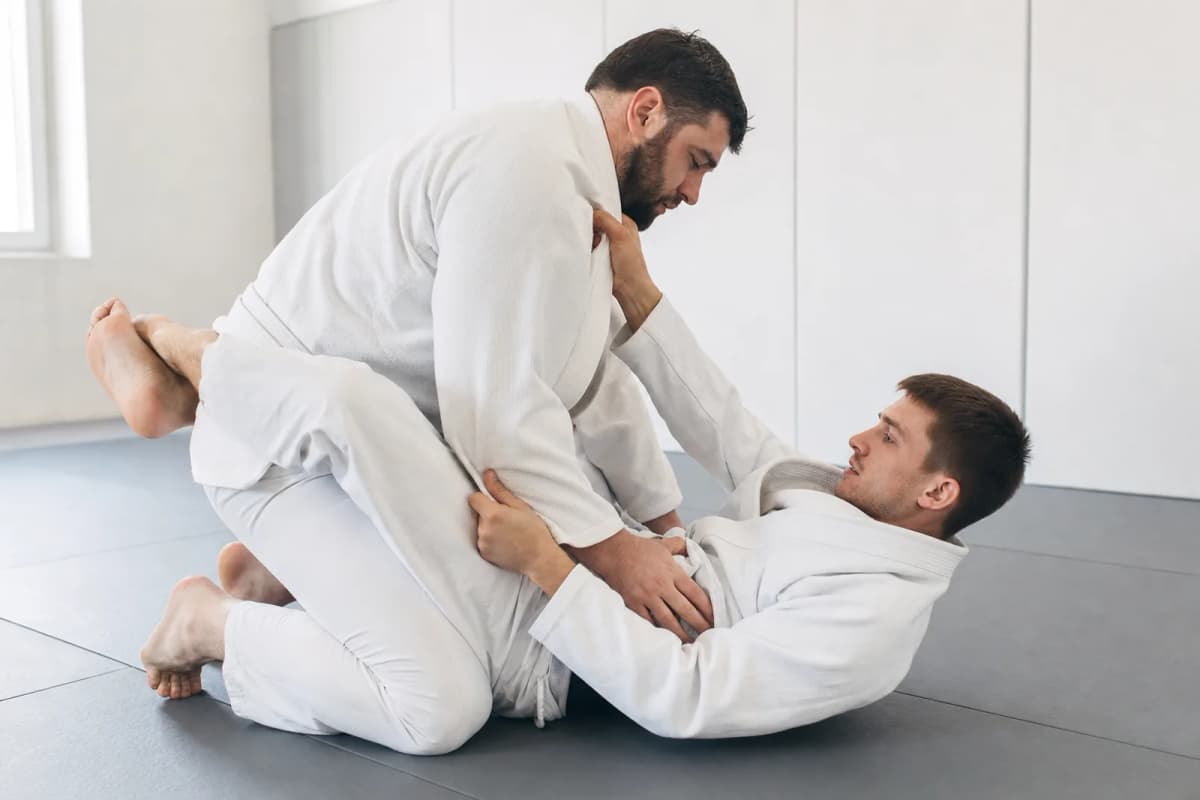
Closed guard wraps both legs around the torso so you can contain their hips and spine. Offense usually starts by breaking posture, forcing a hand to the mat, and choosing a sweep or submission while they are trapped inside your legs.
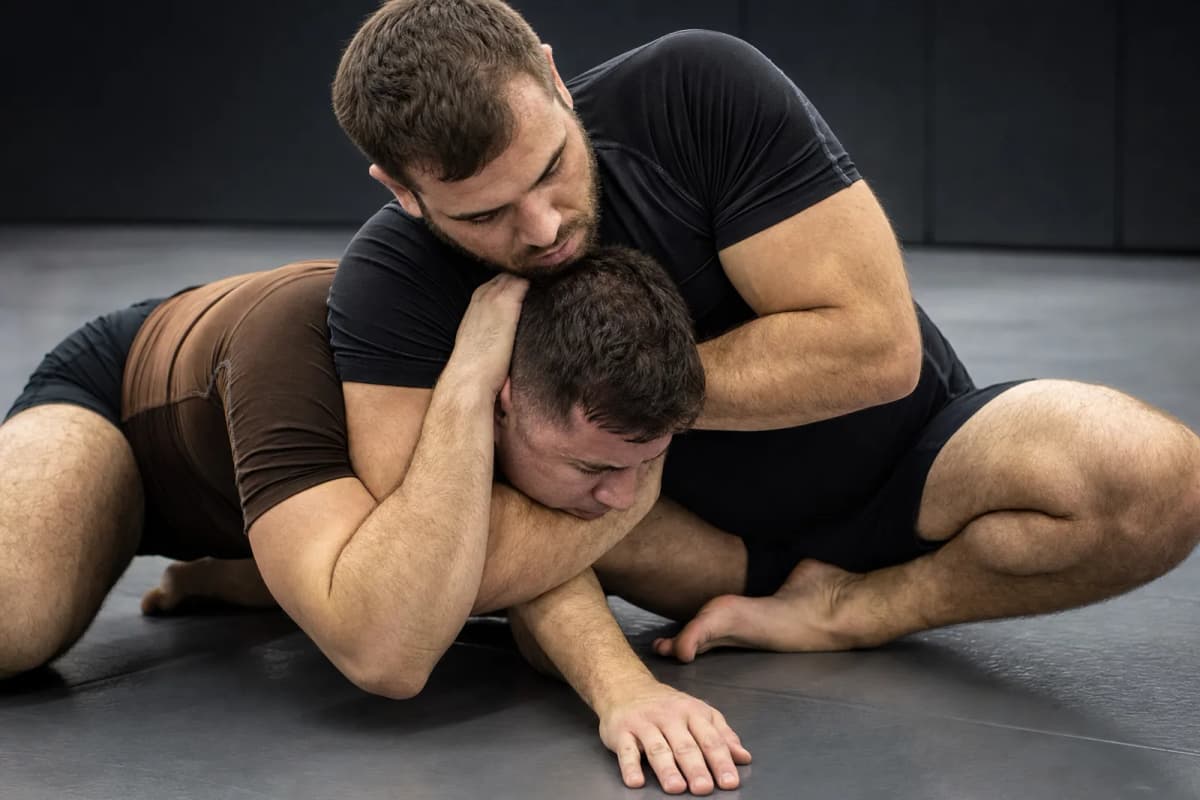
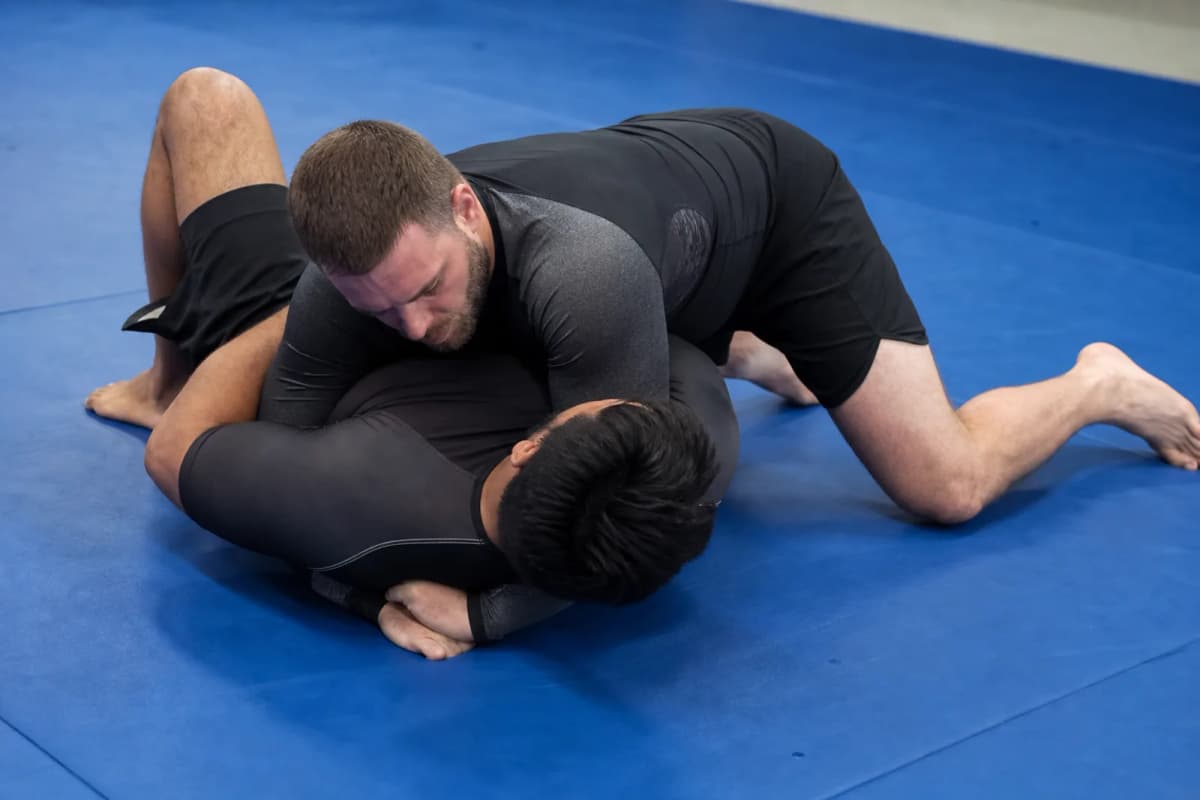
Half guard traps one of their legs between yours. You are no longer containing the whole body with a lock; you are managing distance with a knee shield, fighting for an underhook, or using lockdown-style control so they cannot free the trapped leg and settle into side control.
- Use closed guard when your legs can lock comfortably around the waist and their posture is still breakable
- Use closed guard when you want to slow the pace, force hand placement, and build triangle, armbar, or hip-bump threats
- Use half guard when one leg is already trapped during a pass and locking closed guard would require giving up frames
- Use knee-shield half guard when smash pressure is coming and you need space between their chest and your ribs
- Favor underhook half guard when you can sit up, win the near underhook, and threaten old-school or dogfight sweeps
- Recover closed guard from half guard when you create enough hip space to re-lock without getting flattened
Most bad half-guard rounds are flat retention without frames. Most bad closed-guard rounds are locked legs without posture control.
In closed guard, the common mistake is squeezing the ankles while the opponent sits tall with free hands. Without posture control, the lock becomes a temporary hold and they open your legs on their terms.
In half guard, the common mistake is lying flat with no knee shield and no underhook. That is not a game; it is a pause before side control. Build a frame or underhook first, then choose sweep, recovery, or lockdown control.
Do not confuse stuck half with functional half
If you are flat, crushed, and only holding a leg, hip-escape, frame, or recover before chasing advanced attacks.
Do not force closed guard during a smash pass
When they already control your far hip, fighting for a full lock can give away the underhook and finish their pass.
Key Takeaways
- Closed guard is a containment and posture-breaking system.
- Half guard is a one-leg control system built around frames, underhooks, and recovery.
- Choose the guard that matches the distance you already have, then chain between them instead of forcing one position.
Further Study
Position hub for retention, knee shields, underhooks, and half-guard offense.
The core containment guard for posture breaking and beginner attacks.
A framing structure that keeps smash pressure off your chest in half guard.
The fundamental movement for creating space and recovering guard from bad half.
A classic underhook half-guard sweep that teaches sit-up and far-leg control.
A closed-guard sweep that pairs well once you recover fuller guard and break posture.