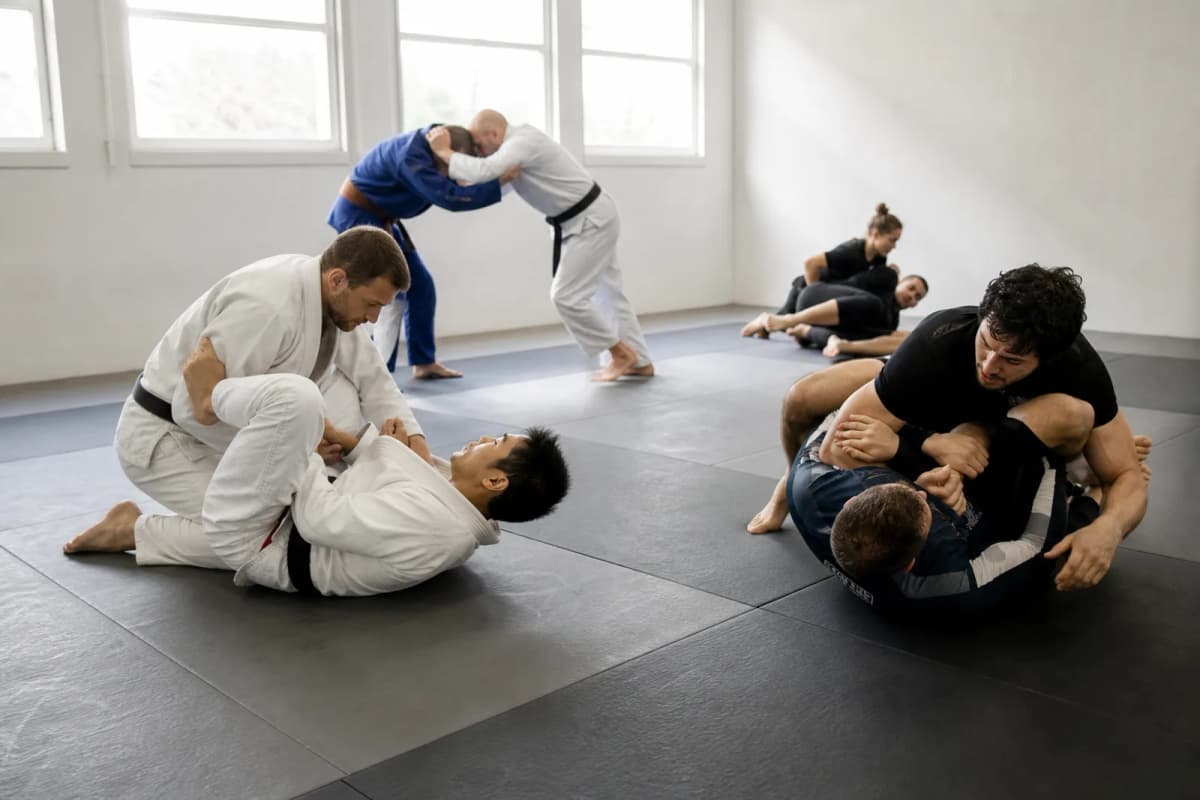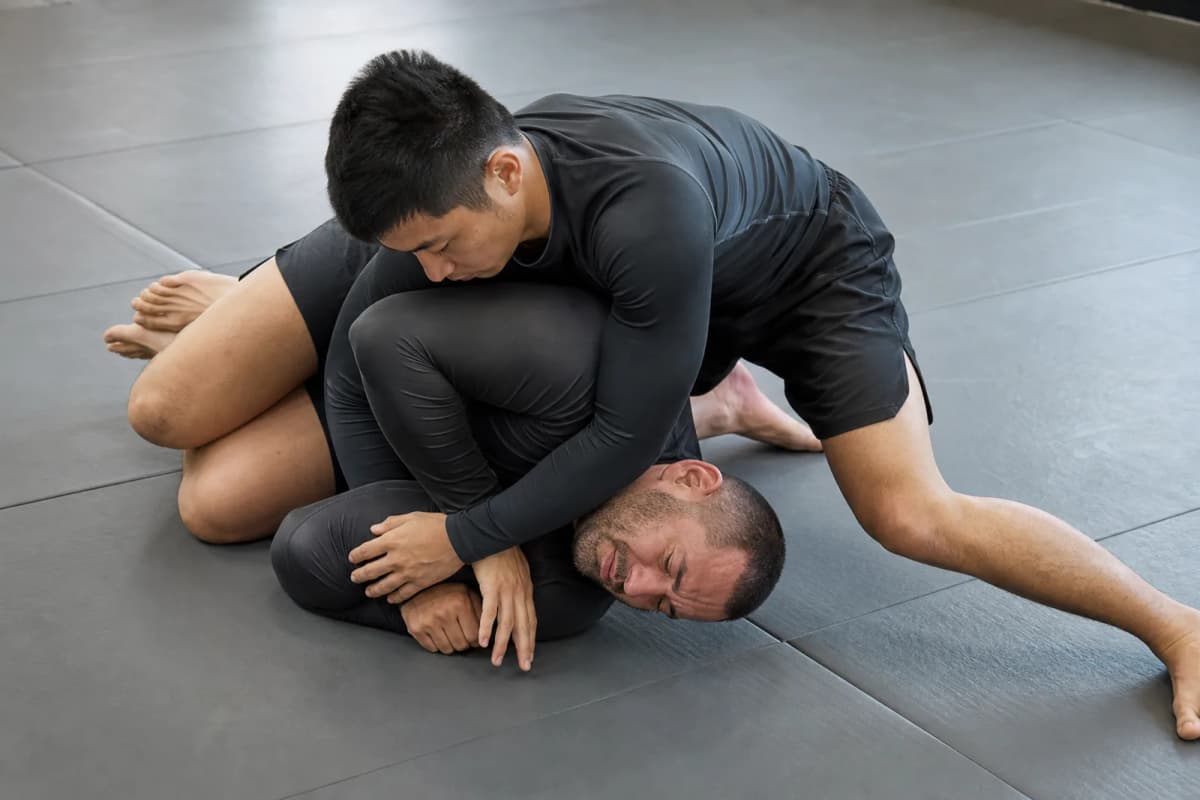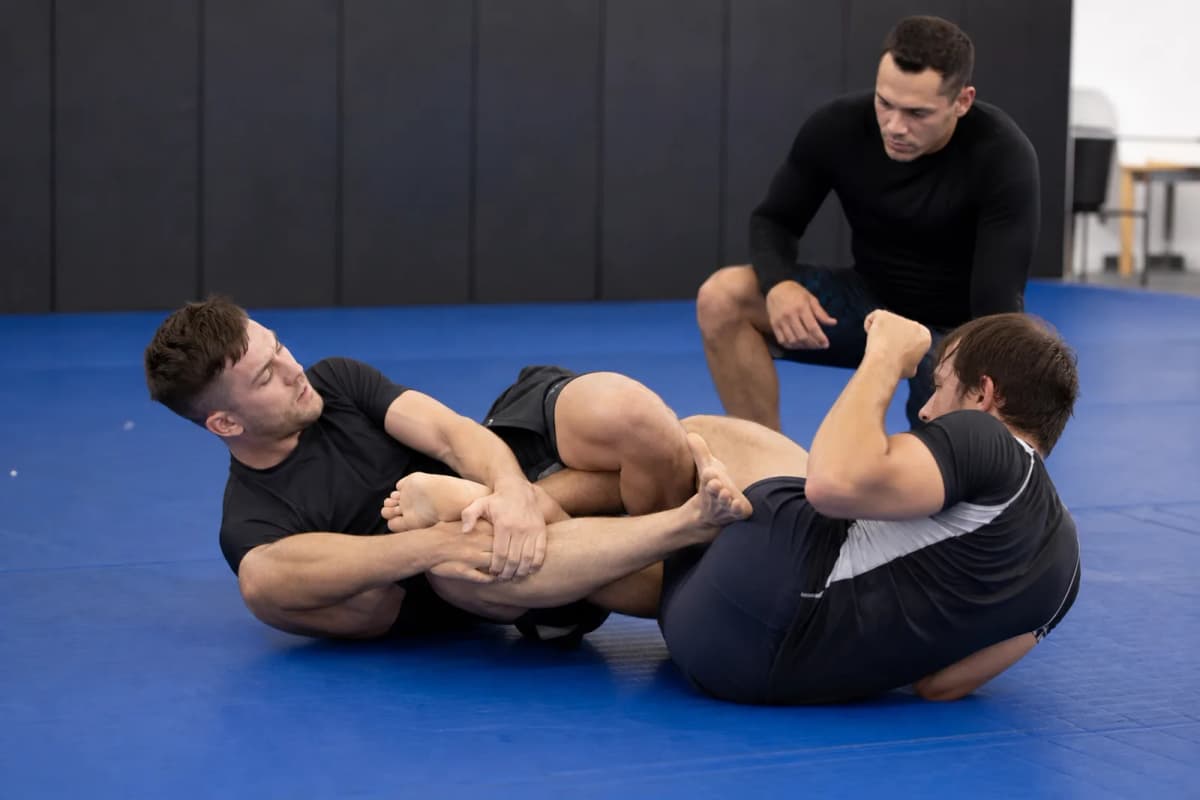
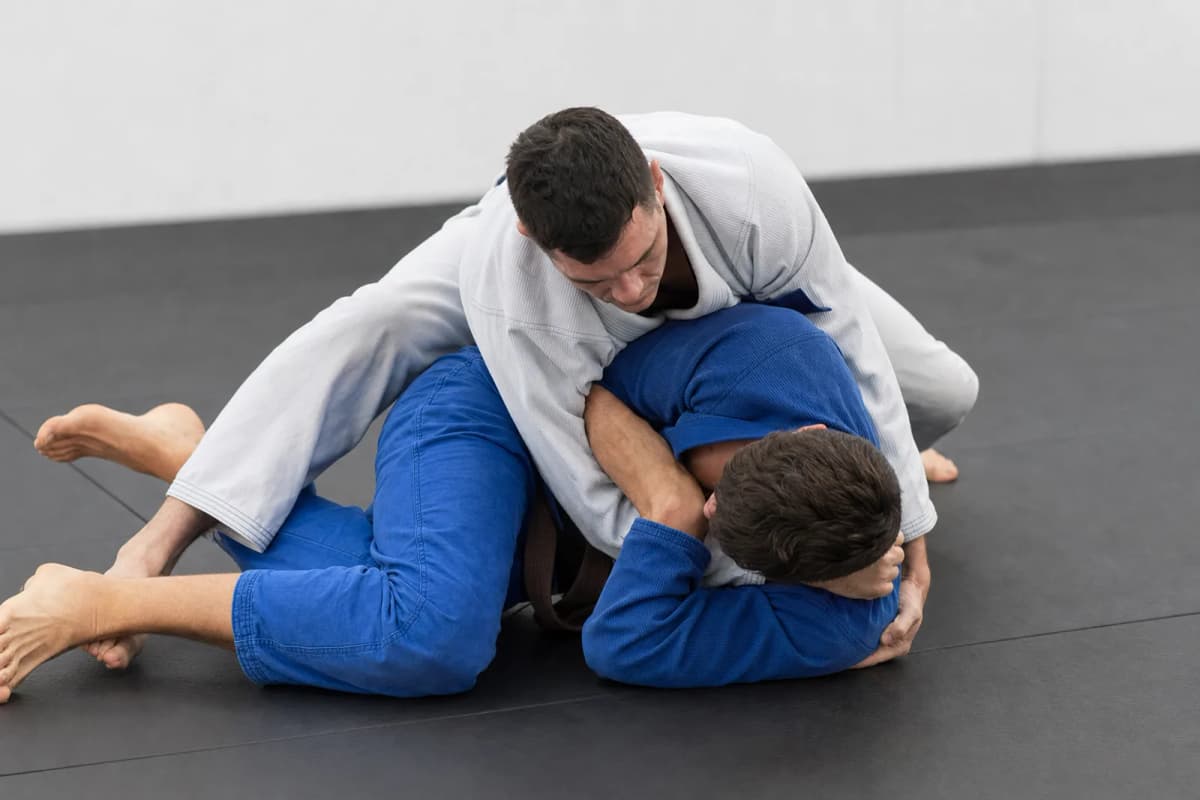
Half guard is a bottom position where one of their legs is trapped between your legs, giving you a bridge between bad side control and fuller guard or sweeps.
If you are on bottom and controlling one of their legs with both of yours, you are in half guard. The quality of that half guard depends on frames and underhooks, not just holding the leg.
Half guard appears constantly in live rolling because many passes stall with one leg trapped. That moment is either the start of your retention and offense or the last pause before side control.
Think of half guard as a decision point: frame and recover closed or open guard, win an underhook and sweep, or use a knee shield to keep smash pressure off your chest while you rebuild.
- Your legs trap one of their legs between you
- Your arms and knees create frames or underhooks so they cannot settle
- Your hips stay active so you can recover, sweep, or enter dogfight exchanges
Beginners meet half guard whether they choose it or not. Learning the position turns pass defense into a plan instead of a scramble.
Closed guard is excellent when you can lock it, but many exchanges never give you that clean lock. Half guard is the position you get when the passer is already halfway through.
A functional half-guard game teaches framing, hip escapes, underhooks, and patience under pressure — skills that transfer to side-control escapes and open-guard retention.
Retention path
Knee shield and frames stop the smash, then hip movement recovers closed guard or open guard.
Offense path
Underhooks open old-school sweeps, dogfight entries, and back exposure when they overcommit to the pass.
- Get a knee shield or strong frame before you get flattened
- Fight for the near underhook or recover posture with frames if the underhook is lost
- Hip-escape early instead of holding a dead leg forever
- Recover closed guard when you win space rather than inventing advanced lockdown attacks first
- Learn one reliable sweep, such as the old-school sweep, once frames and underhooks are consistent
- Treat lockdown and deep half as later layers after basic retention works
Holding a leg while flat is not a half-guard game. Build structure first.
The most common mistake is lying on your back with no knee shield and no underhook while celebrating that you still have a leg. From there, a patient passer frees the knee and settles into side control.
Another mistake is chasing lockdowns or fancy entries before you can create space. If you cannot frame and hip-escape, advanced half-guard variations will not save you under smash pressure.
Do not stay flat
Turn to your side, insert a knee shield or frame, and keep your bottom elbow alive.
Do not confuse stuck with active
If nothing is improving after a few breaths, change the structure or recover fuller guard.
Key Takeaways
- Half guard traps one leg and should create frames, underhooks, or recovery options.
- Beginners should prioritize knee shields, hip escapes, and one simple sweep before advanced lockdown games.
- Half guard and closed guard work together: recover the lock when you can, play half when the pass already traps a leg.
Further Study
Full position hub for retention, offense, and related half-guard structures.
The framing structure that keeps smash passes off your chest.
Essential movement for creating space from bad half guard.
A beginner-friendly underhook sweep from half guard.
A control variation to study after basic frames and recovery are solid.
A common half-guard sit-up exchange that leads to sweeps and back takes.