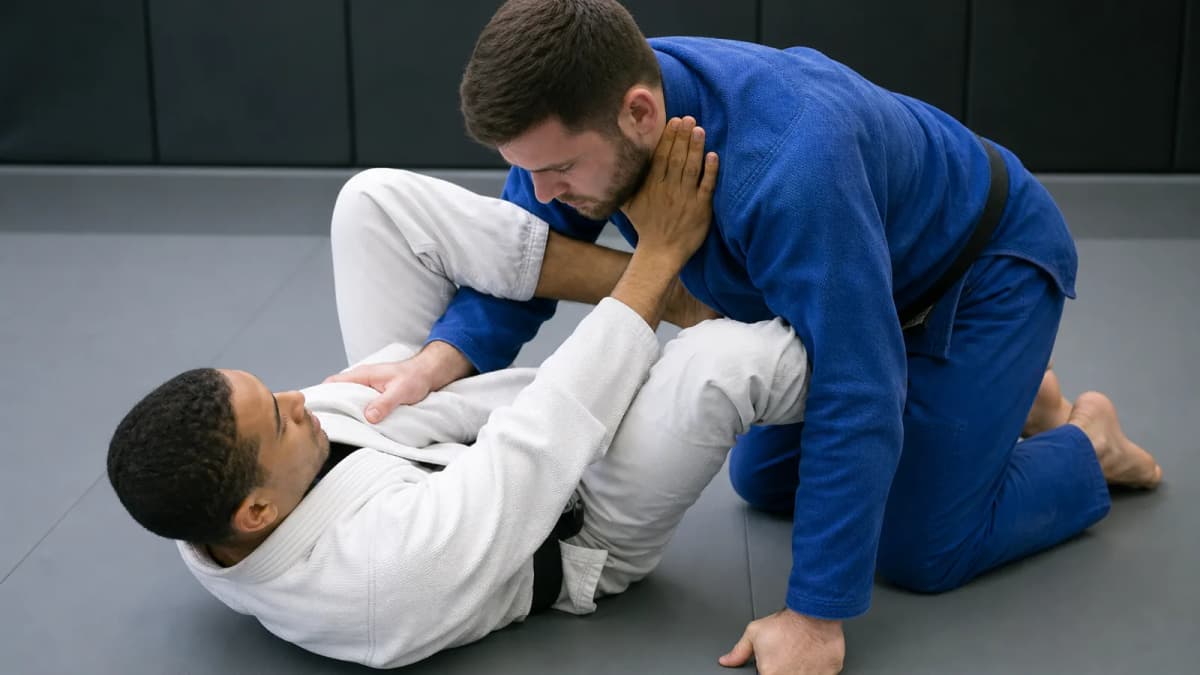
Framing
Use skeletal structure instead of muscle — frames create space, protect neck and arms, and enable escapes.
Framing means using forearms, elbows, knees, and feet as structural posts against the opponent’s body. Good frames create space without burning energy, protect vulnerable areas, and set up escapes from mount, side control, and guard passing pressure.
Bone Not Muscle
Frame with forearm against hip or neck — pushing with flat hands fatigues quickly.
Frame and Move
Frames create space for hip escape — a static frame alone rarely escapes.
Protect the Inside
Elbows inside on bottom mount and side control — wide elbows expose armbars and chokes.
Structural Posts
Align wrist-elbow-shoulder so force transfers through bone into the mat or opponent’s hips.
Space Creation
Frames are temporary — use the inch of space for hip escape or knee insertion.
Layered Defense
Multiple small frames beat one desperate bridge — knee shield plus forearm plus hip escape.
Frames vs Hooks
Frames push away; hooks pull in. Bottom guard retention combines both — frames on biceps, hooks behind knees.
Top Players Break Frames
Passers win by killing frames with knee cuts, crossfaces, and grip strips — expect frame battles every roll.
Bottom Mount
Opponent sits high in mount with crossface pressure.
- Forearm frame on hip and throat simultaneously
- Elbow tight — never flat with arms extended
- Bridge only after frames create hip space for escape
Recognize These Signals
- Crossface loosens — elbow escape window
- Opponent posts hand — trap for Upa
Side Control Defense
Top player flattens you with shoulder pressure.
- Forearm frame on hip, other frame on neck or bicep
- Insert knee shield when hip space opens
- Turn toward opponent to recover guard when frame holds
Recognize These Signals
- Near-side underhook available — turn in
- Frame collapses — prioritize hip escape over submission defense