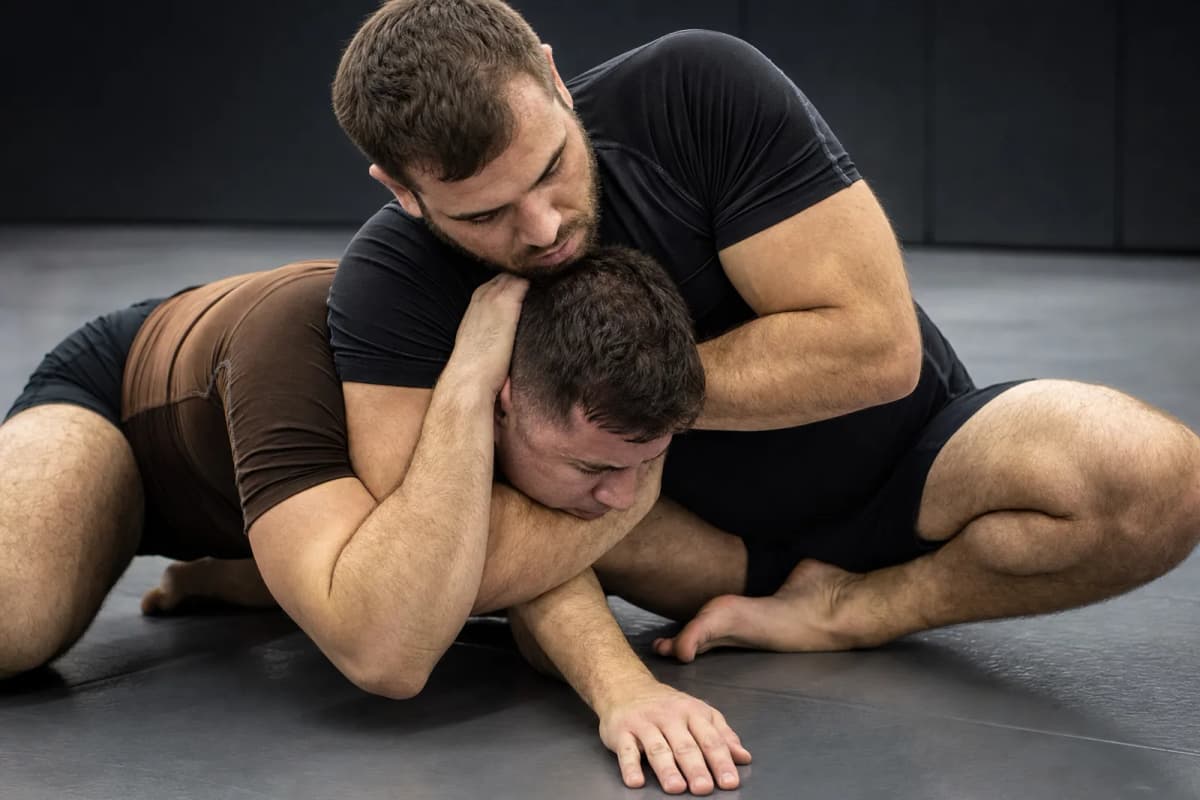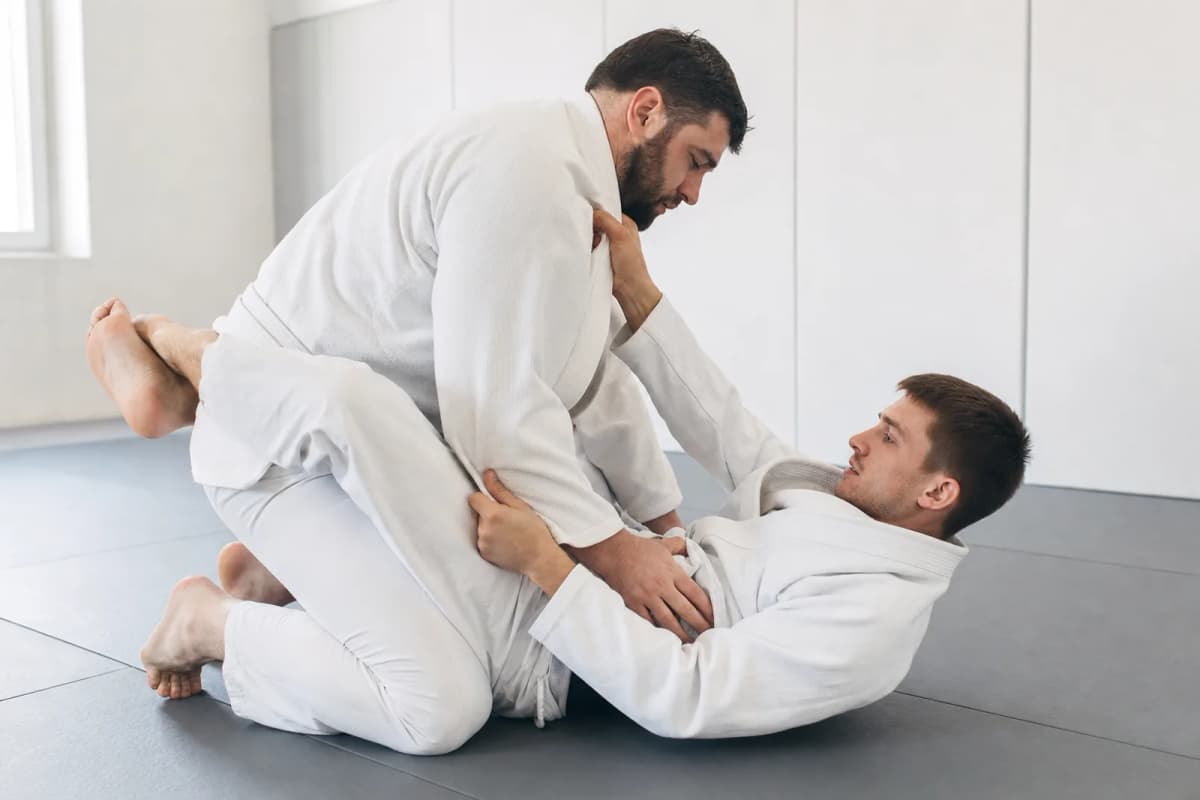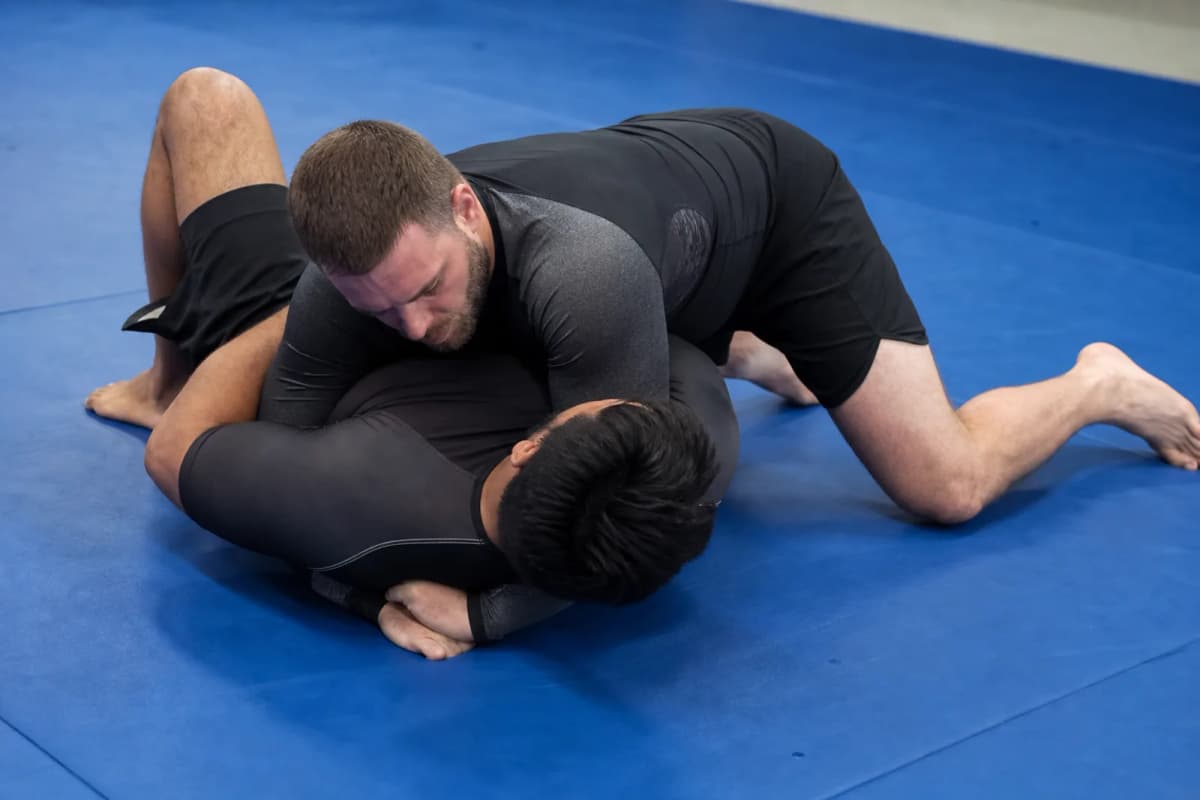
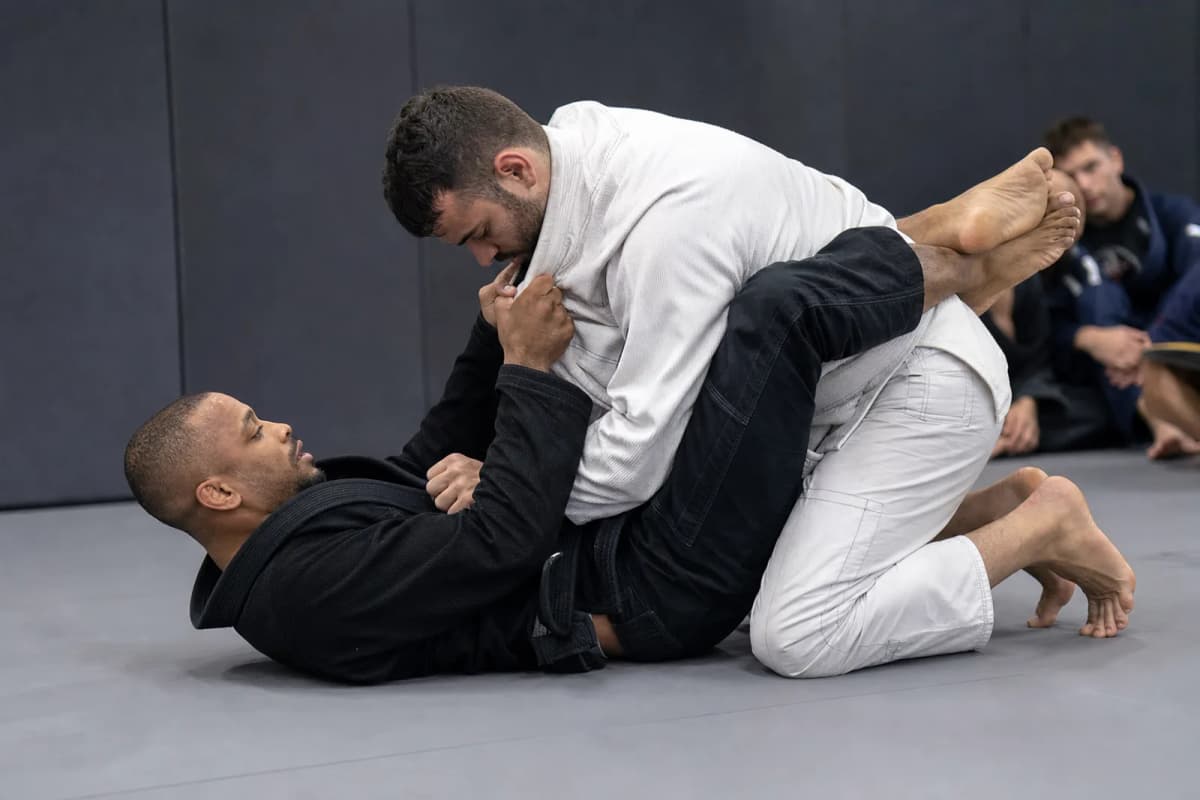
Closed guard is strongest when you can lock your legs and break posture; open guard is strongest when you need hooks, frames, and grips to manage distance against a kneeling or standing passer.
Closed guard traps the opponent inside your legs. Open guard builds a moving frame system between your hips and their base.
Closed guard uses locked legs to contain the opponent while your grips, knees, and hips break posture. Because the opponent is trapped, attacks often begin by pulling them forward or forcing a hand to the mat.
Open guard uses feet, shins, hooks, sleeves, collars, wrists, and hip angles to keep distance. Butterfly guard, de la Riva guard, and spider guard are different open guard structures with different grips and off-balancing patterns.
Closed guard goal
Control posture first, then attack with sweeps, back takes, armbars, triangles, or hip-bump reactions.
Open guard goal
Control distance first, then off-balance the passer into sweeps, leg entries, back exposure, or guard re-composition.
- Use closed guard when your legs can lock comfortably around the opponent and their posture is breakable
- Use closed guard when you want to slow the pace, force hand placement, and build triangle-choke or arm-isolation threats
- Use open guard when the opponent stands, postures, or starts opening your closed guard
- Use butterfly guard when you can sit up with inside hooks and fight for underhooks or arm drags
- Use de la Riva or spider guard when legs and grips can control a standing passer at longer range
Guard choice should follow distance. Forcing the wrong guard usually gives the passer the first move.
In closed guard, the common mistake is squeezing the legs without controlling posture. If the opponent can sit tall and use both hands freely, your lock becomes a temporary hold rather than an attacking guard.
In open guard, the common mistake is playing with loose feet and disconnected grips. Open guard needs active hooks, frames, and angles; otherwise the passer can step around your legs before an attack starts.
Do not hold closed guard passively
Break posture, climb your legs, create angles, or switch guards before the opponent opens on their terms.
Do not leave open guard flat
Keep your hips mobile and your feet purposeful, especially when the passer starts changing sides.
Key Takeaways
- Closed guard is a posture-breaking guard built around containment.
- Open guard is a distance-management system built around hooks, frames, and grips.
- Switch guards before the passer dictates the distance for you.
Further Study
The core containment guard for posture breaking and submission setups.
A seated open guard built around inside hooks and elevation.
An open guard for controlling standing passers with an outside hook.
A sleeve-and-foot control guard that shows the grip-heavy side of open guard.
A classic guard sweep that teaches posture breaking and angle creation.
A common closed guard and open guard submission when posture and arm position break down.