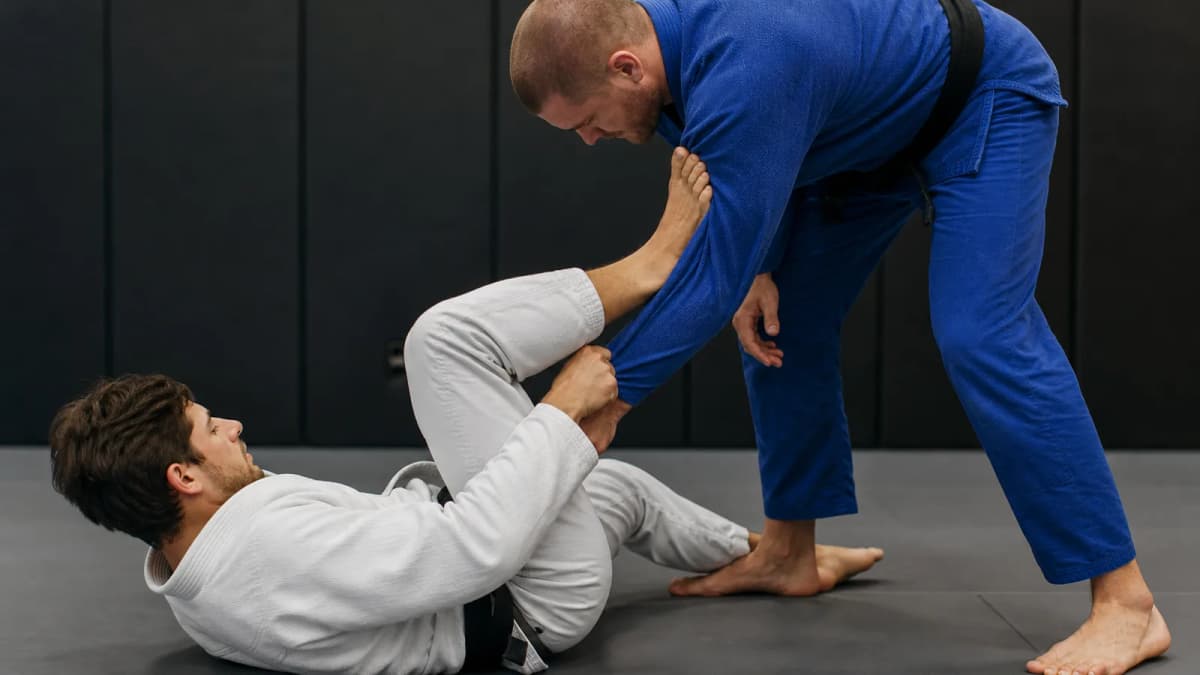
Spider Guard
Gi guard using sleeve and foot on biceps — creates distance, sweeps, and triangle entries against standing passers.
Overview
Spider guard controls both sleeves with feet on the opponent’s biceps (or inner elbows). It creates long-range control that frustrates standing passes and sets up triangles, omoplatas, and balloon sweeps in the gi.
Position Flow
How to Enter
- Transition from collar-sleeve when passer stands
- Insert spider hooks when both sleeves are controlled
- Recover from failed closed guard by pushing to spider
How to Exit
- Balloon sweep when passer steps forward
- Triangle when one arm extends
- Transition to lasso when one spider hook fails
Key Controls
Vulnerabilities
- Leg drag when one sleeve grip breaks
- Smash pass when feet slip off biceps
- Torreando when both sleeves are released simultaneously
Ideal When
You have strong sleeve grips and the passer stands — spider creates distance and off-balancing opportunities in the gi.
OffenseOffense
Goals
- Control distance with feet on biceps
- Break balance sideways for sweeps and submissions
Key Techniques
- Balloon sweep
- Triangle choke from extended arm
- Omoplata when arm crosses center
Pro Tips
- Keep sleeves tight — loose grips lose spider control
- Push one bicep while pulling the other for off-balance
- Re-grip sleeves constantly during movement
Common Mistakes
- Flat back with no hip angle
- Letting feet slide to forearms without re-adjusting
DefenseDefense
Goals
- Strip one sleeve grip to collapse spider structure
- Drop level and smash before hooks re-insert
Key Techniques
- Leg drag after grip break
- Torreando when both feet are cleared
- Knee cut when one sleeve is controlled only
Pro Tips
- Hide hands inside sleeves to prevent four-finger grips
- Walk backward to reduce sweep leverage
Common Mistakes
- Standing tall within triangle range
- Reaching with both arms simultaneously
Variations
Lasso-spider hybridOne-leg spiderSpider to De La Riva
Key Concepts
- Distance management wins against standing passers
- Sleeve control is the entire system
- Spider connects to triangle-omoplata-armbar chains
Recommended Drills
- Sleeve grip fighting to spider insertion
- Balloon sweep repetitions with hip angle focus
- Spider guard retention vs torreando passing
Related Techniques
Summary
Spider guard is gi distance control. Own both sleeves, feet on biceps, angle your hips — then sweep or submit when the passer overcommits.