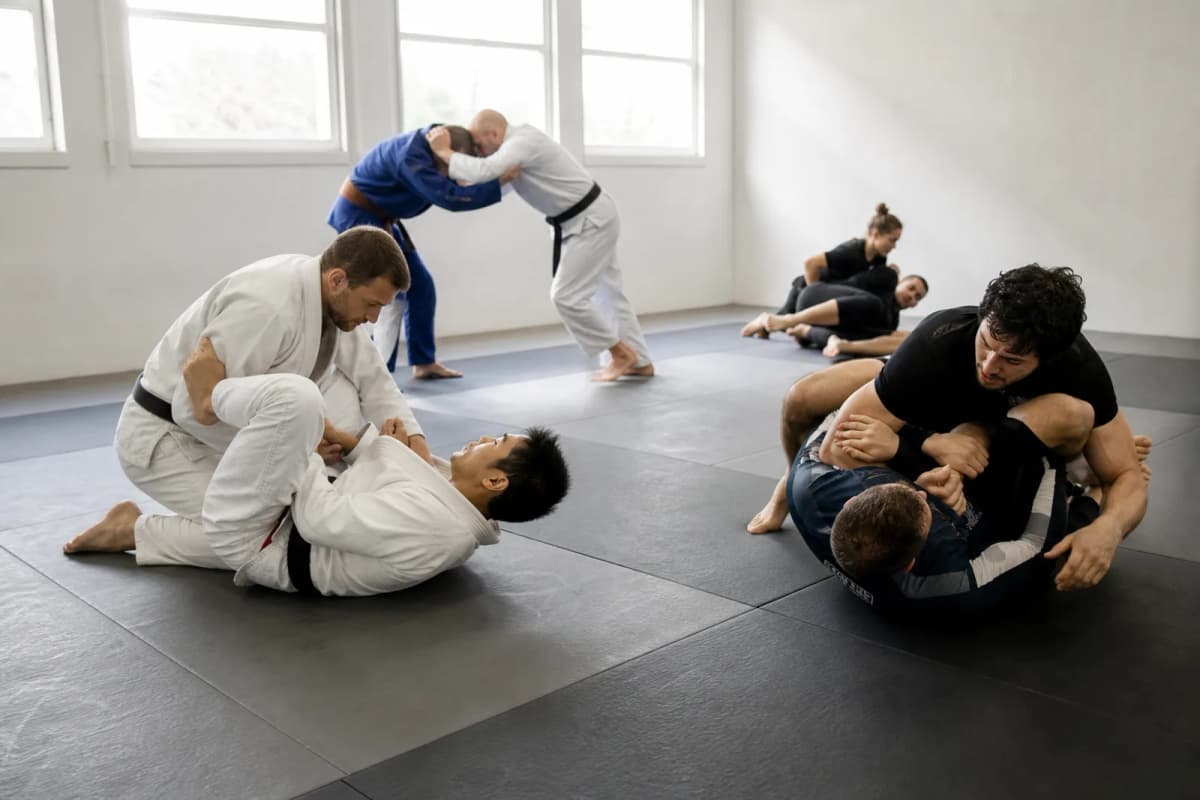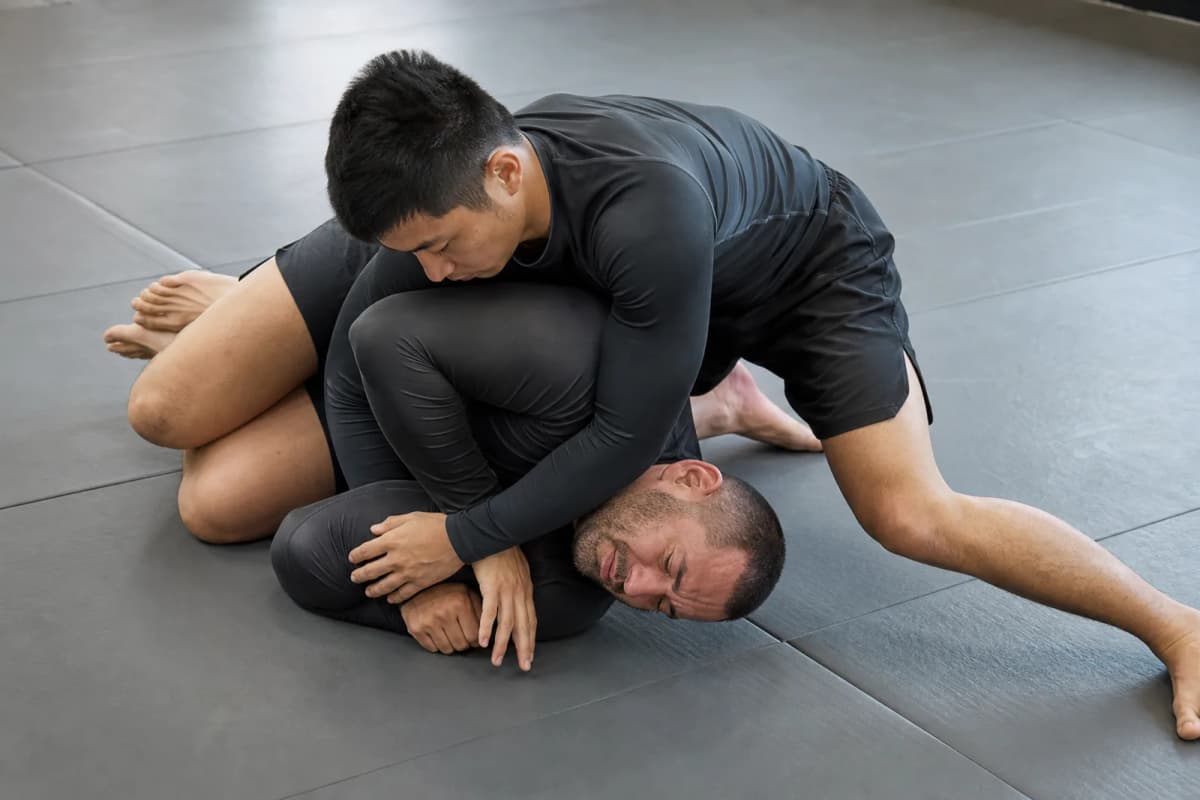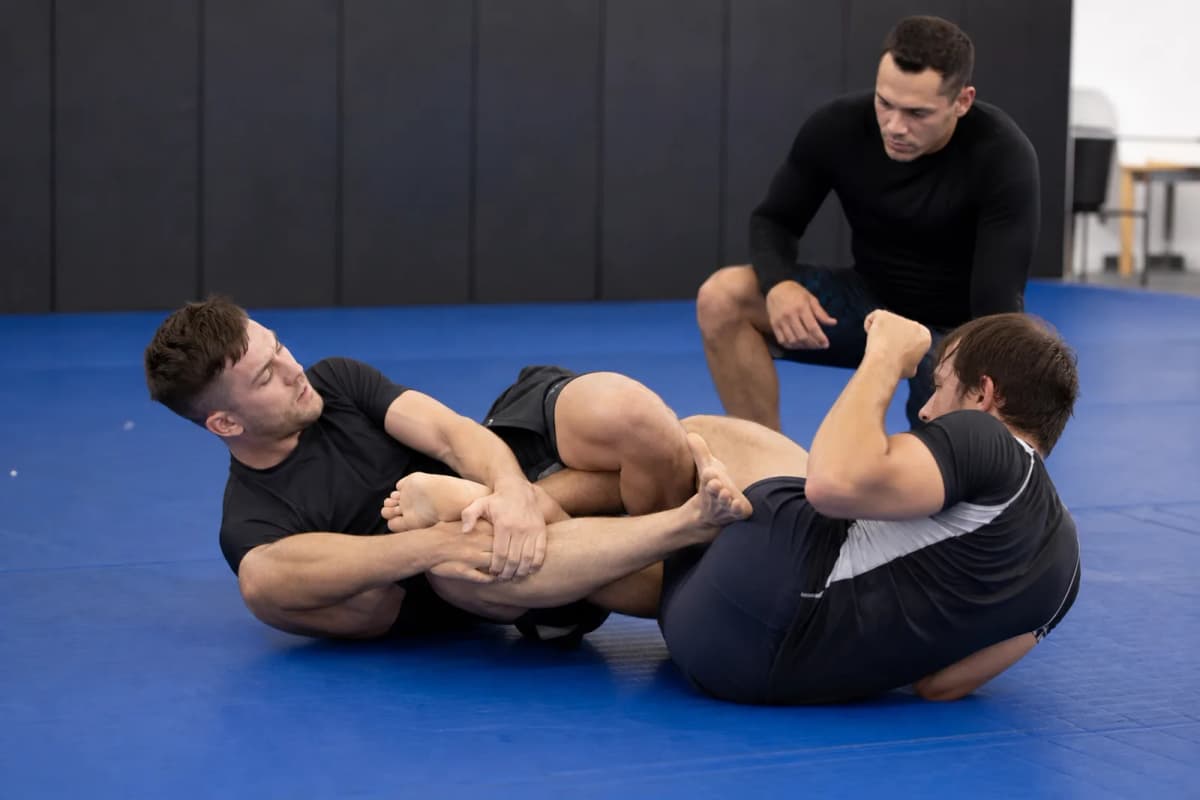

Beginners can start with either gi or no-gi because both build real grappling skills.
Choose the class you can attend consistently, then add the other format when your schedule and recovery allow.
Gi and no-gi are not separate sports for a brand new student as much as they are different learning environments. Both teach balance, pressure, escapes, guard work, and submissions.
If your academy offers both, alternating formats can make your learning broader. If it offers only one, you can still build a strong foundation.
Gi
The gi creates handles. That slows many exchanges, rewards grip fighting, and gives beginners time to feel posture, angles, and defensive structure.
No-gi
No-gi has fewer clothing grips, so control depends more on underhooks, head position, body locks, wrestling, and fast transitions.
- Pick the schedule you can repeat every week
- Ask the coach which beginner class has the best onboarding
- Use gi classes to study grips and posture
- Use no-gi classes to study movement and wrestling ties
- Avoid treating either format as easier or more advanced
Key Takeaways
- Either gi or no-gi is a valid starting point.
- Gi tends to slow the pace and expose grip mistakes.
- No-gi tends to reward wrestling, athletic transitions, and body control.
- Training both eventually gives beginners the most complete perspective.
Further Study
Foundational control skill for gi and no-gi exchanges.
A beginner-friendly guard that appears in both formats.
A wrestling-based entry that transfers well to no-gi.
Gear and hygiene guidance for your first visit.