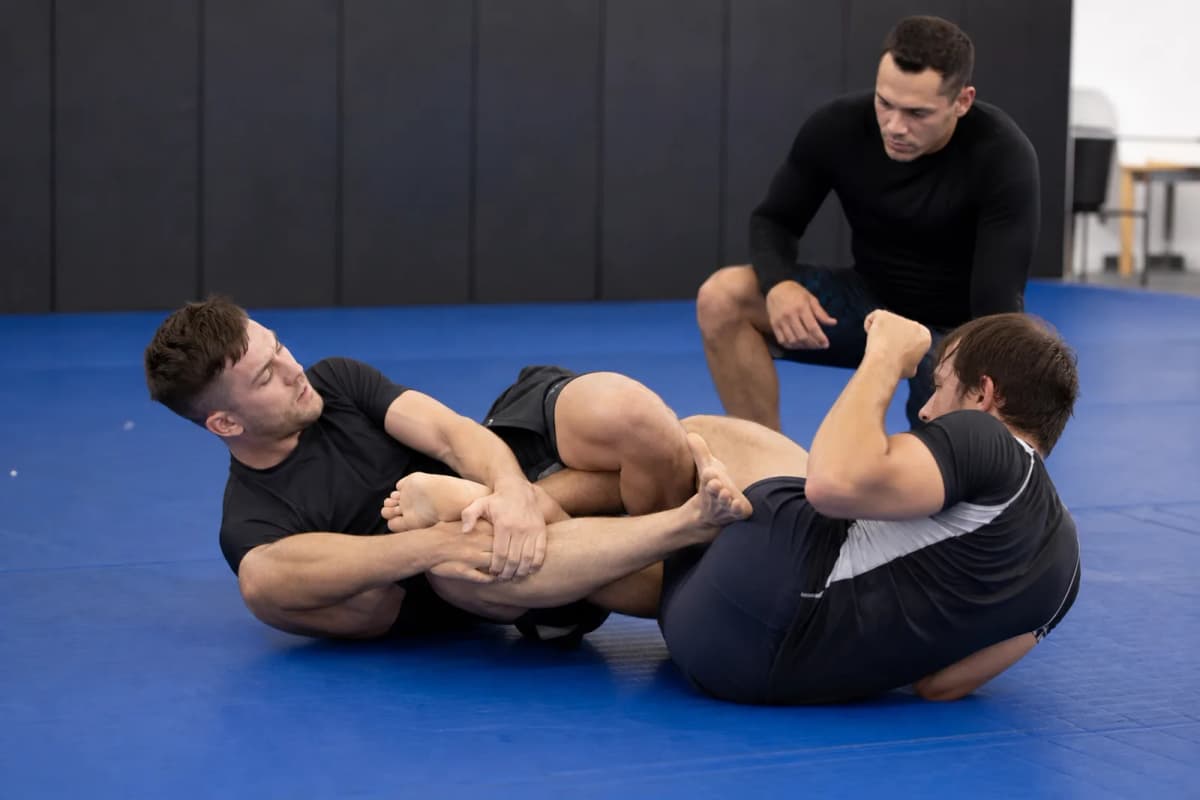
In IBJJF, the knee bar is illegal for white, blue, and purple belts (gi and no-gi) and legal only for adult brown and black, per the Technical Fouls & Illegal Moves table.
Knee-bar legality depends on belt level in IBJJF and on the event rulebook everywhere else.
The IBJJF Technical Fouls & Illegal Moves table — published with the Rule Book on the IBJJF Books and Videos page — marks the knee bar through purple belt. Adult brown and black belts may use it in gi and no-gi. White, blue, and purple should treat the finish as illegal in IBJJF-style brackets unless the event rules clearly say otherwise. Kids and juvenile columns are stricter still.
Official ADCC Championship rules list any leg lock or ankle lock as legal, so the knee bar is allowed there. That never replaces checking the specific rulebook for your division, and it does not change the IBJJF belt split above.
- Straight knee hyperextension can injure before a clear tap signal
- Poor thigh isolation turns a controlled finish into a sudden crank
- Lower-belt divisions prioritize safer, clearer finishing mechanics
- Competitors need to separate useful entanglements from illegal finishes
Learn control before breaking arc
Understand ashi-style entries, hip connection to the knee, and slow hyperextension before chasing hard finishes.
Keep IBJJF exits ready
If you enter a knee-bar shape in an IBJJF match at a lower belt, abandon the illegal finish and transition to a legal ankle lock, sweep, or positional score.
Key Takeaways
- IBJJF marks knee bars illegal through purple; legal for adult brown and black.
- ADCC championship rules allow any leg lock, including the knee bar.
- Lower belts should study control carefully and avoid illegal finishes in competition.
Further Study
Official IBJJF Rule Book (v6.0) and Technical Fouls & Illegal Moves downloads. Confirm your age, belt, and gi/no-gi column.
Official ADCC legal techniques, illegal techniques, scoring, and time limits.
Technique page with mechanics, safety notes, and legality.
A common entanglement family that exposes knee-bar entries.
A more beginner-friendly legal leg attack in many IBJJF adult divisions.
A broader white-belt legality checklist with technique links.
Age-column illegal-moves summary — kids and juveniles are not the adult belt split.
Same IBJJF belt split as the knee bar: illegal through purple, legal for adult brown and black.
Heel hooks stay illegal for IBJJF white belts in gi and no-gi.