Toe holds are not legal for white through purple belts in IBJJF. The official Illegal Moves table allows them for adult brown and black.
Toe-hold legality changes by ruleset, belt level, and the event’s exact illegal-moves table.
The IBJJF Technical Fouls & Illegal Moves table — published with the Rule Book on the IBJJF Books and Videos page — marks the toe hold through purple belt. Adult brown and black belts may use it. White, blue, and purple should assume the finish is off-limits in IBJJF-style brackets unless the published rules clearly allow it.
Official ADCC Championship rules list any leg lock or ankle lock as legal, so the toe hold is allowed there. That never replaces checking the rulebook for your division.
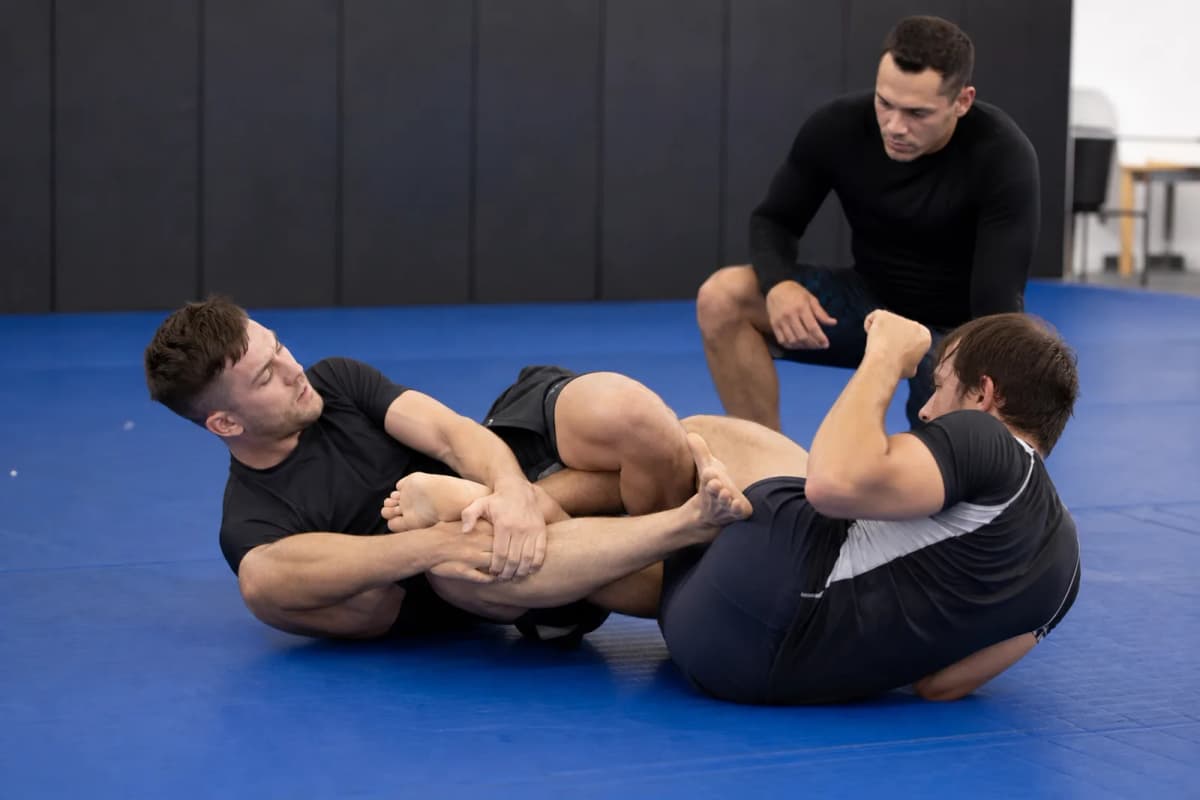
- Figure-four foot locks can stress the ankle and knee together
- Explosive twists give less warning than slower straight ankle pressure
- Lower-belt divisions prioritize safer, clearer finishing mechanics
- Competitors need legal exits when a scramble exposes a planted foot
Control the knee line first
Learn reverse ashi and outside ashi control before adding finishing torque. Clean rotation of the foot as a unit beats yanking toes.
Keep IBJJF exits ready
If you enter a toe-hold shape in a restricted IBJJF match, abandon the illegal finish and transition to a legal ankle lock, sweep, or pass.
Key Takeaways
- IBJJF marks toe holds illegal through purple; legal for adult brown and black.
- ADCC championship rules allow any leg lock, including the toe hold.
- Lower belts should prioritize legal foot locks and controlled training over competition finishes.
Further Study
Official IBJJF Rule Book (v6.0) and Technical Fouls & Illegal Moves downloads. Confirm your age, belt, and gi/no-gi column.
Official ADCC legal techniques, illegal techniques, scoring, and time limits.
Technique page with mechanics, safety notes, and legality.
Compare rotational foot attacks and when each appears.
A more beginner-friendly legal leg attack in many IBJJF adult divisions.
A broader white-belt legality checklist with technique links.