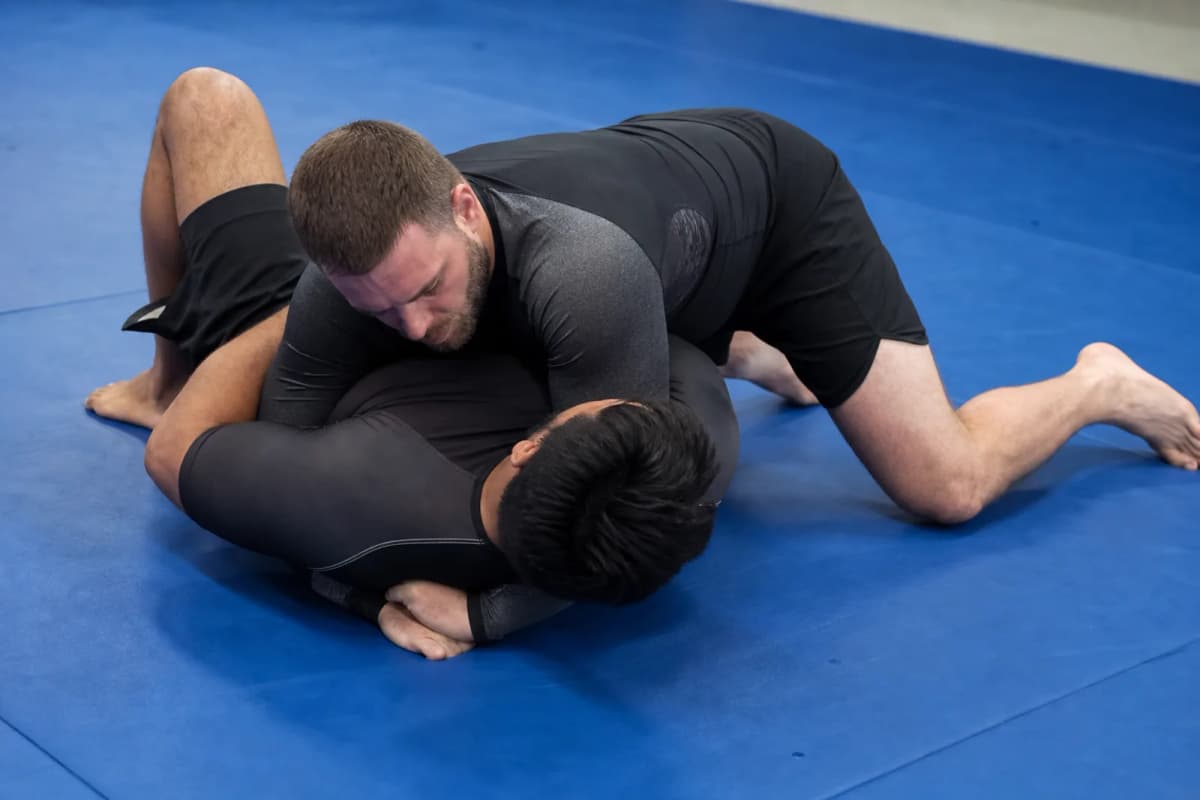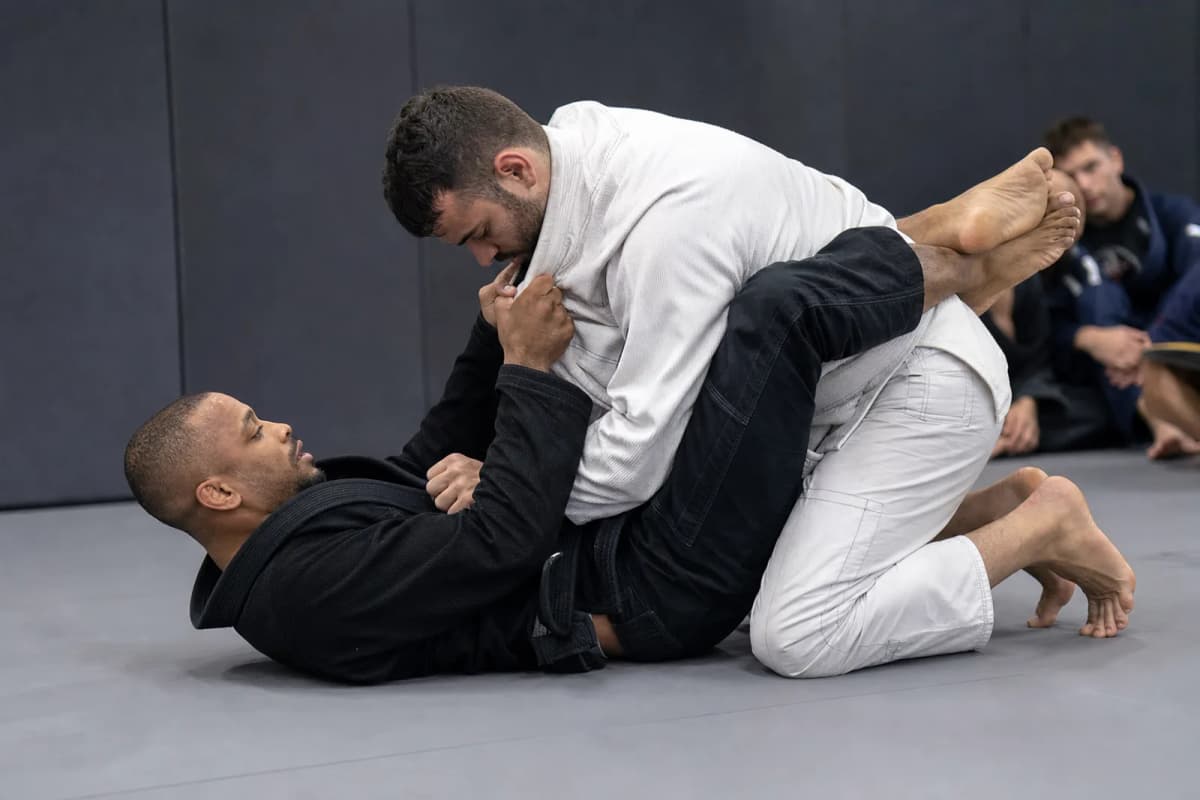
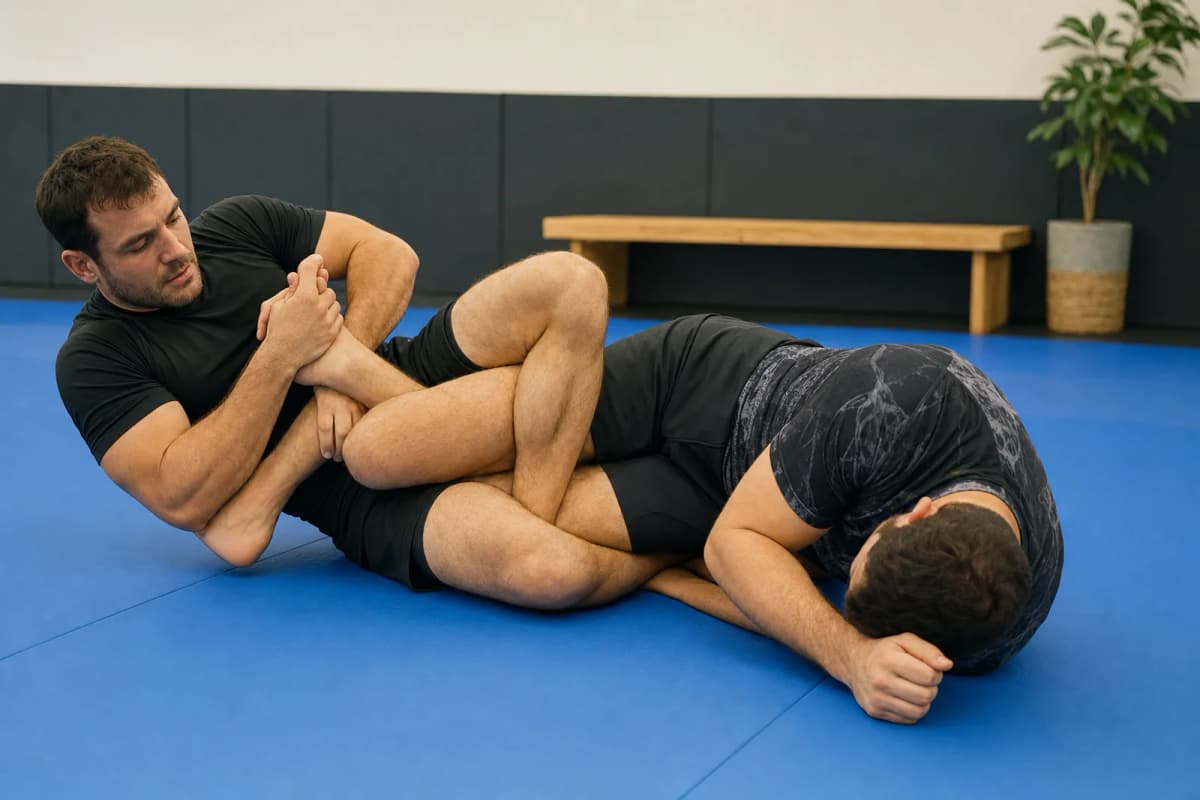
Choose heel hooks when rules allow and you control the knee line in ashi or saddle; choose toe holds when you need a legal twisting foot attack from secondary control or many gi contexts.
Both attacks twist the lower body, but they load different structures. Heel hooks rotate through the knee line; toe holds twist the foot and ankle complex.
A heel hook isolates the heel and uses rotational pressure that transmits through the ankle into the knee. It is strongest when the knee line is controlled inside an entanglement such as ashi garami, outside ashi, or saddle, so the opponent cannot hide the heel or straighten out of the attack.
A toe hold uses a figure-four grip on the foot to twist the toes and ankle. It can finish from secondary controls, turtled exchanges, or positions where the heel is harder to isolate. Because many rule sets treat toe holds differently from heel hooks, it often becomes the twisting option when heel hooks are restricted.
Heel hook direction
The heel is trapped and rotated while the knee line stays pinned, loading the knee through the lower leg.
Toe hold direction
A figure-four on the toes twists the foot and ankle complex, often without the same deep heel isolation.
- Use a heel hook when your ruleset allows it and you already control the knee line in ashi or saddle
- Use a heel hook when the heel is exposed and your hips can keep the entanglement stable through the finish
- Use a toe hold when the heel hides but the foot remains available for a figure-four twist
- Use a toe hold in many gi or restricted contexts where heel hooks are illegal but twisting foot attacks may still be allowed
- Default to a straight ankle lock when you need a simpler, often more widely legal attack with clearer beginner control
- Never force rotational pressure through a loose entanglement just because the foot is nearby
Leg locks become dangerous when people finish before they control. Position first, then pressure.
With heel hooks, the common error is cranking rotation while the knee line is still free. If they can hide the heel, turn the knee, or straighten out, you do not have a finish yet. Re-stabilize the entanglement before applying pressure.
With toe holds, the common error is attacking only the toes while the rest of the body escapes. Without hip control and a clear figure-four, the twist stalls and you lose the position. Another mistake is treating any foot twist as interchangeable with a heel hook under competition rules.
Train rotational attacks slowly
Heel hooks and aggressive toe holds can injure quickly. Apply pressure gradually and tap early in training.
Know your rules before you hunt finishes
White-belt and gi divisions often restrict heel hooks. Confirm legality before you build a competition game around them.
Key Takeaways
- Heel hooks are knee-line rotational attacks that need legal permission and stable entanglements.
- Toe holds twist the foot and ankle and are often the secondary option when the heel is hidden or heel hooks are restricted.
- If control is unclear, prefer positional improvement or a straight ankle lock over forcing rotation.
Further Study
Rotational finish that depends on heel isolation and knee-line control.
Figure-four foot twist used from secondary controls and many restricted rule sets.
Foundational entanglement for entering legal and illegal foot attacks depending on rules.
A dominant entanglement often paired with inside heel-hook threats when legal.
A common outside entanglement path connected to heel hooks and ankle attacks.
A simpler foot attack that is often the safer default when rotation is unavailable or illegal.