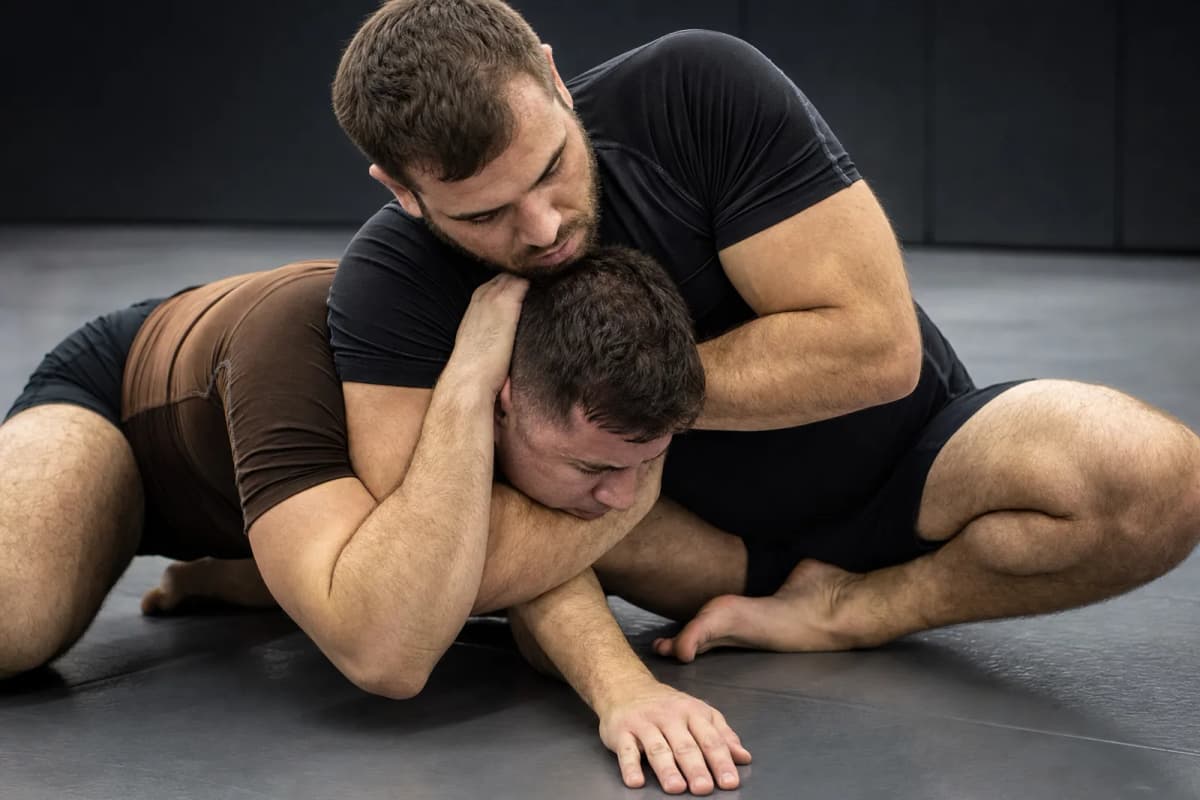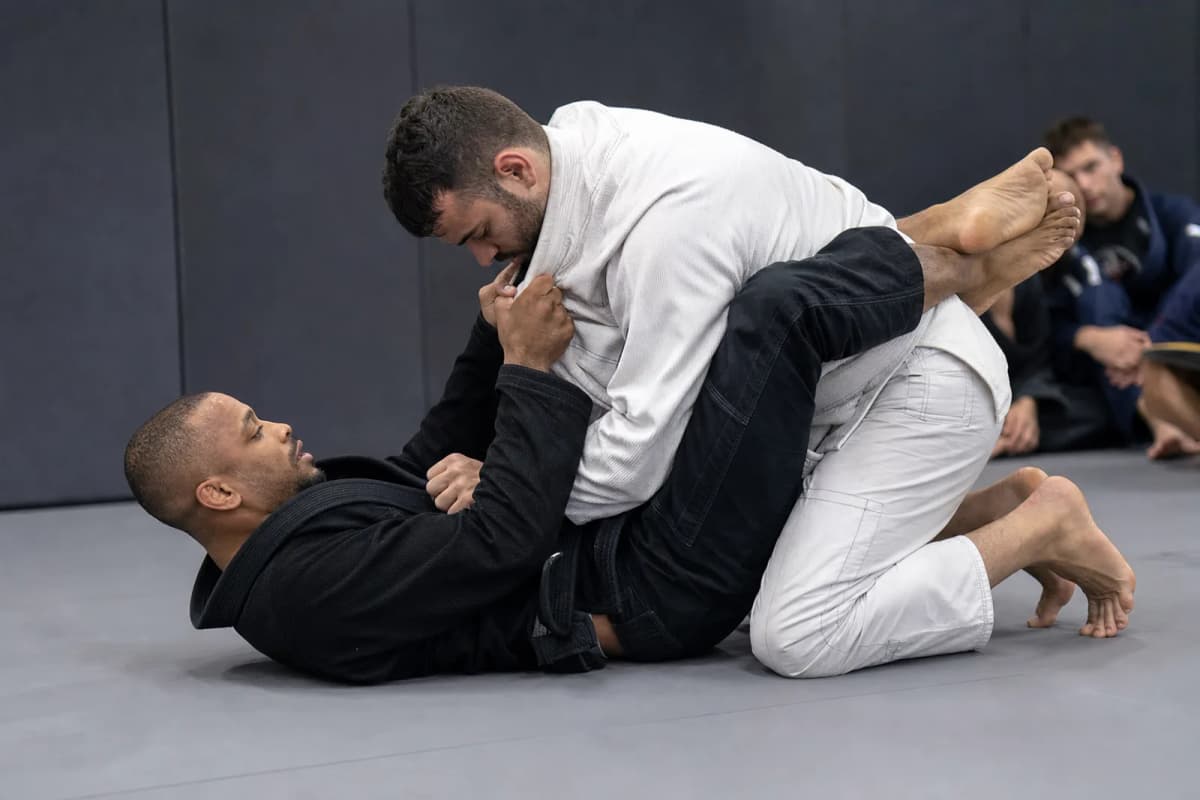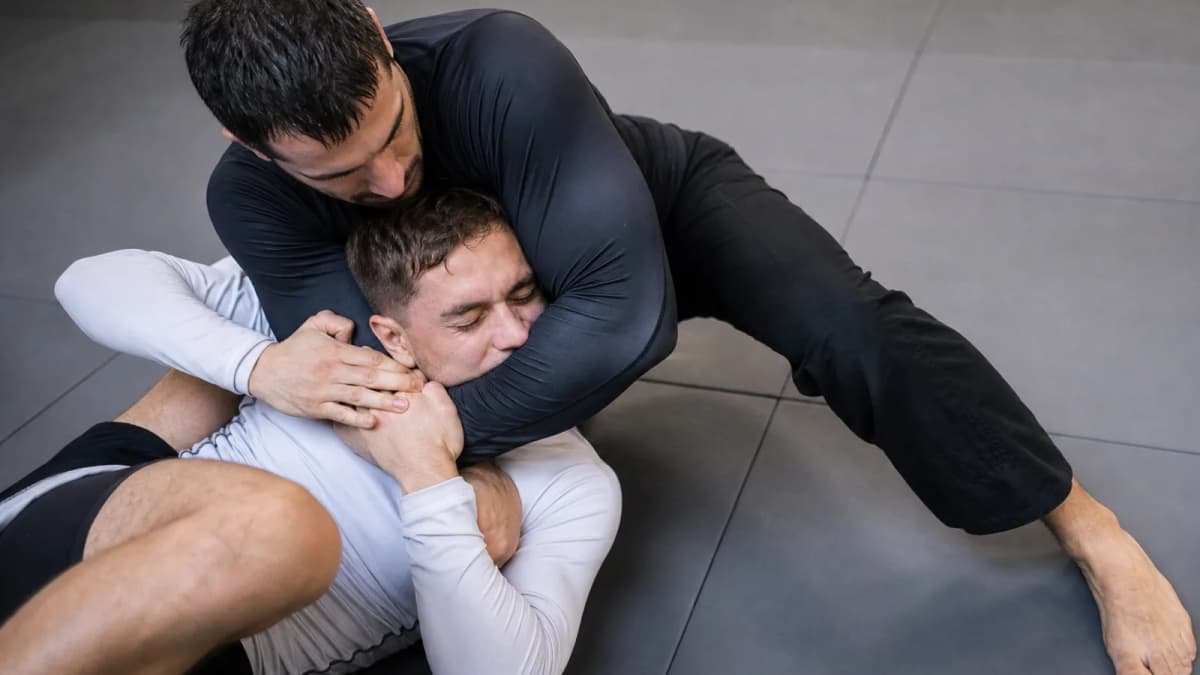
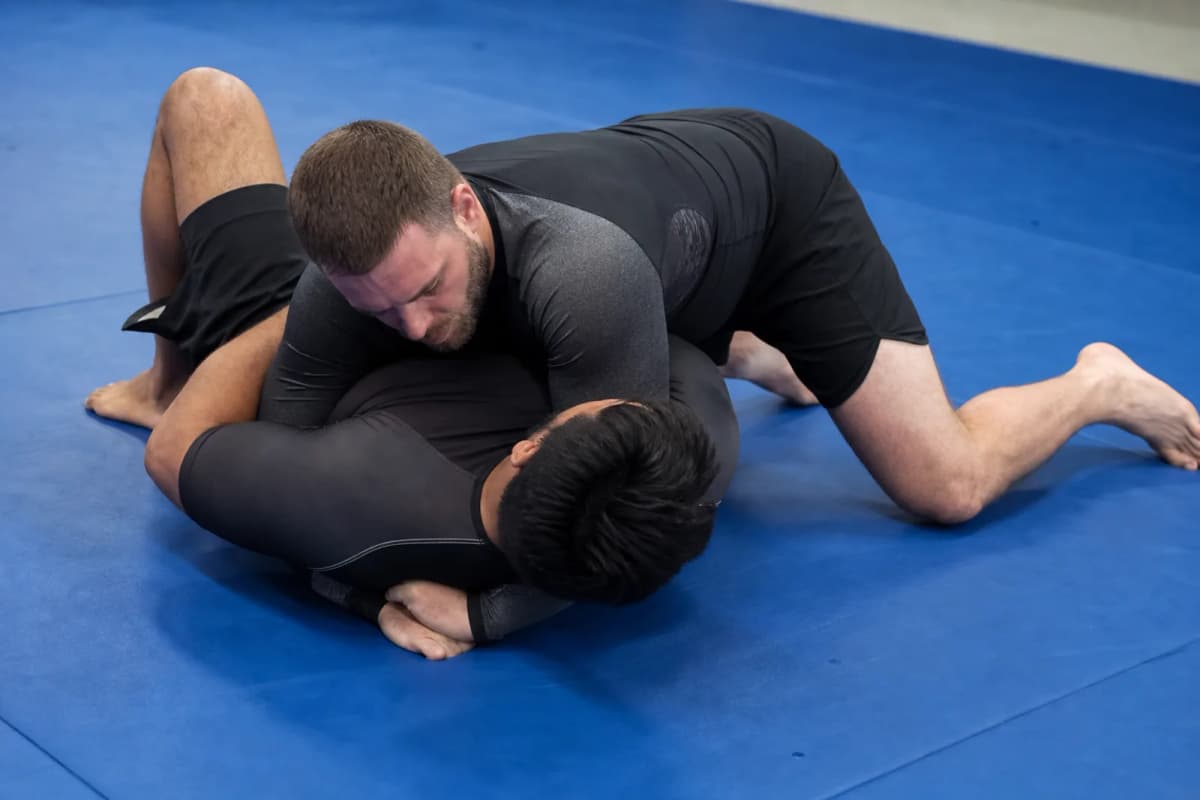
Choose the body lock pass when you can glue chest-to-chest through half guard; choose the knee cut when you can slice a knee across and win the far hip without giving up underhooks.
Both are pressure passes. Your chest connection and knee line decide which branch is honest.
A body lock pass wins by wrapping the torso, removing space under the chest, and folding or walking past the hips while the bottom player cannot insert frames. It is a connection-first pass: underhooks, chest pressure, and hip control matter more than a pretty knee angle.
A knee cut (knee slide) wins by putting one knee across the thigh line, controlling the upper body, and clearing into side control or mount. It is a lane-first pass: if the inside knee is blocked by a strong shield or underhook, forcing the slide usually stalls in half guard.
Choose body lock when
You already beat the underhook battle, your chest is glued, and their frames cannot reset between your torso and theirs.
Choose knee cut when
You have a clear knee line across the near thigh, their shoulders are flattened or crossfaced, and the far hip is available without giving away underhooks.
- Use the body lock from half guard or against seated/butterfly styles when you can clasp around the torso and remove space
- Use the body lock when sleeve and collar grips are scarce in no-gi and chest connection is your main control
- Use the knee cut from headquarters, split stance, or a cleared knee-shield battle
- Use the knee cut when you can staple the near hip and keep their near shoulder from turning into you
- Chain them: a failed knee cut that wins chest position often becomes a body lock; a body lock that opens a knee line often becomes a knee cut
Body locks fail when they are loose. Knee cuts fail when the upper body is free.
In the body lock, the common mistake is clasping hands without chest pressure. A soft lock lets them insert a knee shield, underhook, or hip escape and turns your “pass” into a scramble.
In the knee cut, the common mistake is sliding the knee before winning the shoulder and hip battle. If they keep an underhook or strong shield, the pass stalls and you gift half-guard offense.
Do not hug air
A body lock needs chest-to-chest glue and hip control. If you can see daylight under your sternum, fix connection before walking past.
Do not cut into a wall
Clear the knee shield and underhook first. A knee cut into a strong frame usually ends in half guard, not side control.
Key Takeaways
- Body lock passes win with torso connection and folded hips; knee cuts win with an inside knee lane plus upper-body control.
- If you already own chest pressure, prefer the body lock. If you already own the knee line, prefer the knee cut.
- Both passes finish in side control you can hold — do not chase the label of the pass past a stable pin.
Further Study
Torso-lock pressure pass against seated and half-guard styles.
The inside-lane pressure pass behind the knee cut comparison.
Where many body-lock and knee-cut battles start or stall.
The control battle that often decides which pass is available.
Pair this pressure choice with outside-passing options.