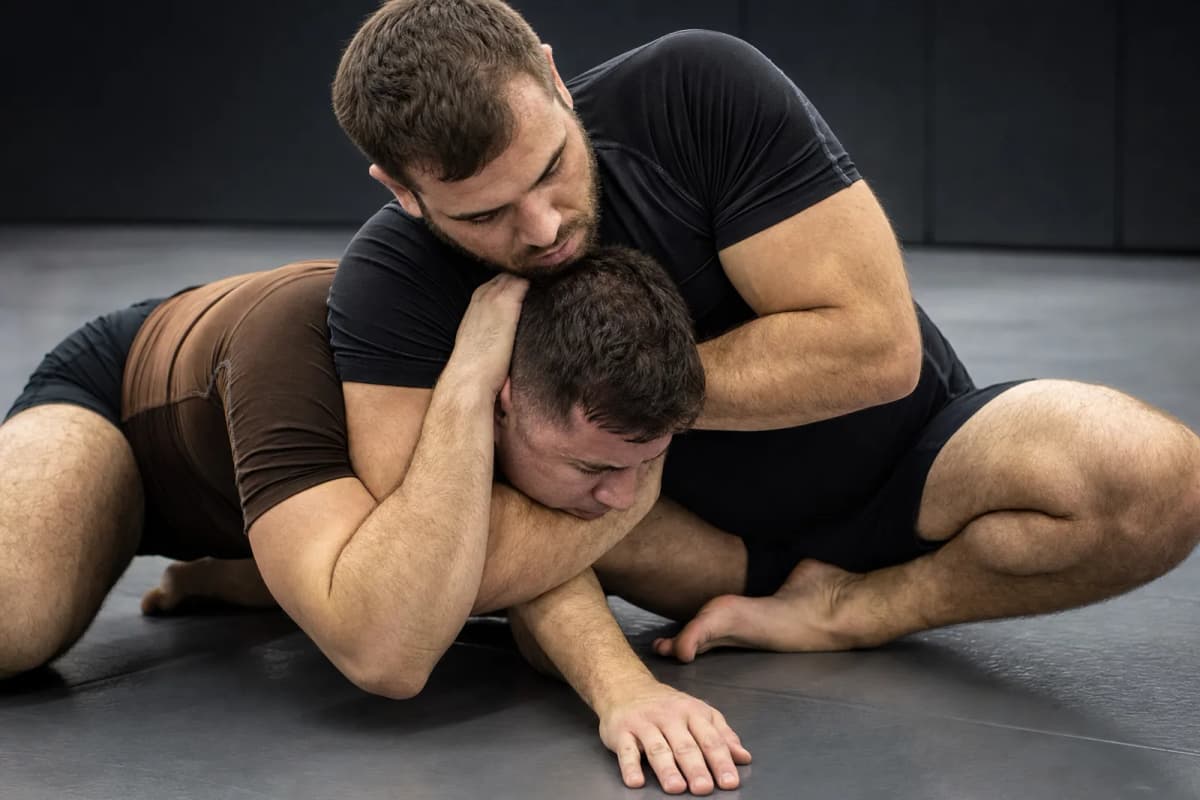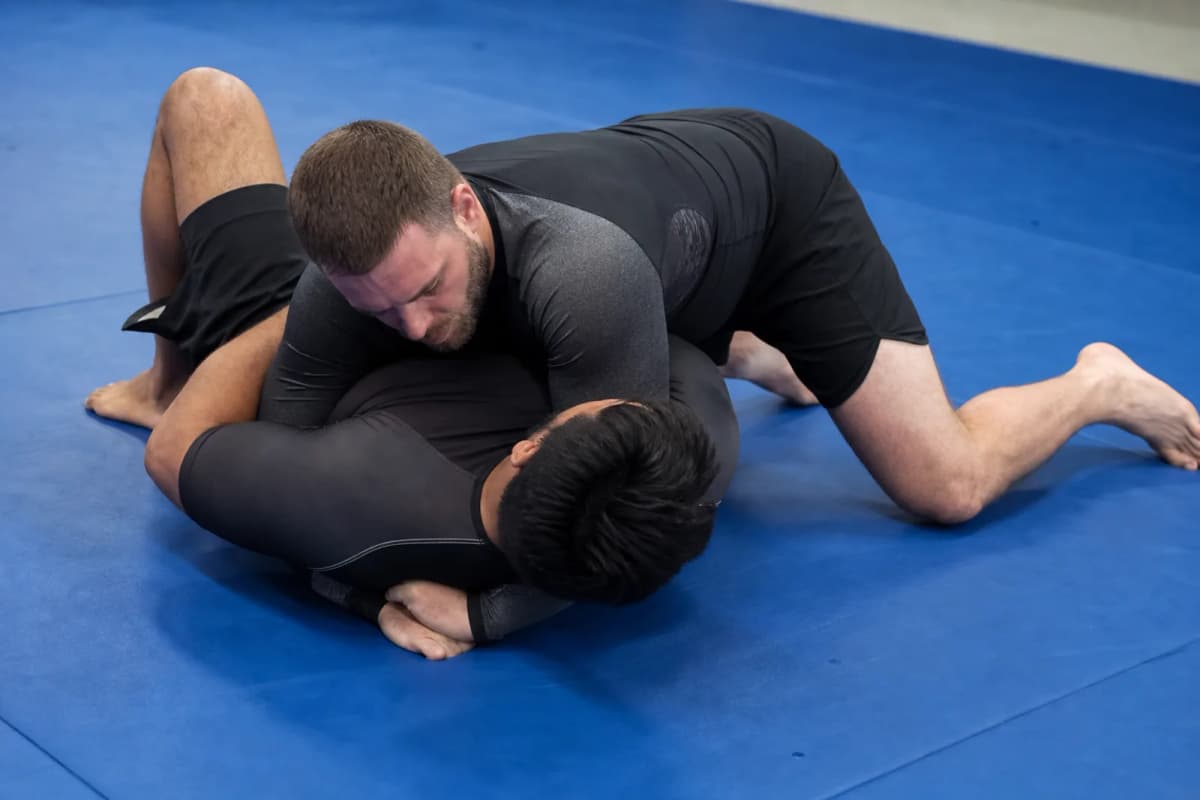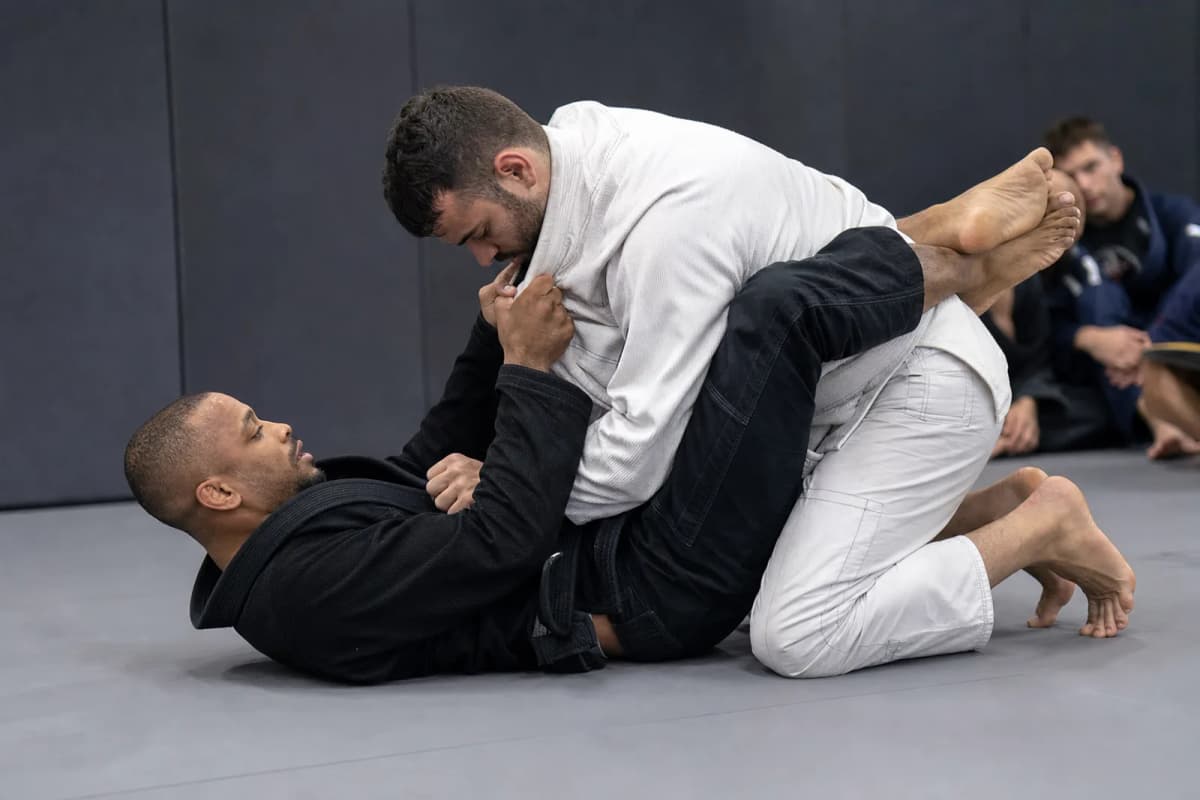
The guillotine attacks the exposed neck first, the D'Arce attacks a head-and-arm line when the arm is driven across, and the anaconda attacks when you can wrap the head and arm from the opposite threading direction.
All three chokes can begin near the front headlock, but the finishing alignment is different.
A guillotine is the most direct neck attack. Your choking arm wraps under the chin or around the neck, then your body position stops the opponent from slipping their head free.
A D'Arce choke becomes available when the opponent's arm is trapped across their own neck line. The choking arm threads through the armpit and toward the neck, then the lock compresses the shoulder into the carotid space.
An anaconda also uses head-and-arm compression, but the threading path is reversed. The arm wraps from the neck side toward the armpit, often pairing with a roll or angle change to tighten the shoulder pressure.
Guillotine
Neck-first control. Best when the head is low, posture is broken, and the chin line is available.
D'Arce and anaconda
Head-and-arm control. Best when one shoulder can be folded into the neck instead of attacking the neck alone.
- Use the guillotine when the opponent shoots with their head exposed or leaves their neck forward during a scramble
- Use the D'Arce when their near arm is extended, their shoulder is across their neck, and your chest can stay heavy on the upper back
- Use the anaconda when the head-and-arm shell is tight but the roll, angle, or palm-to-biceps lock is easier than a D'Arce thread
- Use arm-in guillotine variations when the neck is available but the trapped arm changes the finishing angle
- Use high-elbow guillotine variations when you need to stop the opponent from circling toward the safe side
The biggest error is treating every front headlock like the same choke.
For guillotines, beginners often squeeze before controlling the hips and shoulders. Without posture control, the opponent can hop, roll, or turn the corner.
For D'Arce chokes, the common mistake is locking the hands before the shoulder is driven deep across the neck. A shallow lock feels strong in the arms but does not compress the choke line.
For anacondas, the common mistake is rolling without keeping the head and arm connected. The roll should tighten the wrap, not give the opponent space to pull their elbow free.
Control before squeeze
Win head position, shoulder line, and hip angle first. The finish should feel like alignment plus compression, not a biceps curl.
Follow the trapped arm
If the arm slips out, transition back to front headlock control instead of squeezing an empty neck line.
Key Takeaways
- Pick the guillotine when the neck is exposed and posture control is available.
- Pick the D'Arce when the arm is extended across the neck and you can thread through the armpit.
- Pick the anaconda when the head-and-arm wrap is available from the neck-side thread and angle change.
Further Study
The direct front headlock choke for exposed-neck reactions.
A head-and-arm choke built around shoulder compression through the armpit.
A front headlock head-and-arm finish that often uses a roll or angle change.
The control hub that connects snapdowns, go-behinds, and all three choke families.
A guillotine variation for when the arm stays inside the choking structure.
A guillotine finish that blocks the opponent from escaping around the safe side.