Guide
The IBJJF Rule Book awards 2 points for takedown, sweep, and knee on belly; 3 for a guard pass; and 4 for mount and back control after a 3-second stabilize.
Official scoring values
These numbers come from the IBJJF Rule Book scoring table, published on the Books and Videos page.
- 2 points: takedown, sweep, and knee on belly
- 3 points: guard pass
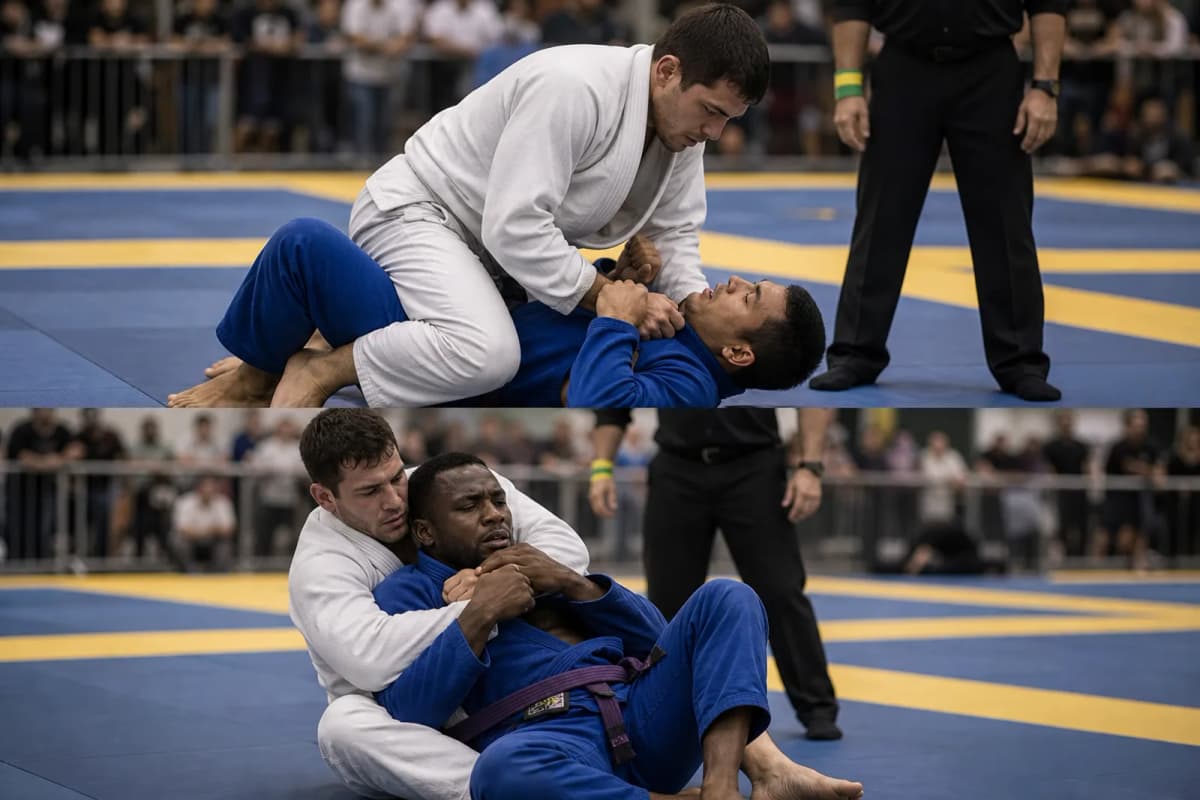
- 4 points: mount and back control
- Hold the position for 3 seconds before the referee awards the points
- A pass straight to mount adds both scores (3 + 4) when each criterion is met
Use points as a map of hierarchy
The point system is a simplified map of which positions the ruleset values. Training that hierarchy makes you better even if you prefer submissions.
- Stabilize positions long enough to score cleanly
- Do not abandon a scored mount to dive into a low-percentage scramble
- Read the latest official IBJJF Rule Book before competing
Key Takeaways
- IBJJF scores 2 / 3 / 4 after a 3-second stabilize.
- Advantages cover near-scores that miss a criterion.
- Confirm values in the current official rule book before competing.
Further Study
IBJJF Books and Videos (Rule Book & Illegal Moves poster)
Official IBJJF Rule Book (v6.1) and Technical Fouls & Illegal Moves downloads. Confirm your age, belt, and gi/no-gi column.
What is the difference between IBJJF and ADCC rules?
Scoring and legality contrast, including ADCC’s different point table.
Mount
A 4-point IBJJF position and a high-percentage finishing platform.
Back Control
The other 4-point IBJJF control position.