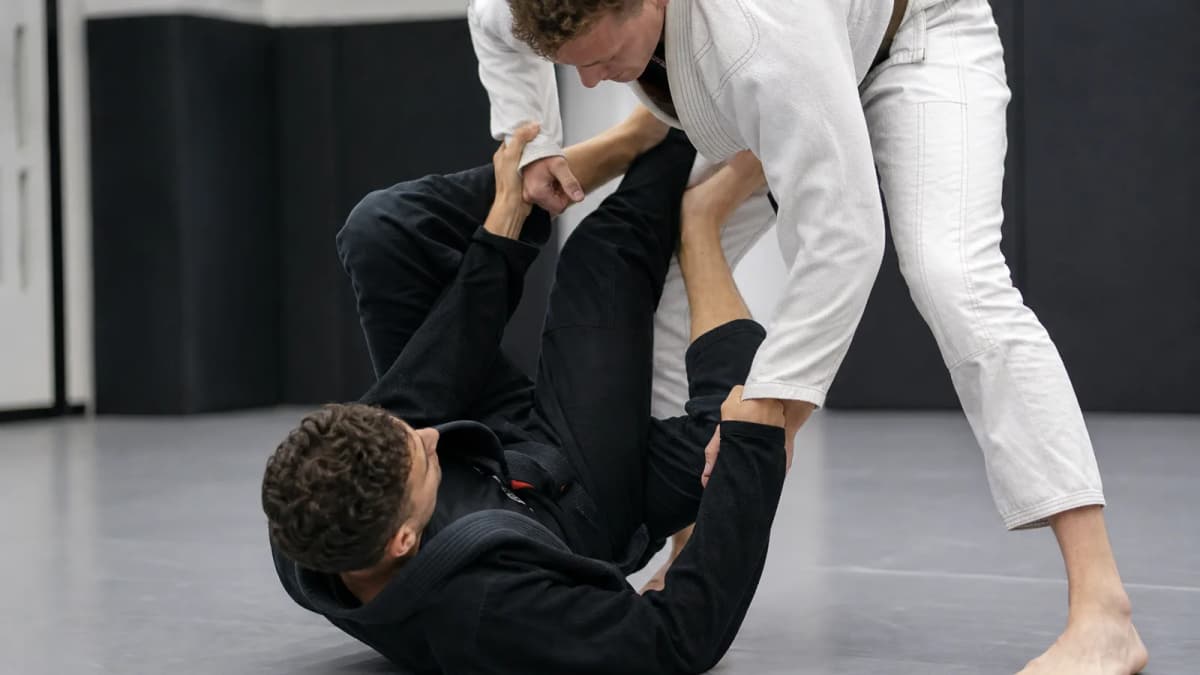
Inverted Guard
Upside-down open-guard family that uses shoulder mobility and leg frames to retain, sweep, and enter company or waiter systems.
Overview
Position Flow
How to Enter
- Invert from de la Riva or open guard when they clear your near-side frames
- Granby-roll recoveries after a pass threatens side control
- Shoulder-roll retention when toreando grips yank you off your hip
How to Exit
- Company guard when both legs sandwich their torso
- Waiter’s sweep when they step over a raised hook
- Berimbolo / back take when they turn away
- Recover upright open guard once space returns
Key Controls
- Active leg frames on hips, biceps, or shoulders while inverted
- Sleeve, collar, or ankle grips that stop them circling free
- Neck protection with chin tuck and hands ready to frame
Vulnerabilities
- Stack pressure that pins shoulders and steals air
- Knee-on-belly or smash passes on shallow inversions
- Neck and shoulder strain if you invert without mobility prep
Ideal When
Upright frames are failing and you need a shoulder-based retention layer that still leads to offense.
OffenseOffense
Goals
- Survive the pass long enough to reattach hooks
- Force a reaction that opens company, waiter’s, or back takes
Key Techniques
Pro Tips
- Invert with purpose — always have a next connection
- Keep frames alive; dead inverted legs get stacked
Common Mistakes
- Inverting as a panic habit with no grips
- Staying inverted after they have already cleared both hooks
DefenseDefense
Goals
- Prevent the shoulder roll or punish unfinished inversions
- Stack or circle to kill hooks before they settle
Key Techniques
- Heavy hip pressure and head position to stop the roll
- Toreando clears that yank them off the inversion line
- Smash pass once shoulders are pinned
Pro Tips
- Do not chase inverted legs with your head low
- Force them to choose between air and hooks
Common Mistakes
- Standing tall over active inverted hooks
- Turning your back while they still have a sleeve or ankle
Variations
Retention inversion from open / de la RivaCompany-guard sandwich from deep inversionWaiter’s and berimbolo exits off the inverted angle
Key Concepts
- Inverted guard is a bridge, not a home
- Shoulder mobility and neck safety are prerequisites
- Every inversion should threaten a concrete exit
Recommended Drills
Related Techniques
Summary
Inverted guard uses shoulder rolls and leg frames to keep passing from finishing. Protect your neck, reattach hooks quickly, and exit to company, waiter’s, or back takes instead of living upside down.