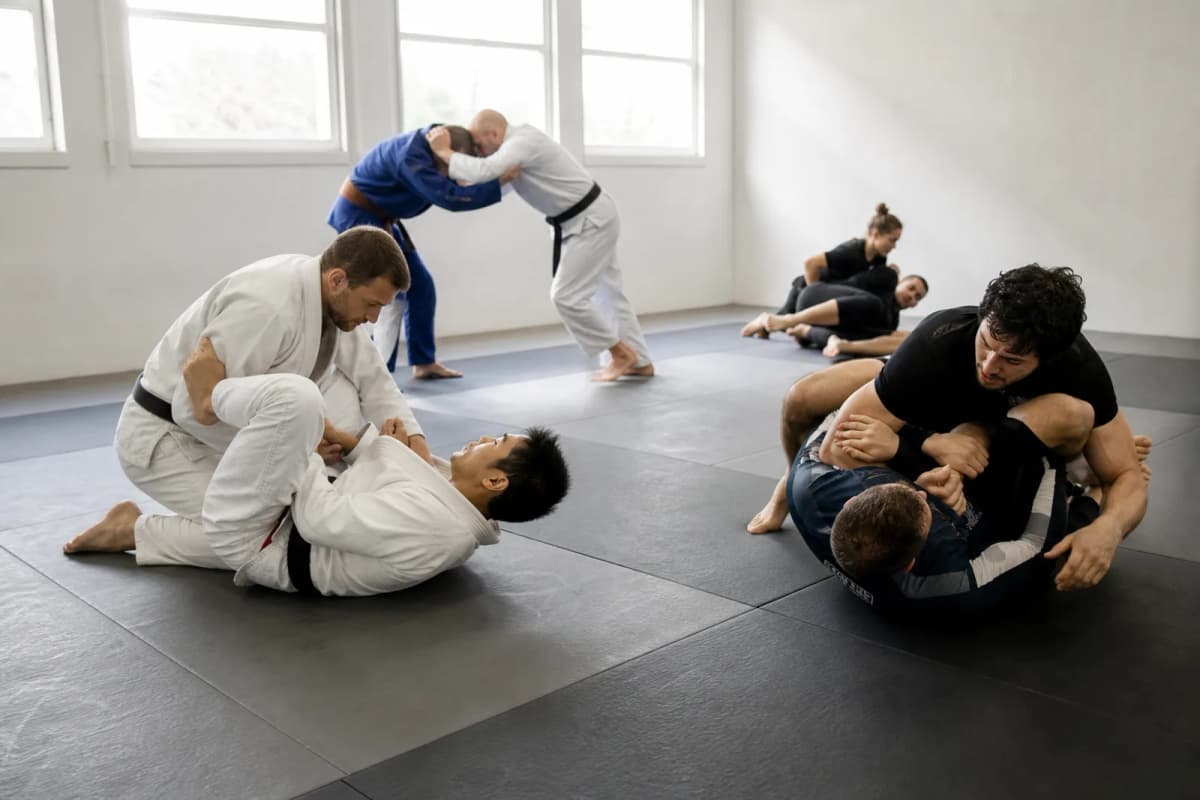
Your first month of BJJ is mostly about surviving class, learning basic movements, and building the habit of showing up.
Orientation beats optimization. Your goal is to become a reliable training partner who can move, breathe, and tap intelligently.
Most beginners feel lost for weeks. That is normal. Class will introduce more techniques than you can remember, and that does not mean you are failing.
Measure progress by attendance, calmer breathing, and clearer survival habits — not by taps scored in sparring.
- Warm-ups and movement drills that feel awkward at first
- Technique that makes sense in drills and disappears in sparring
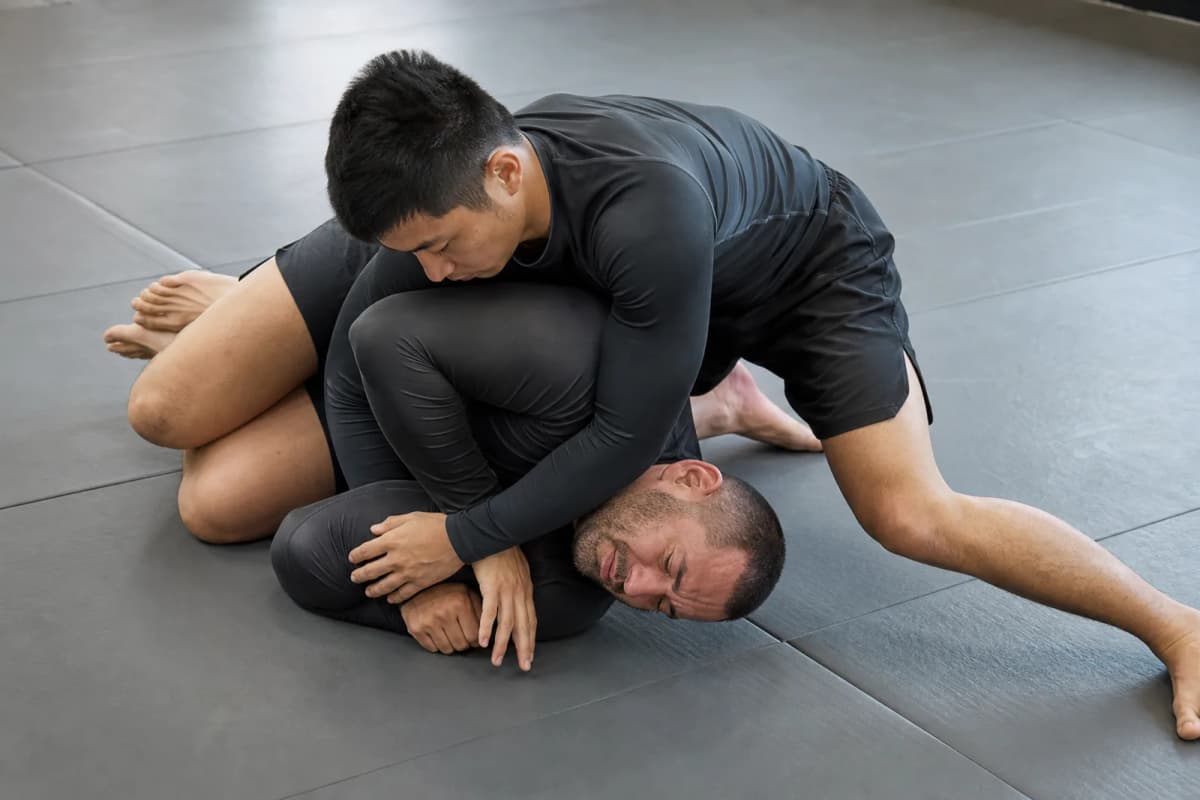
- Getting stuck under side control or mount more than you like
- Soreness in grip muscles, neck, and hips
- Small wins: escaping once, remembering a frame, or lasting longer without panic
Movements
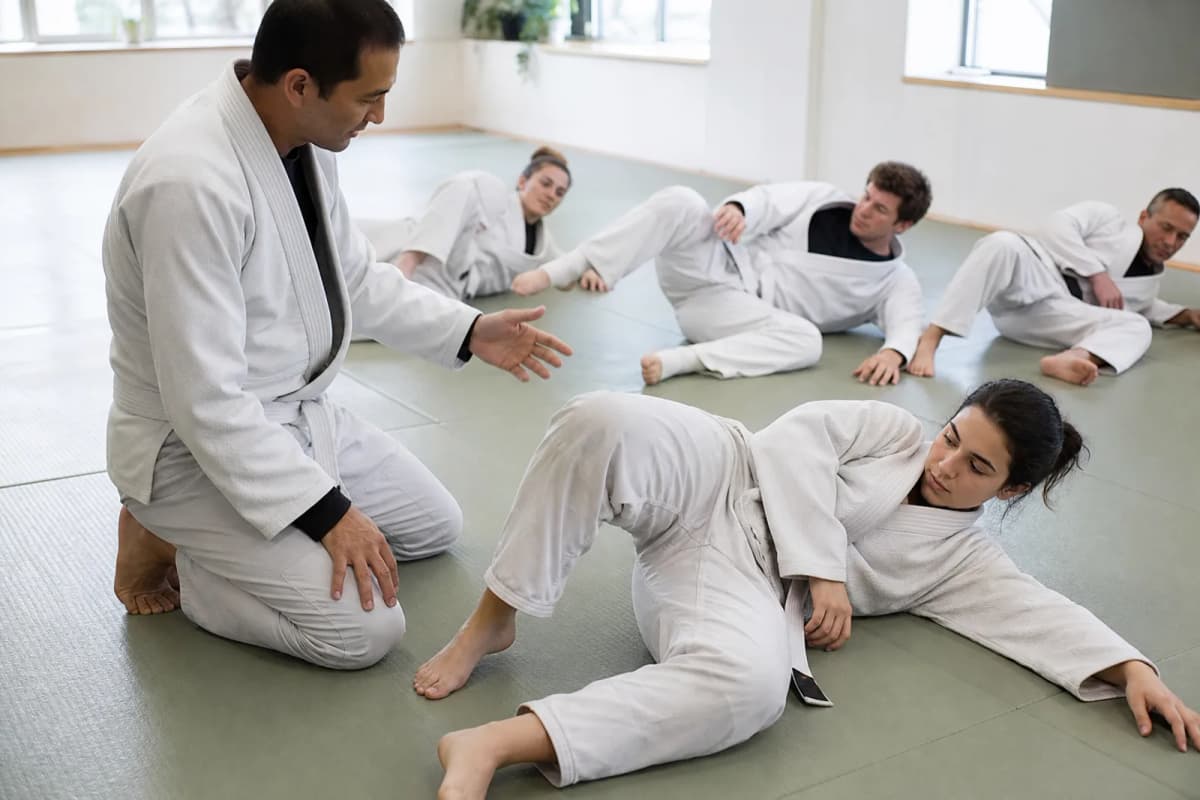
Hip escape, technical stand-up, bridging, and framing transfer into almost every later technique.
Culture
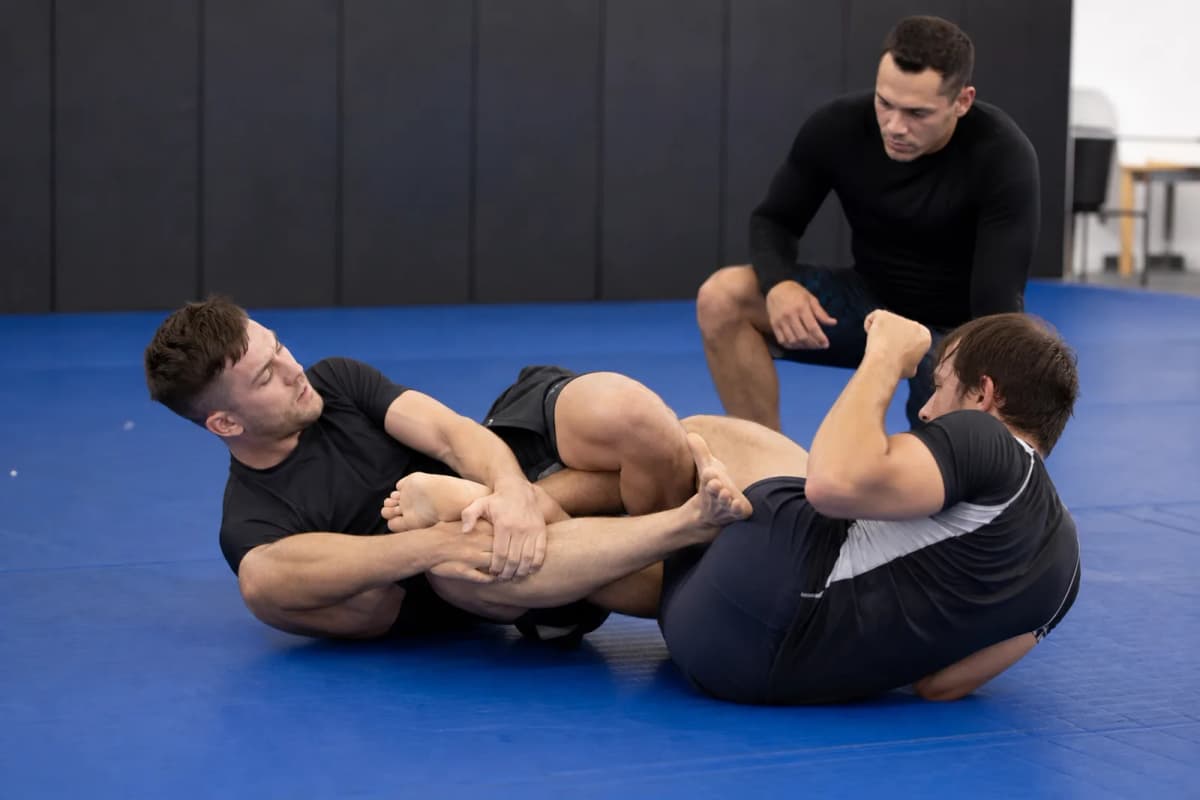
Tap early, ask questions, and tell partners you are new. Good gyms reward that honesty.
Schedule
Two to three classes per week beats one heroic week followed by burnout. Consistency compounds faster than intensity.
After the first month, the same fundamentals start forming simple systems — closed guard chains, half-guard retention, and safer sparring choices. Use the three-month guide when you are ready for a longer plan.
Key Takeaways
- The first month is habit and survival, not technique collecting.
- Breathing, tapping, and basic movements matter more than submissions.
- Consistent classes beat short bursts of hard training.
Further Study
The longer beginner roadmap this article leads into.
Gear basics so logistics do not block attendance.
Why you can start at your current fitness level.
A core first-month movement for escaping pressure.
A useful early control position once survival basics land.