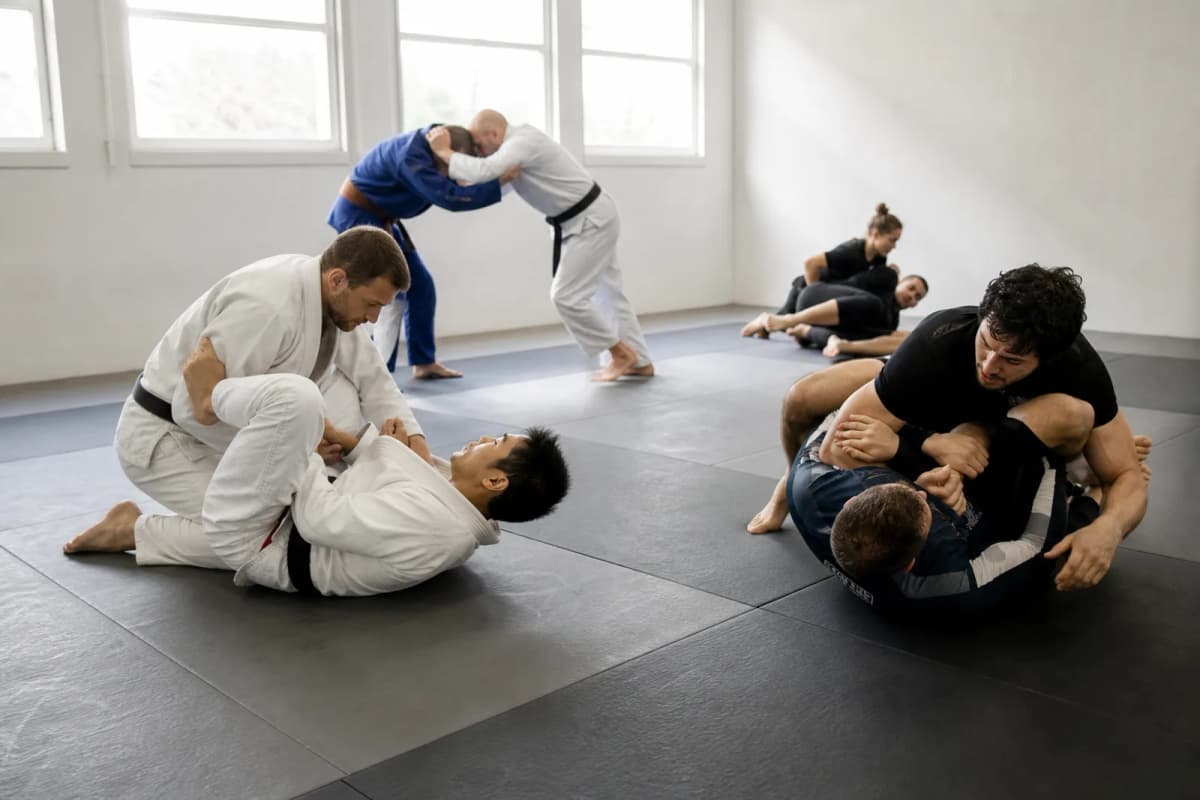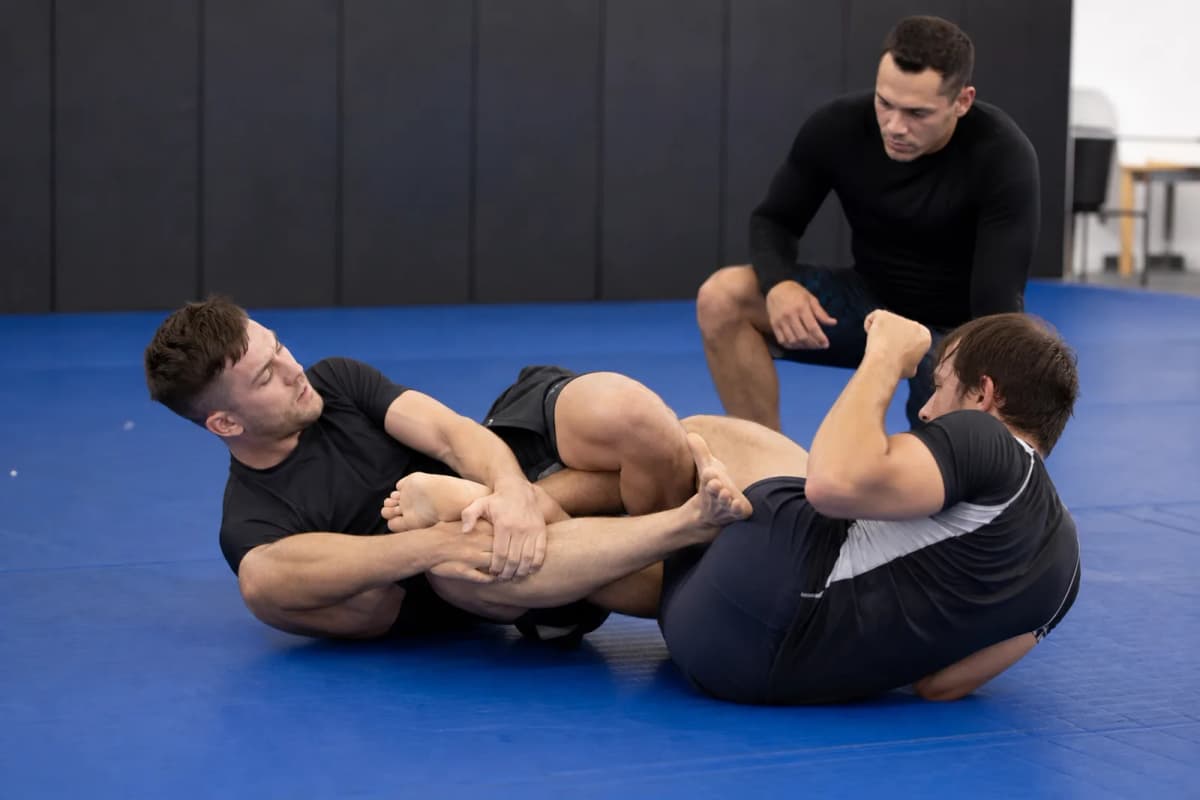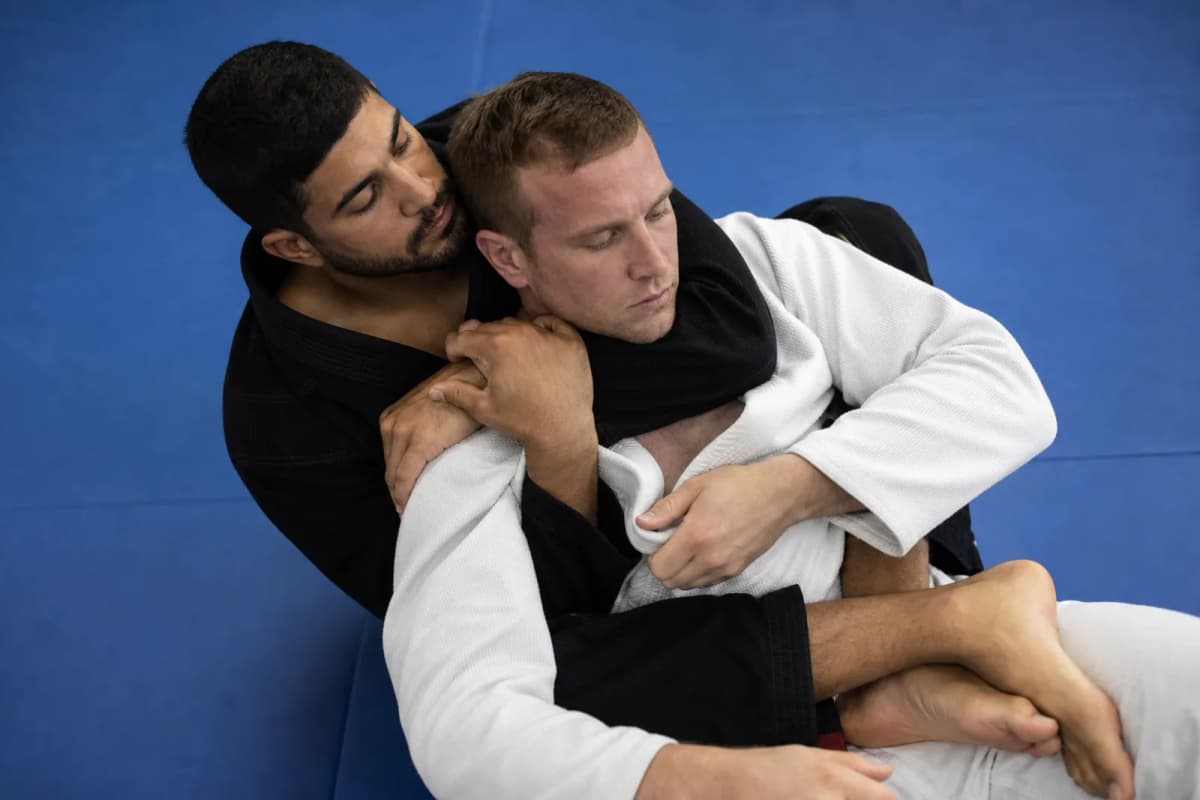
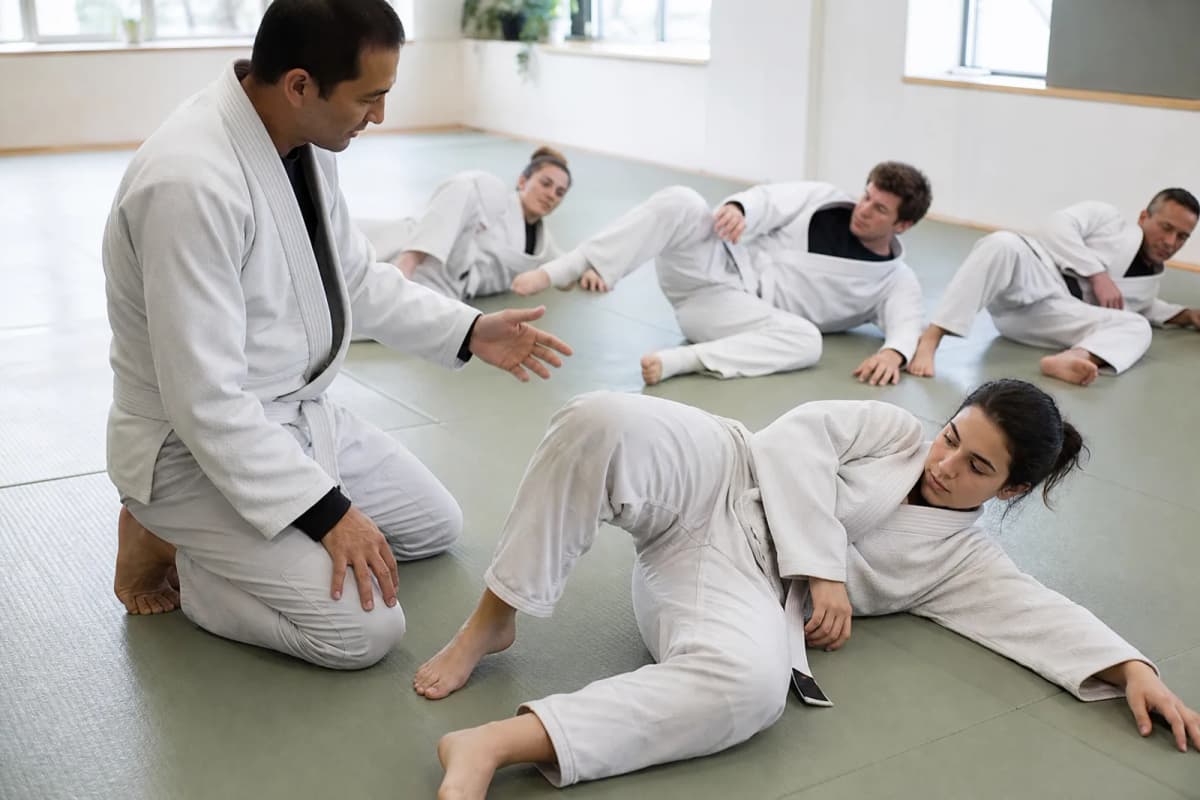
In the first three months, prioritize survival, frames, hip escapes, closed-guard basics, and training habits over collecting advanced techniques.
Your job is not to win rounds. Your job is to learn how to train, survive bad positions, and build a tiny set of reliable skills.
Most new white belts feel lost because they try to memorize everything. Progress comes faster when you shrink the problem: show up, breathe, frame, escape, and rebuild a simple closed-guard starting point.
If you leave month three with solid frames, a usable hip escape, basic posture in closed guard, and the habit of tapping early, you are ahead of the beginner who collected twenty unfinished techniques.
- Show up two to three times per week and protect recovery between hard days
- Survive mount and side control with frames instead of thrashing
- Escape to half guard or closed guard with hip movement
- Break posture in closed guard before hunting submissions
- Learn one sweep and one submission that share the same posture-break entries
- Practice technical stand-ups and safe falling habits when rounds go to the feet
- Ask one clear question after class instead of collecting random online moves
Month 1
Learn gym etiquette, tapping, breathing under pressure, framing from mount and side control, and how to leave class without ego damage.
Month 2
Make hip escapes and closed-guard posture control automatic. Start chaining one sweep, such as a scissor or hip-bump entry your coach teaches.
Month 3
Add one submission from already-broken posture, tighten retention after failed attacks, and review the same small system every week.
Consistency and safety compound. Technique volume does not if you cannot repeat it under fatigue.
Treat rolling as practice, not as a weekly report card. Tap early, reset cleanly, and notice which positions keep appearing. Those repeating positions are your real curriculum.
Private lessons can help later, but more mat time with a short focus list usually beats buying complexity in month one. Match your study to what your gym already drills.
- Warm up enough to move well, then train at a pace you can think through
- After class, write down one position and one detail — not ten techniques
- Drill the same escape and guard sequence across weeks until it shows up in live rounds
- Sleep, hydrate, and skip the heroic seven-day training streak that creates injury
- Holding breath and muscling every exchange
- Refusing to tap and learning nothing except how to get injured
- Chasing leg locks or fancy open guards before frames and closed guard exist
- Comparing yourself to athletic beginners instead of measuring your own week-to-week survival
- Skipping fundamentals classes because they feel basic
Key Takeaways
- The first three months are for survival skills, closed-guard basics, and consistent training habits.
- A small repeated system beats a large unpracticed technique list.
- If you can frame, hip-escape, and rebuild closed guard under pressure, you have a real foundation.
Further Study
Create structure under mount and side control so escapes become possible.
The core movement for making space and recovering guard.
A beginner-friendly bottom hub once you can lock the waist and break posture.
A safe way to stand when rounds leave the ground.
Study the position you will escape often in your first months.
Another high-frequency top pressure position for beginner survival work.