Use X-guard when both hooks can elevate and off-balance a standing passer; use single-leg X when one leg is isolated and you need a quick sweep, stand-up, or ankle-lock entry.
Both positions elevate a standing opponent from bottom. X-guard uses two hooks under the passer; single-leg X isolates one leg as the primary control.
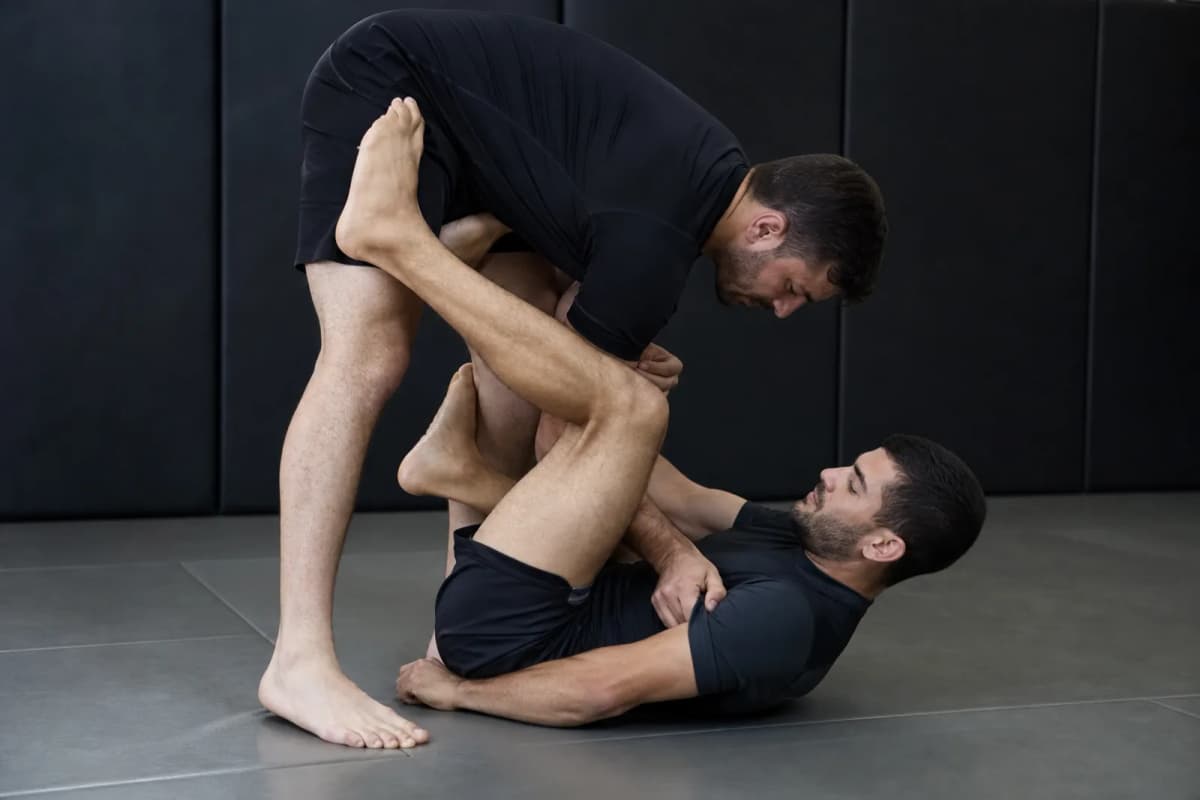
X-guard typically places one hook behind the far hamstring or hip line and another under the near thigh so you can elevate, tilt, and sweep a standing passer. It rewards clean entry timing, active feet, and the ability to keep their base broken while you choose a dump or back exposure.
Single-leg X (SLX) isolates one leg between your legs and hips, often with a figure-four style lower-body control. It is usually easier to enter from failed butterfly sweeps, seated guard exchanges, or when the passer steps a leg forward. From SLX you can sweep, stand up into a single-leg style finish, or enter ankle locks and ashi-family entanglements.
X-guard goal
Elevate with both hooks, break their base, and finish with a sweep or transition while they are standing over you.
Single-leg X goal
Own one leg tightly, then sweep, stand up, or connect to straight ankle locks and outside ashi entries.
- Use X-guard when the passer is standing tall and both of your hooks can get under their hips or thighs
- Use X-guard when you already have elevation and want larger dump-style sweeps across their base
- Use single-leg X when one leg is clearly isolated and you need a fast, high-percentage bottom control
- Use single-leg X when you want a direct path to straight ankle locks or ashi-garami style follow-ups
- Switch from SLX to X-guard when they post the free leg and give you room to insert the second elevation hook
- Abandon both and recover butterfly or seated guard if they collapse weight and kill your elevation
Elevation guards fail when the hooks are decorative and the passer keeps a square, heavy base.
In X-guard, the common mistake is inserting hooks without lifting or off-balancing. If both feet are under the opponent but their weight stays centered, you are storing their base rather than attacking it. Elevate, tilt, and force a post before you chase the sweep.
In single-leg X, the common mistake is holding the leg loosely while lying flat. SLX needs hip connection, knee pressure, and an active upper body. Without that, the passer can free the foot, smash into half guard, or step around before your sweep starts.
Do not force X-guard from a smashed seat
If they are already collapsing into you, rebuild frames and butterfly hooks instead of fishing for a second elevation hook.
Do not ignore the free leg in SLX
Track their free foot. If it posts hard, decide whether to sweep that direction, elevate into X-guard, or enter a leg entanglement.
Key Takeaways
- X-guard is a two-hook elevation system for off-balancing standing passers.
- Single-leg X isolates one leg for sweeps, stand-ups, and leg-lock entries.
- Choose based on how many hooks you can honestly elevate, then chain between SLX, X-guard, and ashi instead of forcing one shape.
Further Study
Elevation guard built around two hooks under a standing passer.
One-leg control that connects to sweeps, stand-ups, and ankle attacks.
A primary dump-style finish once both hooks elevate and break their base.
High-percentage SLX offense when the isolated leg and free-foot post line up.
A common legal foot attack often entered from single-leg X and ashi positions.
A foundational entanglement family that pairs with SLX and ankle-lock chains.