FAQ
OSS is a one-word answer for almost anything in a BJJ gym: hello, thanks, yes, got it. You will also hear a lot of other jargon in your first classes. This page explains OSS and the 40 terms beginners hear most.
What OSS means and when people say it
OSS is about respect and effort. It has no single literal meaning on the mat.
- Hello or goodbye when you bow on or off the mat, or greet a training partner.
- Thank you after a round or a technique.
- Yes or understood when the coach explains a drill.
- It is most common in academies with a traditional or Brazilian culture. Some gyms never use it, and some people dislike it.
- Its origin is usually traced to the Japanese osu, from karate dojos. The exact history is debated.
Training terms
| Term | Meaning |
|---|---|
| Roll / rolling | Live sparring with full or near-full resistance |
| Flow roll | Light, cooperative rolling to practice movement |
| Positional sparring | Live rounds that start from one position, such as guard or side control |
| Drilling | Repeating a technique on a cooperative partner |
| Open mat | Unstructured session where people roll or drill freely |
| Tap / tap out | Giving up by tapping your partner or the mat, or saying tap |
| Submission | A choke or joint lock that makes the opponent tap |
| Professor | Common title for a black belt instructor |
| Stripes | Tape marks on a belt that show progress inside a belt |
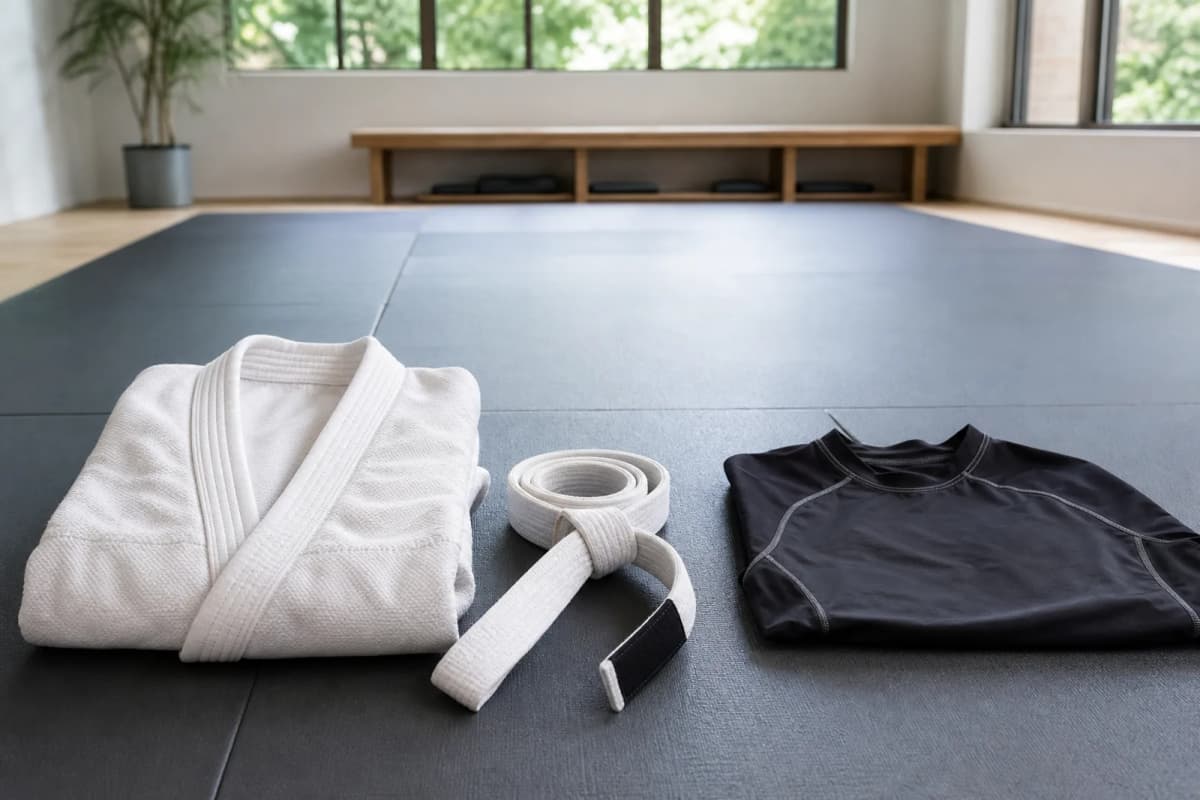
| Gi / no-gi | Training in the kimono and belt, or in shorts and a rash guard |
| Rash guard | Tight, stretchy training top used in no-gi and under the gi |
Position terms
| Term | Meaning |
|---|---|
| Guard | Bottom position where you control the opponent with your legs |
| Closed guard | Guard with your legs locked around the opponent's waist |
| Open guard | Any guard where your legs are not locked, using feet, knees and grips |
| Half guard | Bottom position trapping one of the opponent's legs |
| Mount | Sitting on the opponent's torso, knees on the mat |
| Side control | Top position across the opponent's chest, past their legs |
| Knee on belly | Top position with one knee pinning the opponent's stomach |
| North-south | Top position chest to chest, facing the opposite direction |
| Back control | Behind the opponent with hooks or a body lock, the strongest position |
| Turtle | Defensive position on knees and elbows |
| Scarf hold (kesa gatame) | Side pin sitting beside the opponent's head, holding the head and arm |
| Combat base | Kneeling stance with one knee up, used to start passing |
Movement and control terms
| Term | Meaning |
|---|---|
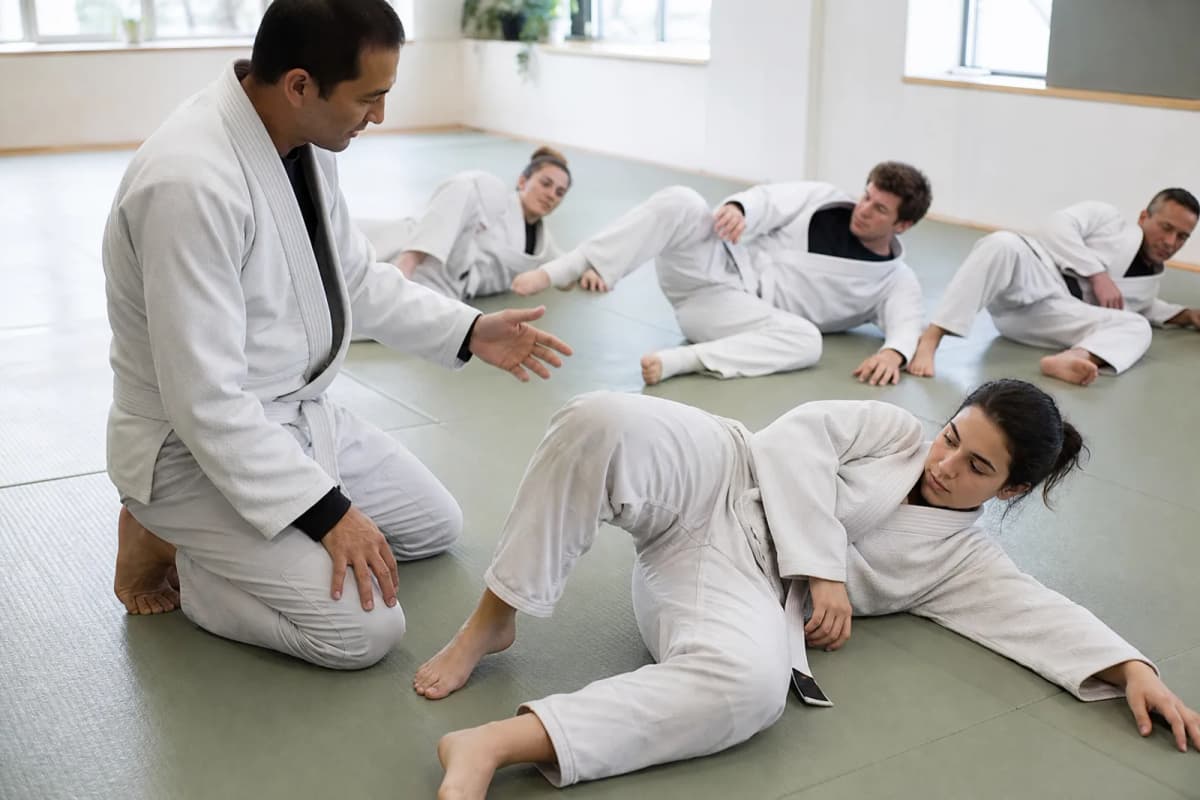
| Shrimp | Hip escape: turning on your side and pushing your hips away |
| Bridge (upa) | Lifting your hips to off-balance an opponent on top |
| Frames | Arm and leg structures that hold space against pressure |
| Base | Balance and a stable stance that make you hard to sweep |
| Posture | Keeping your spine and head upright, especially in someone's guard |
| Sweep | Reversing from bottom guard to a top position |
| Pass / guard passing | Getting past the opponent's legs to a top pin |
| Pulling guard | Sitting to guard instead of trying a takedown |
| Underhook | Your arm under the opponent's armpit, controlling their side |
| Overhook | Your arm wrapped over the opponent's arm |
| Crossface | Shoulder pressure across the opponent's jaw to turn their head away |
| Scramble | A fast exchange where neither person has control |
Submission and leg lock terms
| Term | Meaning |
|---|---|
| Kimura | Shoulder lock with a figure-four grip, bending the arm behind the back |
| Americana | Shoulder lock with a figure-four grip, bending the arm toward the head |
| Armbar | Straightening the elbow against your hips |
| Triangle | Choke using your legs around the head and one arm |
| Rear naked choke (mata leão) | Choke from the back with your arm around the neck |
| Leg entanglement | Leg position used to control and attack the legs, such as ashi garami |
| Reaping | Crossing your leg over the opponent's thigh, a foul in most IBJJF divisions |
Key Takeaways
- OSS means hello, thanks, yes or understood, depending on the moment.
- You never have to say it; follow your gym's culture.
- Rolling is sparring, and tapping ends the round safely.
- Learn the position names first: guard, mount, side control and back control.
- Shrimping, bridging and framing are the movements you will drill most as a beginner.
Further Study
BJJ belt order: every rank from white to red belt
Belts, stripes and IBJJF minimum times.
What to wear to your first BJJ class
Gi, no-gi and gym hygiene basics.
White belt roadmap
The positions and escapes to learn first.