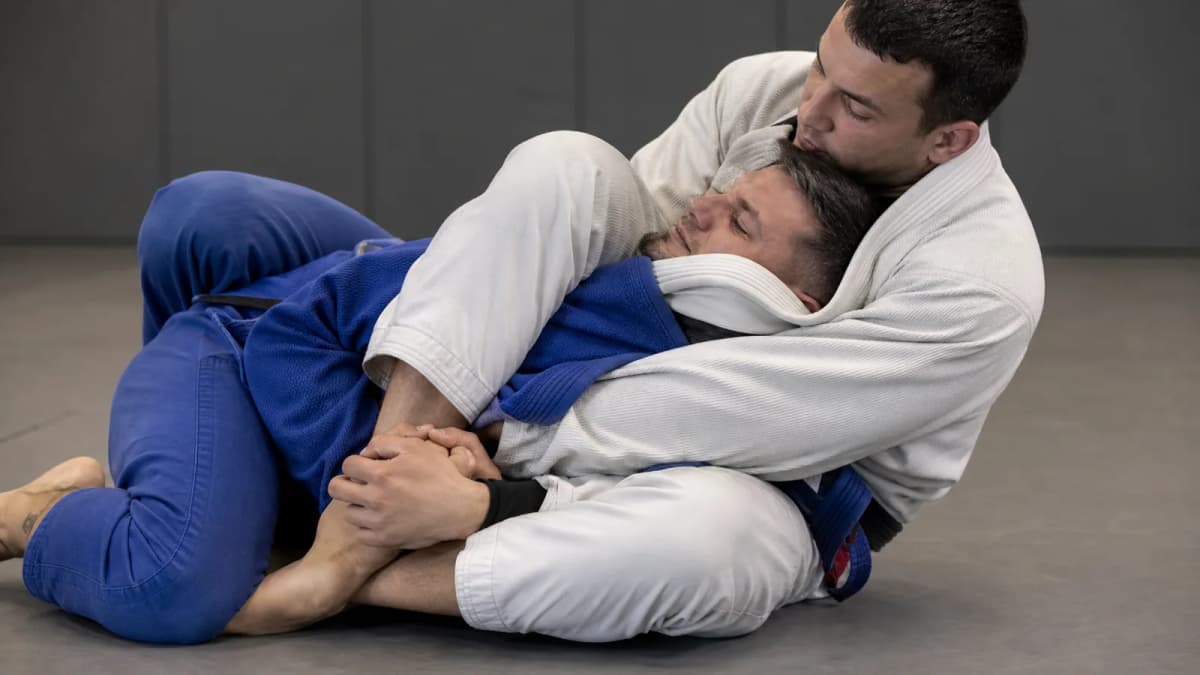
Reverse Triangle
Triangle strangulation finished with the opponent’s head and arm trapped on the opposite side of the classic triangle — common from mount, side control, and scrambles.
blood choke
Overview
The reverse triangle locks a triangle around the head and one arm with the finishing angle opposite a classic closed-guard triangle. It often appears from mount, side control, or failed armbars when the opponent’s posture and arm line reverse relative to your hips. The finish still compresses the carotids — the geometry is just mirrored.
#Setup
- Isolate a head-and-arm configuration where their free arm is outside your intended lock.
- Throw the leg over the trapped shoulder/neck line from the reverse angle.
- Lock your knee behind the other knee (or shin) to close the figure-four.
#Execution
- Adjust angle so the trapped shoulder packs into the neck.
- Pinch knees and engage hamstrings while controlling the trapped wrist.
- Use hip pressure and shoulder connection to remove daylight.
#Finishing
⚠️
Safety Note
Avoid yanking the head to force a reverse triangle. Improve angle and knee pinch first to protect both partners’ necks.
Primary Targets
- Neck
- Carotid arteries
Key Concepts
- Reverse triangle is geometry, not a different submission family.
- Angle and knee pinch matter more than raw squeeze.
- Arm attacks should be ready when the choke is defended.
Primary Entries
- Mount or S-mount when they turn and expose a reverse head-and-arm line.
- Side control when a kimura or armbar attempt leaves the neck available.
- Scrambles off failed classic triangles where the arm switches sides.
Defenses & Counters
Follow-Ups
Training Drills
- Mount to reverse-triangle inserts with cooperative turning
- Reverse triangle to armbar chains
- Angle-adjustment rounds focusing on knee pinch before head pulls
Related Techniques
Deepen your study with complementary positions and attacks.
Summary
The reverse triangle finishes the same blood choke on a mirrored angle from mount, side control, or scrambles. Lock the figure-four, fix the angle, squeeze with the legs, and chain to the arm when they defend the neck.